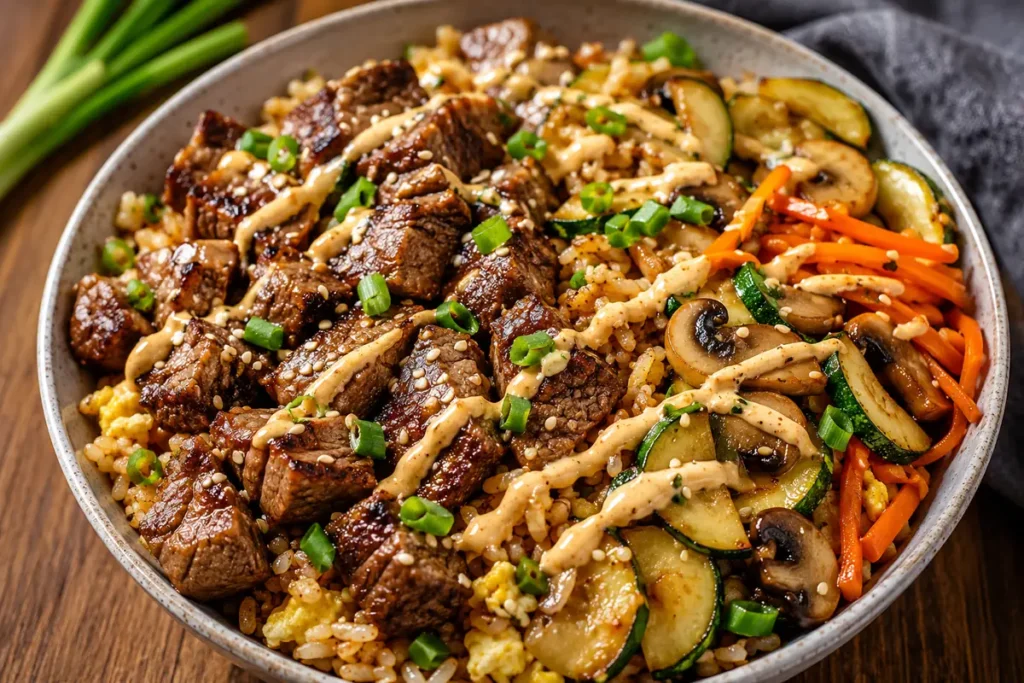
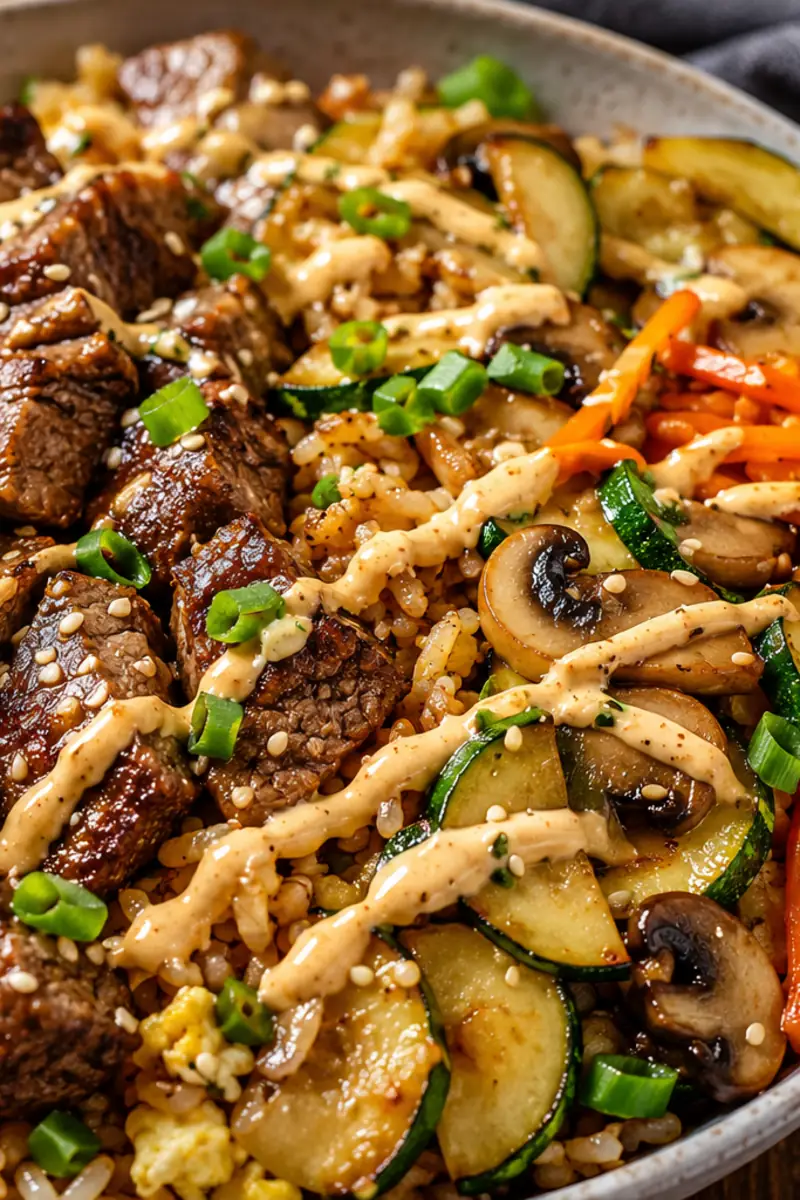
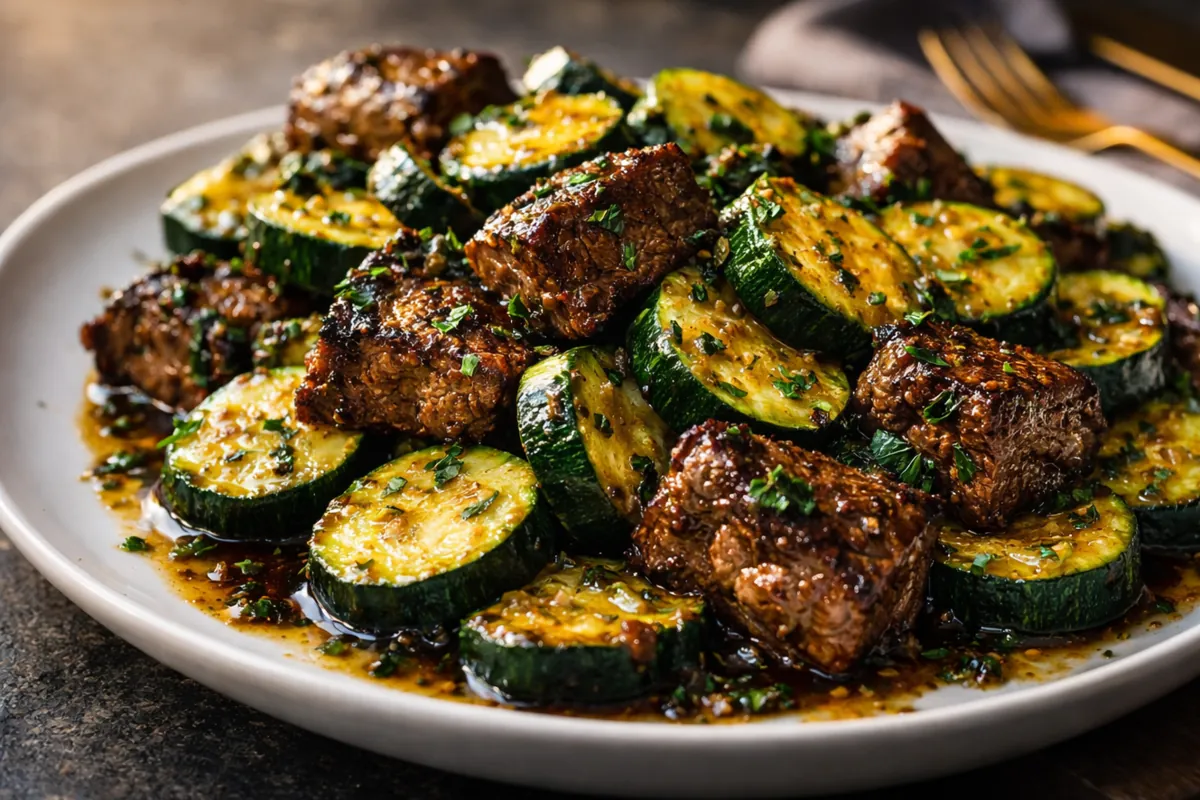
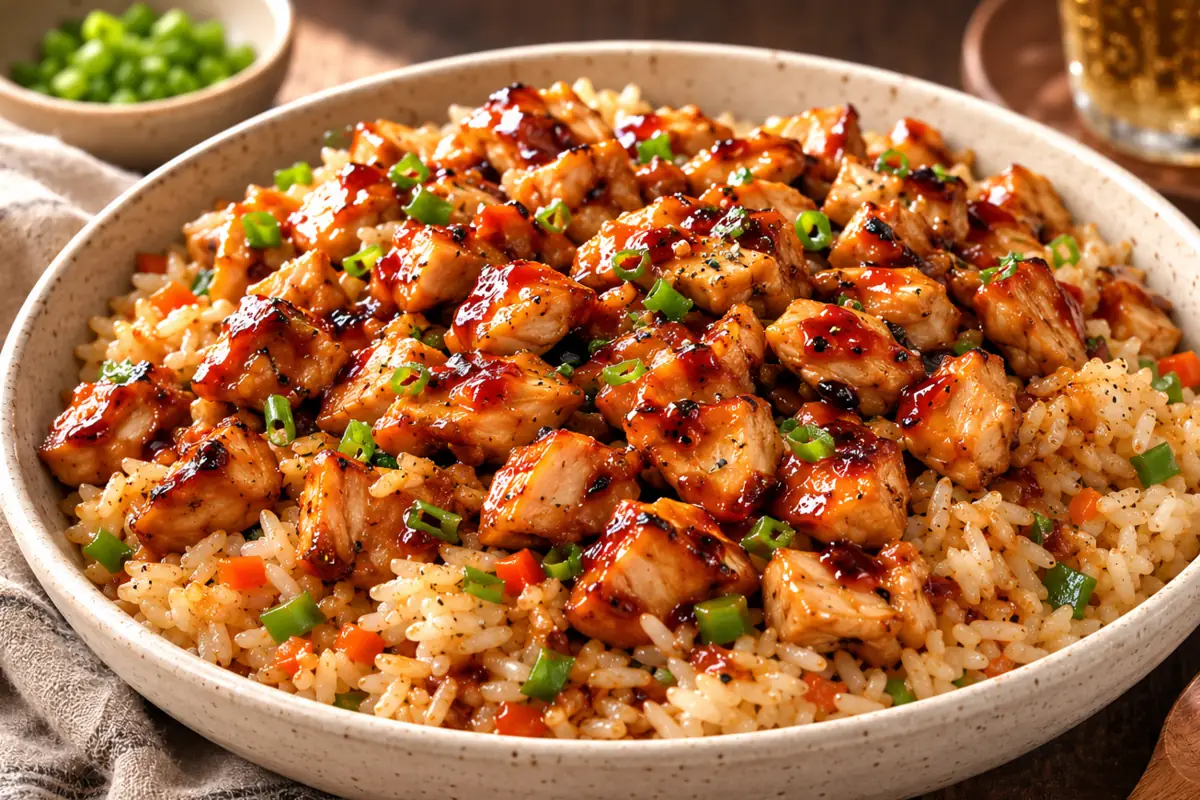
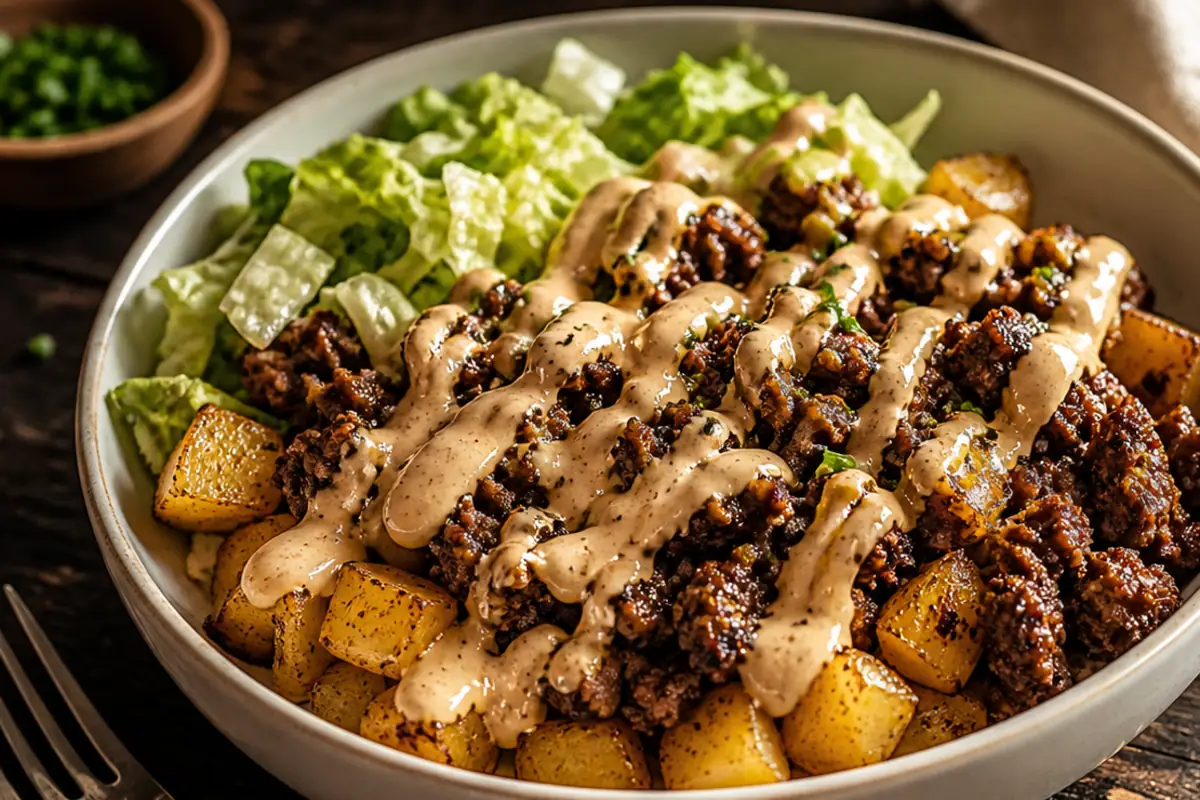
Steak cubes with browned edges, tender centers, and garlicky butter are the first thing you notice in these Hibachi Steak Bowls. Underneath, vegetable fried rice brings chewy grains, tender-crisp zucchini, sweet carrots, and mushrooms with savory browned edges.
A thin drizzle of creamy sesame sauce cools the sizzling steak and ties the whole bowl together. The active cooking takes about 35 minutes, and the vegetables cook while the steak rests.
Why You’ll Love Hibachi Steak Bowls
The best part of Hibachi Steak Bowls is the contrast. You get hot seared beef, lightly crisp rice, soft vegetables, and a cool, tangy sauce in every bite.
The steak cooks in one layer, so the cubes brown instead of steaming.
Cold cooked rice keeps the fried rice from turning soft or sticky.
Zucchini, carrots, and mushrooms make the bowl colorful without requiring a separate side dish.
The creamy sesame sauce takes about two minutes and can be mixed while the pans heat.
Leftovers hold up well for lunch, especially when the sauce stays separate.
The recipe scales easily if you use a wide skillet and brown the steak in batches.
This is the kind of dinner that feels substantial without requiring a long simmer or a sink full of dishes.
How to Make Hibachi Steak Bowls
The active cooking takes around 20 minutes once everything is cut and measured. The move that matters most is giving the steak cubes enough skillet space to sear.
If the steak releases liquid and looks gray, the pan is crowded or not hot enough. Cook in two batches if the cubes sit tightly together.
1. Mix the mayonnaise, soy sauce, rice vinegar, sesame oil, paprika, garlic powder, and water until smooth. Keep the sauce loose enough to drizzle.
2. Cut the sirloin into even 1-inch cubes. Pat them dry before seasoning so the surface can brown quickly.
3. Heat the large skillet over medium-high heat. Add the oil, then place the steak cubes in one layer.
4. Sear the steak for 2 to 3 minutes per side. Turn the pieces with tongs so several sides develop a dark crust.
5. Move the steak to a plate. Add butter and garlic to the hot skillet for 30 seconds, then spoon the mixture over the steak.
6. Cook the zucchini, carrots, and mushrooms in a second skillet for 4 to 5 minutes. The zucchini should bend slightly but still have a firm center.
7. Scramble the eggs in the open space, then add the cold rice, soy sauce, sesame oil, salt, and pepper. Toss until steaming hot.
8. Spoon the rice into bowls and arrange the steak on top. Drizzle with sauce, then add sesame seeds and green onion.
Storing and Reheating Tips
Hibachi Steak Bowls keep in the refrigerator for up to 3 days. The main texture concern is the steak, which can become chewy if reheated too long.
Store the rice and steak together if needed, but keep the creamy sesame sauce in a separate container.
Cool the food before sealing it, then refrigerate it within 2 hours of cooking.
Reheat one portion in a covered skillet with 1 tablespoon water over medium-low heat.
A microwave works too. Cover loosely and heat in 45-second bursts, stirring the rice between bursts.
Add the sauce after reheating so it stays smooth and cool.
Freezing isn’t my first choice here. The vegetables soften and the sauce can separate after thawing.
For meal prep, portion the rice, vegetables, and steak into containers, then add sauce just before eating.
Variations and Substitutions
The steak, rice, and hibachi-style sauce should stay anchored. The vegetables are the flexible part, so use what cooks quickly and can handle high heat.
Swap sirloin for strip steak, flank steak, or tenderloin. Cut any substitute into the same 1-inch cubes.
White rice works in place of brown rice. Use it cold, preferably cooked the day before.
Replace zucchini with broccoli florets, snap peas, or thinly sliced bell pepper. Broccoli needs an extra 2 minutes.
Plain Greek yogurt can replace half the mayonnaise for a tangier sauce, though the texture will be slightly lighter.
Use tamari instead of soy sauce for a gluten-free version.
Add a pinch of red pepper flakes to the sauce if you want more heat without changing the cooking method.
Avoid frozen mixed vegetables unless thawed and dried first. Extra water will soften the rice and prevent the mushrooms from browning.
Ingredient Notes
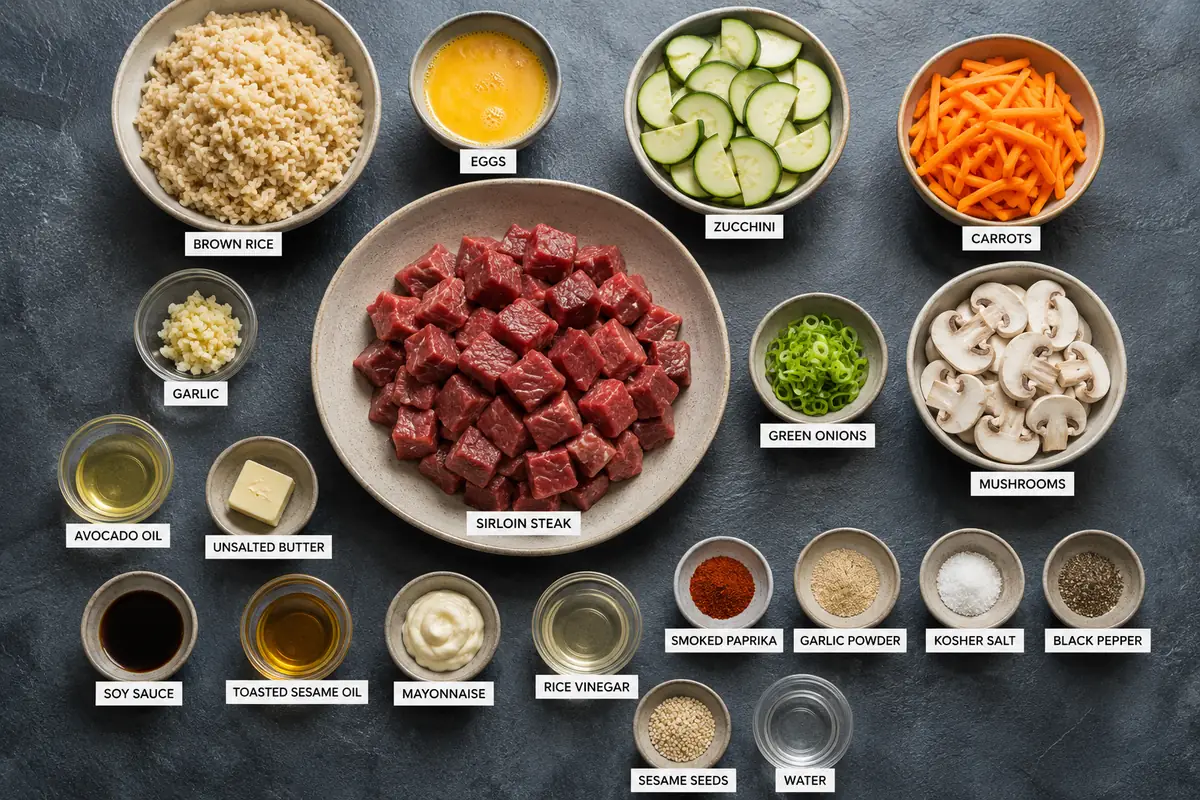
The steak enters the pan as 1-inch cubes, which gives each piece enough surface area for browning while keeping the centers tender. Patting them dry is especially useful because wet steak steams before it sears.
Sirloin gives you a good balance of tenderness, beefy flavor, and price. Don’t use stew meat here because the short cook time won’t soften it.
Cold brown rice has firm grains that separate in the skillet. Fresh hot rice tends to clump and can turn pasty.
Zucchini goes into the pan with carrots and mushrooms, but keep the pieces fairly thick. Thin zucchini slices become soft before the carrots finish.
Matchstick carrots cook quickly and add a sweet crunch. Larger pieces need more time than the steak.
Mushrooms should touch the hot skillet directly. If they’re crowded, they’ll release water and stay pale.
The egg adds savory richness and helps bind the rice slightly. Scramble it until just set before tossing in the rice.
Soy sauce seasons both the steak and rice, while sesame oil gives the sauce its toasted aroma. Low-sodium soy sauce keeps the bowl from becoming overly salty.
Expert Cooking Tips
The most common mistake is cooking the steak and vegetables in an overcrowded pan. Both need direct contact with hot metal, but the steak especially needs space for its browned crust.
Don’t do this: don’t stir the steak constantly. Let each side sit undisturbed for about 2 minutes before turning.
Use an instant-read thermometer on a larger cube. Pull the steak at 135°F for medium-rare or 145°F for medium.
Rest the steak while the rice finishes. Five minutes is enough, and the juices stay in the meat instead of running across the bowl.
If the fried rice looks dry, add a tablespoon of water and cover the skillet for 30 seconds. Steam will soften the grains without making them wet.
If the sauce is too thick, thin it with water a teaspoon at a time. If it’s too sharp, add another teaspoon of mayonnaise.
Don’t add the sauce to the hot skillet. Mayonnaise-based sauces can loosen unevenly and lose their smooth texture.
Keep the heat at medium-high for the vegetables, but reduce it slightly if the garlic starts to darken. Burned garlic will overpower the steak.
What to Serve with Hibachi Steak Bowls
These bowls already include steak, rice, eggs, and several vegetables, so sides should add freshness or acidity rather than more starch.
A quick cucumber salad with rice vinegar cuts through the buttery steak and creamy sauce.
Steamed edamame adds a simple salty side when you want more protein.
Miso soup keeps the meal light and warm without competing with the garlic and sesame flavors.
Pickled ginger or a few radishes add sharpness and a crisp bite.
For a larger spread, serve extra sauce and sliced fruit alongside the bowls.
A cold green tea or sparkling water with lime works well with the savory sauce.
Keep sides uncomplicated. The bowl has enough moving parts already, and its best texture comes from serving it hot.
FAQ
The questions below cover the spots where this recipe is easiest to misjudge: steak doneness, rice texture, and reheating.
Can I use freshly cooked rice?
Yes, but spread it on a plate and chill it briefly first. Cold rice separates more easily and absorbs less oil.
How do I keep the steak tender?
Cut the cubes evenly, pat them dry, and avoid cooking past your preferred doneness. A crowded pan can also make the meat tough.
Can I make the sauce ahead?
Make it up to 3 days ahead and refrigerate it covered. Stir in a teaspoon of water before serving if it thickens.
Can I double the recipe?
Yes, but brown the steak in two batches and use the widest skillet available for the rice. Crowding creates steamed meat and soft vegetables.
Why is my fried rice watery?
The vegetables may have released too much moisture. Cook them until their surfaces brown, and make sure frozen or washed ingredients are well dried.
Can I freeze the bowls?
The steak and rice can be frozen for up to 2 months, but the vegetables will soften and the mayonnaise sauce should be made fresh.
One Last Bite
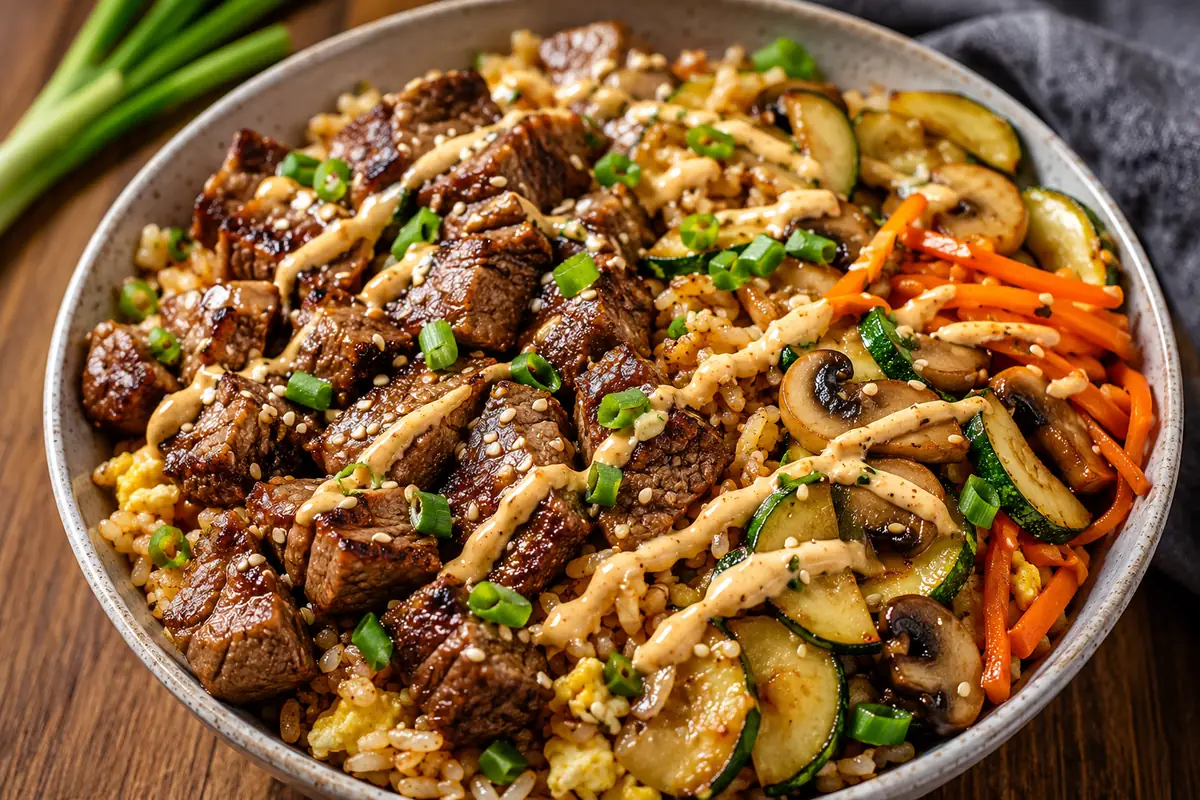
Hibachi Steak Bowls bring the browned steak, garlicky rice, and cool sesame sauce you want from takeout into a practical weeknight meal. The leftovers make a solid lunch, and the method is reliable enough to return to whenever dinner needs to feel handled.
Loaded Hibachi Steak Bowls for Easy Dinners
Loaded Hibachi Steak Bowls for Easy Dinners combine seared steak cubes, vegetable fried rice, and creamy sesame sauce in one hearty meal.
Stir the mayonnaise, soy sauce, rice vinegar, sesame oil, smoked paprika, garlic powder, and water in a small bowl. Add water a teaspoon at a time until the sauce drizzles easily.
Pat the steak cubes dry. Season with half the salt and pepper, then toss with 1 tablespoon soy sauce and 1/2 teaspoon sesame oil.
Cook
Heat a large skillet over medium-high heat. Add 1/2 tablespoon avocado oil and the steak in a single layer. Sear for 2 to 3 minutes per side, turning until browned and the thickest pieces reach 135°F for medium-rare or 145°F for medium.
Transfer the steak to a plate and add the butter and garlic to the skillet. Cook for 30 seconds, scraping up the browned bits, then spoon the garlic butter over the steak.
Heat the remaining avocado oil in a second skillet over medium-high heat. Add the zucchini, carrots, and mushrooms. Cook for 4 to 5 minutes until the zucchini is tender-crisp and the mushrooms are browned.
Push the vegetables to one side. Add the beaten eggs and scramble until just set, about 1 minute.
Add the cold brown rice, remaining soy sauce, remaining sesame oil, and remaining salt and pepper. Toss everything together for 3 to 4 minutes, breaking up clumps, until the rice is hot.
Divide the fried rice among four bowls. Arrange the steak over the top, then drizzle with the creamy sesame sauce and finish with sesame seeds and sliced green onion.
Notes
Refrigerate leftovers in airtight containers for up to 3 days, keeping the sauce separate when possible. Reheat the rice and steak in a covered skillet with 1 tablespoon water over medium-low heat; the steak is best when warmed just until hot.
Stella Rose is a recipe developer, food blogger, and founder of https://www.stellachef.com. She shares easy family-friendly recipes, meal prep ideas, and comforting homemade dishes designed for real life. Her goal is to help home cooks create delicious meals with simple ingredients and practical cooking techniques.