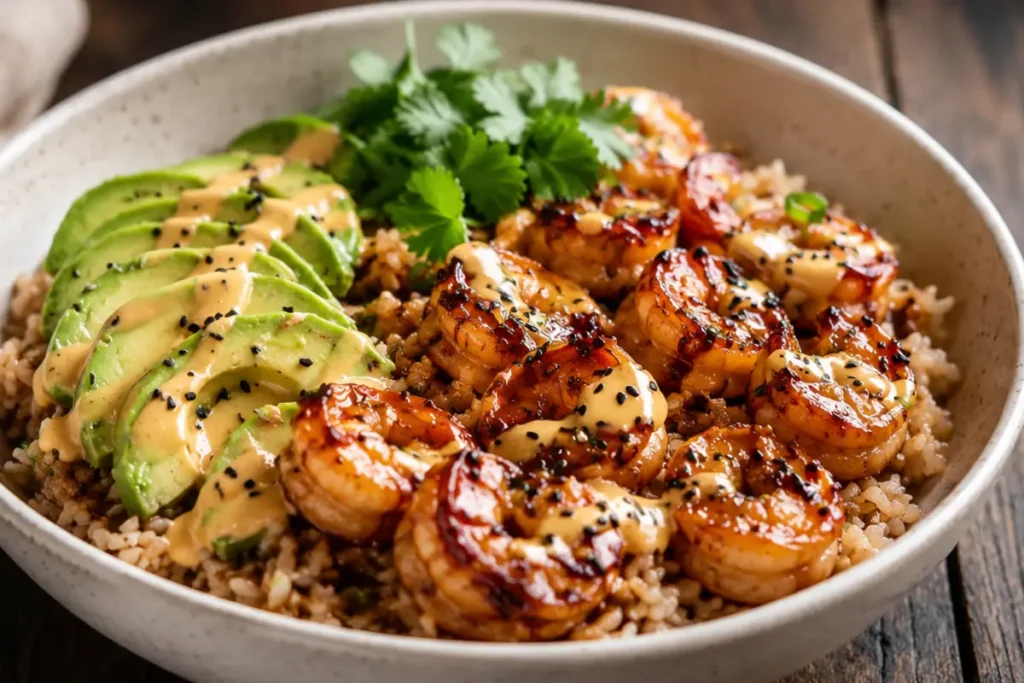
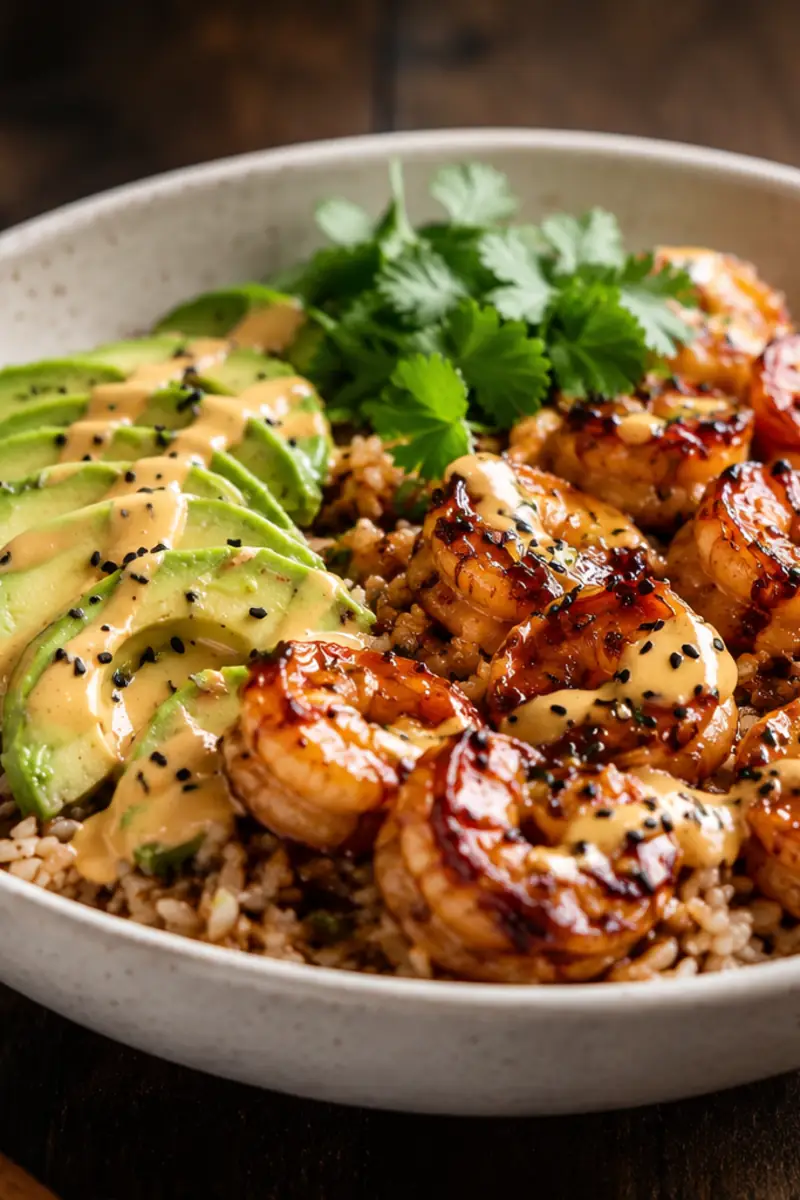
Hot rice catches every drop of glossy sauce in these Teriyaki Shrimp Rice Bowls. The shrimp stay juicy, the vegetables keep a light snap, and garlic and ginger smell incredible as the sauce bubbles.
That rich, savory-sweet bowl takes 30 minutes using cooked rice. It’s a practical answer when takeout sounds tempting but you still want something freshly cooked.
Why You’ll Love Teriyaki Shrimp Rice Bowls
A good rice bowl needs contrast, not a pile of ingredients competing for space. Here, warm rice softens the salty-sweet sauce while broccoli and carrots add color and crunch.
The whole dinner comes together in one skillet once the rice is ready.
Juicy shrimp: A quick sear keeps the centers tender before the sauce finishes cooking them.
Homemade teriyaki thickens in about two minutes, with no bottled sauce required.
Small broccoli florets and thin carrots cook at the same rate, so neither turns mushy.
Cooked or meal-prepped rice makes this a realistic 30-minute dinner.
Each bowl has plenty of visible protein without feeling heavy.
Leftovers hold for three days, making the recipe useful for next-day lunches.
How to Make Teriyaki Shrimp Rice Bowls
Plan on 15 minutes of prep and about 15 minutes at the stove. Drying the shrimp before searing is the move that matters most because wet shrimp steam instead of browning.
Pull the skillet from the heat when the shrimp are opaque and loosely C-shaped. Tight curls usually mean they’ve gone too far.
1. Whisk the sauce ingredients until the honey dissolves and the cornstarch leaves no visible lumps.
2. Pat the shrimp dry. Cut any large broccoli florets smaller so the vegetables cook quickly and evenly.
3. Sauté the broccoli and carrots for 4 to 5 minutes. Transfer them while they’re still crisp-tender.
4. Add the shrimp in one layer. Cook for 1 to 2 minutes per side, stopping when the centers are almost opaque.
5. Whisk and add the sauce. Let it bubble for 1 to 2 minutes, just until it looks glossy and coats a spoon.
6. Return the vegetables for 30 seconds, then serve everything over warm rice with green onions and sesame seeds.
Storing and Reheating Tips
Refrigerate leftovers within two hours and use them within three days. Shrimp can turn rubbery under aggressive heat, so reheating gently matters more than reheating quickly.
Freezing the assembled bowls isn’t ideal. Rice freezes well, but cooked shrimp lose their tender texture after thawing.
Store the rice separately so it doesn’t absorb all the sauce overnight.
Portion the bowls ahead for lunches, keeping the green onions and sesame seeds separate.
Microwave at 50 percent power in 30-second intervals, stirring between each interval.
For the skillet, add a teaspoon of water and warm over low heat until the sauce loosens.
Stop reheating as soon as the shrimp are hot. Continued cooking only makes them firmer.
Variations and Substitutions
The vegetables and sweetener leave room for adjustment. Keep the shrimp, rice, and soy-garlic-ginger sauce anchored so the bowl still tastes like teriyaki.
A few sensible swaps can also help use what’s already in the pantry.
Replace broccoli with snap peas or sliced bell pepper. Cook either just until crisp-tender.
Use tamari for a gluten-free sauce. Choose a reduced-sodium version when possible.
Brown sugar can replace the honey in equal volume. Whisk thoroughly so the crystals dissolve.
For more heat, add 1/4 teaspoon crushed red pepper to the sauce.
Brown rice works well, but cook it ahead since it won’t fit the same 30-minute schedule.
Coconut aminos are sweeter and less salty than soy sauce. Reduce the honey by about one tablespoon if using them.
Ingredient Notes
Cornstarch gives the teriyaki its shiny, clingy finish, but it only thickens after the sauce reaches a simmer. Small, evenly cut vegetables stay colorful while the shrimp finish cooking.
Use raw shrimp rather than precooked shrimp. Precooked ones become firm before the sauce has time to thicken.
Large shrimp are easier to sear without overcooking. Thaw frozen shrimp completely and blot away surface moisture.
Reduced-sodium soy sauce keeps the finished bowl savory without overwhelming the honey and rice vinegar.
Fresh ginger brings a peppery bite that dried ginger can’t quite match. A jarred ginger paste works in the same amount.
Unseasoned rice vinegar adds acidity without the extra sugar found in seasoned vinegar.
Toasted sesame oil is strong. One teaspoon gives the sauce a nutty aroma without taking over.
Cooked jasmine rice is soft and fragrant, though another long-grain white rice works just as well.
Expert Cooking Tips
The usual trouble starts when the shrimp remain in the skillet while a thin sauce slowly reduces. By the time that sauce thickens, the shrimp may already be tough.
Build the sauce with cornstarch so it finishes fast, then get the skillet off the heat.
Choose a wide skillet. Crowded shrimp release moisture and turn pale instead of searing.
Don’t pour sauce over wet shrimp. The excess water weakens the sauce and delays thickening.
Stir the cornstarch into cold liquid. Adding it directly to a hot skillet creates stubborn white lumps.
Keep the vegetables slightly firm during their first cook. They soften again when returned to the sauce.
Watch the curl: Loose C-shaped shrimp are done; tight circles signal overcooking.
If the sauce gets too thick, stir in water one teaspoon at a time. If it’s thin, simmer it for another 30 seconds.
Taste before adding salt. Soy sauce brands vary considerably, and the sauce becomes saltier as it reduces.
What to Serve with Teriyaki Shrimp Rice Bowls
The rice already makes this a complete meal, so sides can stay fresh and uncomplicated. Crisp, cool, or lightly acidic choices balance the rich teriyaki sauce best.
Pick one if you want a fuller spread rather than turning dinner into a project.
Cucumber salad with rice vinegar adds cool crunch and acidity.
Steamed edamame keeps the meal straightforward and adds more protein.
A cabbage slaw with a light sesame dressing brings extra texture.
Miso soup works when you want something warm without another heavy component.
Extra steamed broccoli is the easiest way to stretch the vegetables.
Orange slices or pineapple chunks make a bright, simple finish after dinner.
FAQ
Most questions come down to shrimp timing and sauce consistency. Both are easy to manage once you know what to watch for.
Can I use frozen shrimp?
Yes. Thaw them completely, remove the tails if preferred, and pat them very dry before cooking.
How do I know shrimp are done?
They should look opaque with a loose C shape. Remove the skillet from the heat before they curl into tight circles.
Why is my sauce too thin?
It may not have reached a full simmer, or the cornstarch settled before pouring. Whisk it again and simmer for another 30 to 60 seconds.
Can I make the bowls ahead?
Yes. Prepare the sauce up to three days ahead and store it covered. For meal prep, keep the rice separate from the shrimp mixture until reheating.
Can I double the recipe?
Double the sauce and rice, but cook the shrimp in two batches. Crowding the skillet makes them release water and prevents a good sear.
One Last Bite
Teriyaki Shrimp Rice Bowls deliver warm rice, tender shrimp, crisp vegetables, and enough glossy sauce to tie everything together. Once the ingredients are prepped, the skillet work moves fast, making this the kind of 30-minute dinner worth keeping in rotation.
Loaded Teriyaki Shrimp Rice Bowls for Busy Weeknights
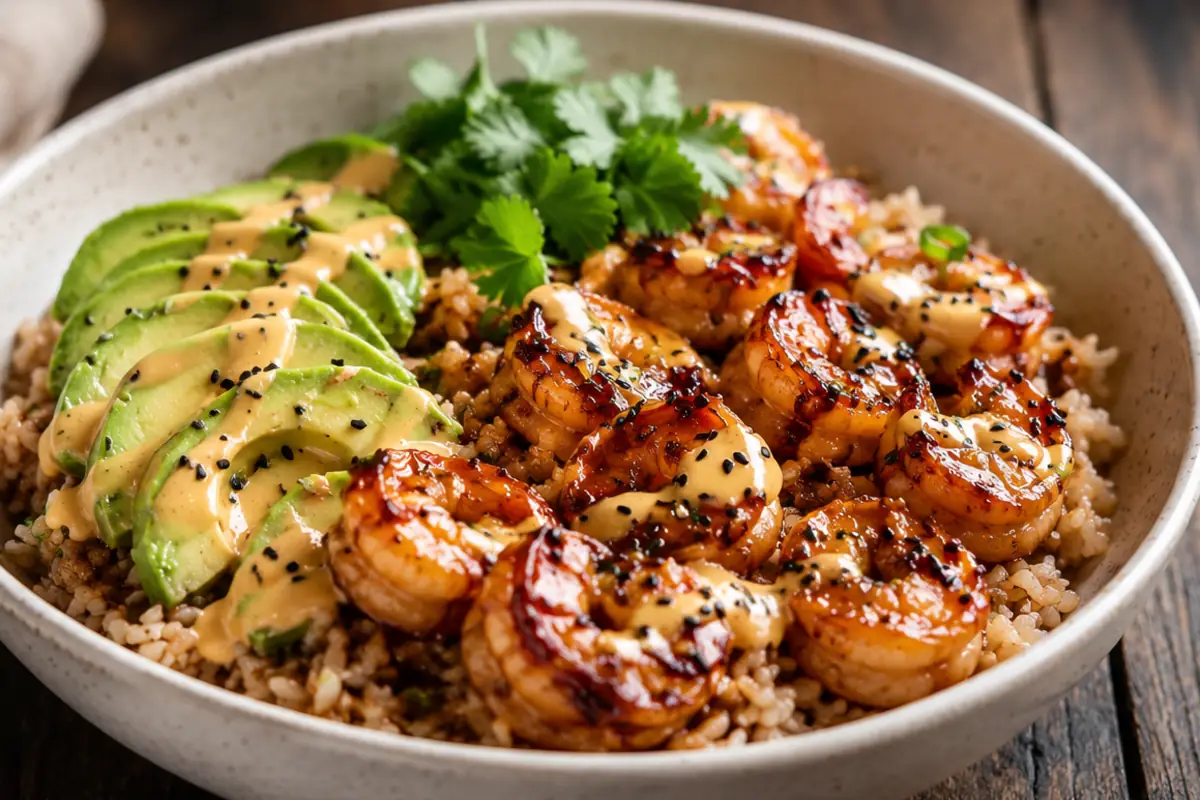
Loaded Teriyaki Shrimp Rice Bowls for Busy Weeknights combine juicy shrimp, crisp vegetables, warm rice, and glossy homemade teriyaki sauce.
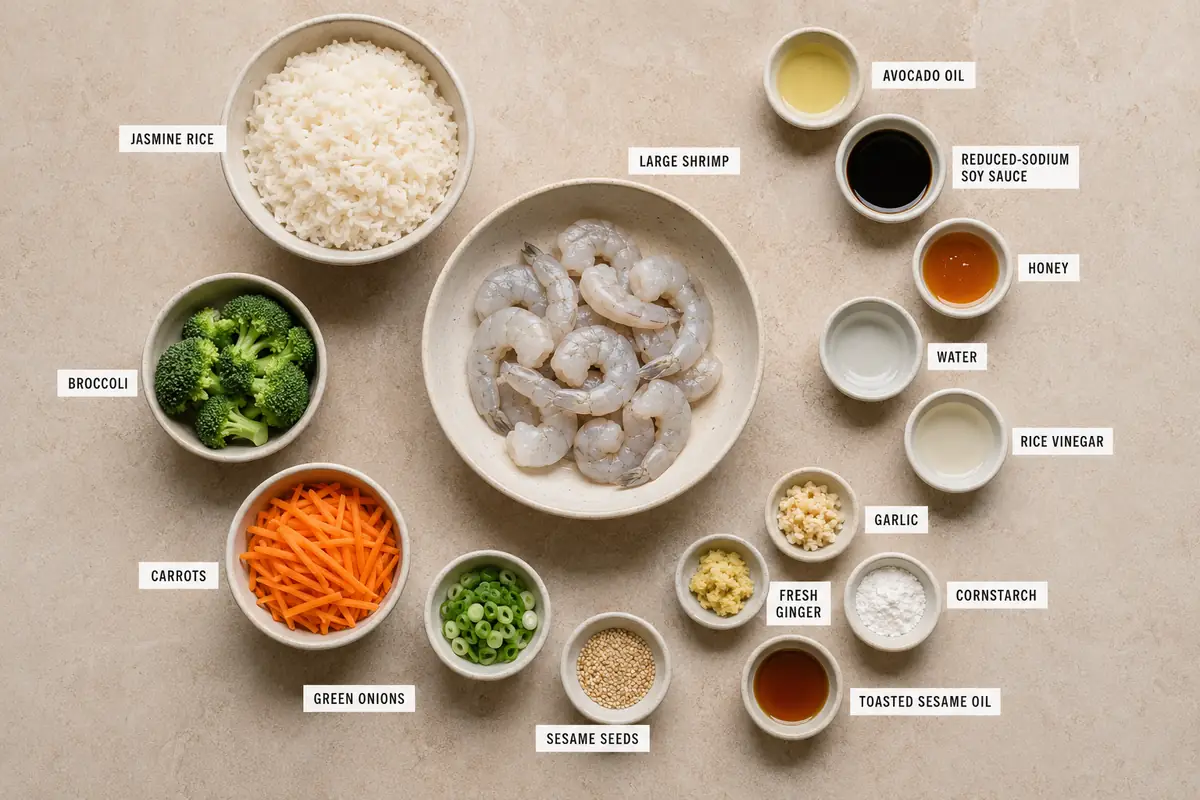
Whisk the soy sauce, honey, water, rice vinegar, garlic, ginger, cornstarch, and sesame oil until no cornstarch lumps remain.
Pat the shrimp thoroughly dry with paper towels and keep chilled while the skillet heats.
Cook and Assemble
Warm the cooked rice if needed and divide it among four serving bowls.
Heat 2 teaspoons avocado oil in a large skillet over medium-high heat. Cook the broccoli and carrots for 4 to 5 minutes, stirring occasionally, until bright and crisp-tender. Transfer to a plate.
Add the remaining avocado oil. Arrange the shrimp in one layer and cook for 1 to 2 minutes per side, until nearly opaque.
Whisk the sauce again, then pour it into the skillet. Simmer for 1 to 2 minutes, stirring, until glossy and thick enough to coat the shrimp.
Return the vegetables to the skillet and toss for 30 seconds, just until hot. Remove the pan from the heat before the shrimp curl tightly.
Spoon the shrimp, vegetables, and teriyaki sauce over the rice. Finish with green onions and sesame seeds.
Notes
Refrigerate the rice and shrimp mixture in separate airtight containers for up to 3 days. Reheat gently with a teaspoon of water to loosen the sauce. Tamari can replace the soy sauce, but taste before adding extra salt. Freezing isn’t recommended because reheated shrimp can become firm and dry.
Stella Rose is a recipe developer, food blogger, and founder of https://www.stellachef.com. She shares easy family-friendly recipes, meal prep ideas, and comforting homemade dishes designed for real life. Her goal is to help home cooks create delicious meals with simple ingredients and practical cooking techniques.