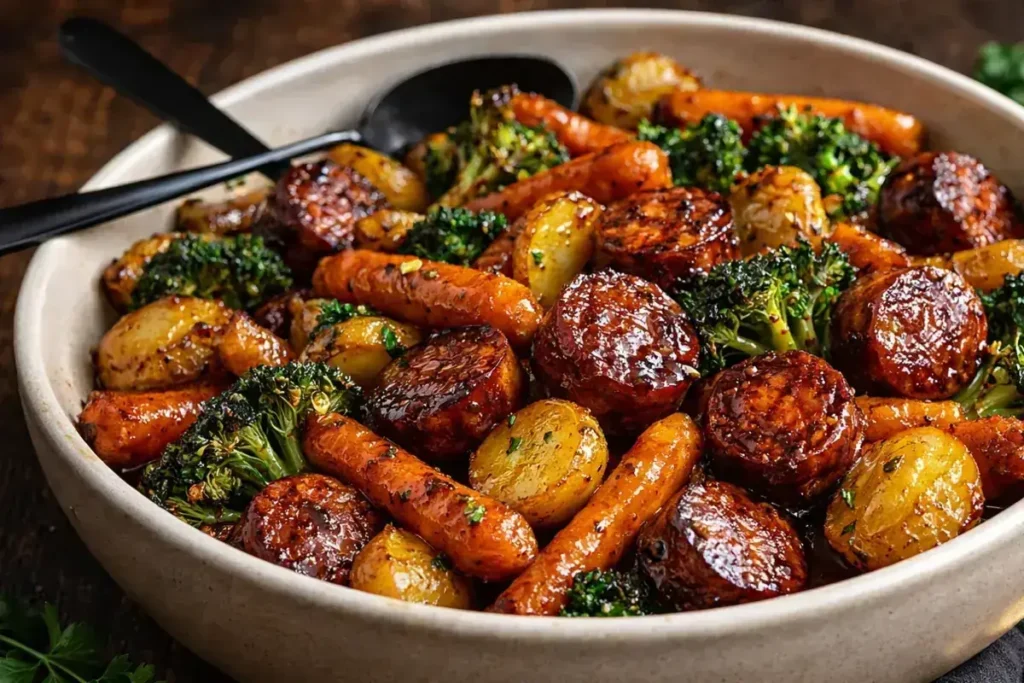
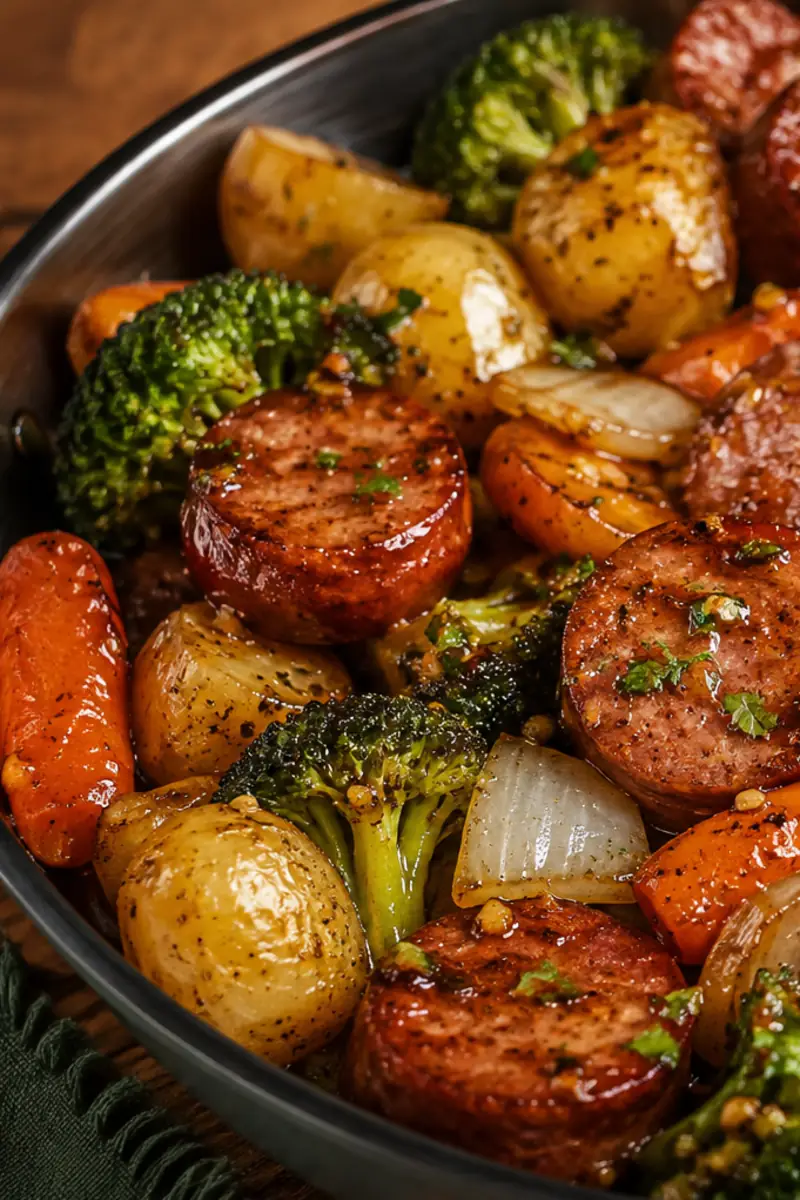
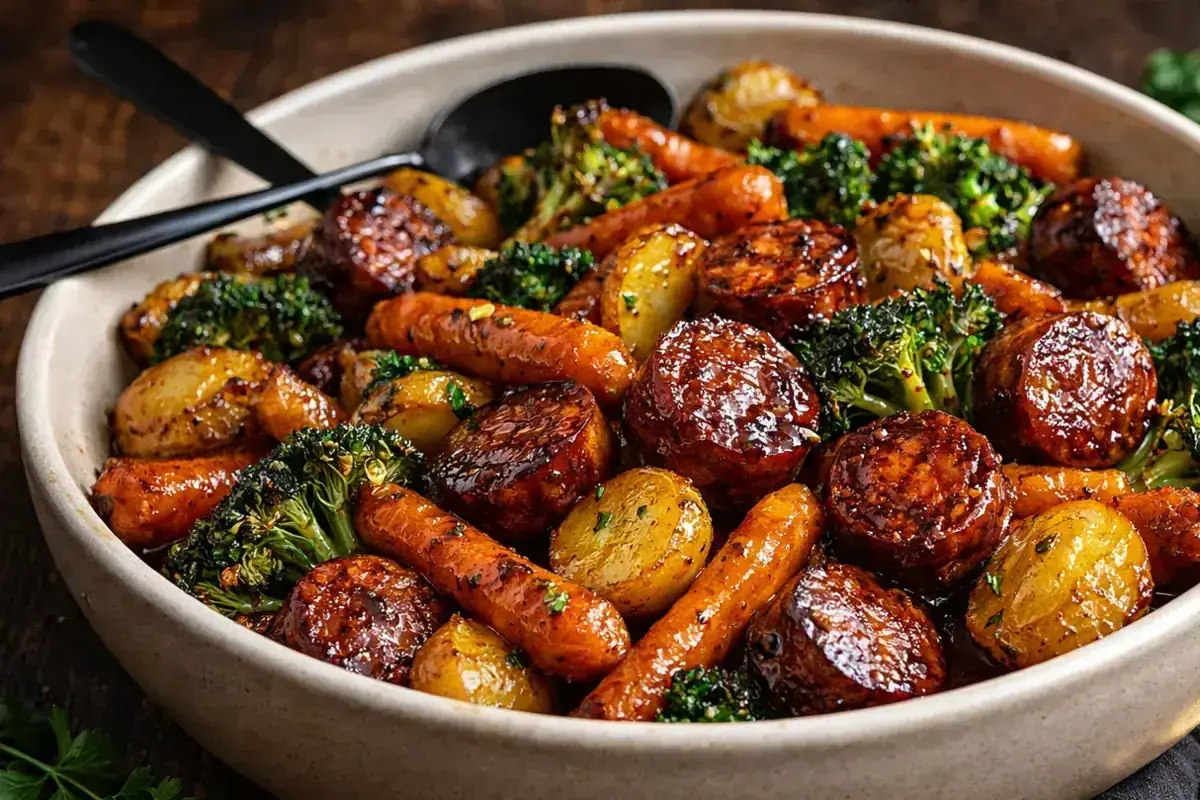
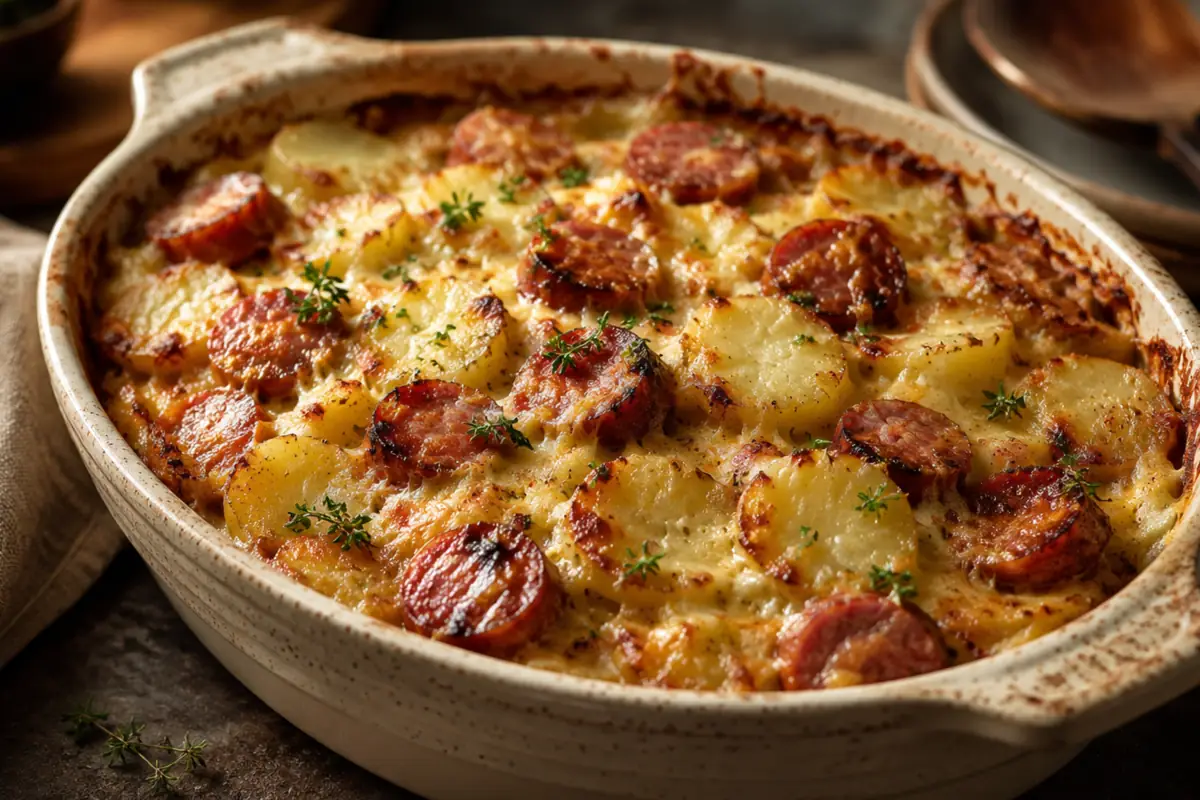
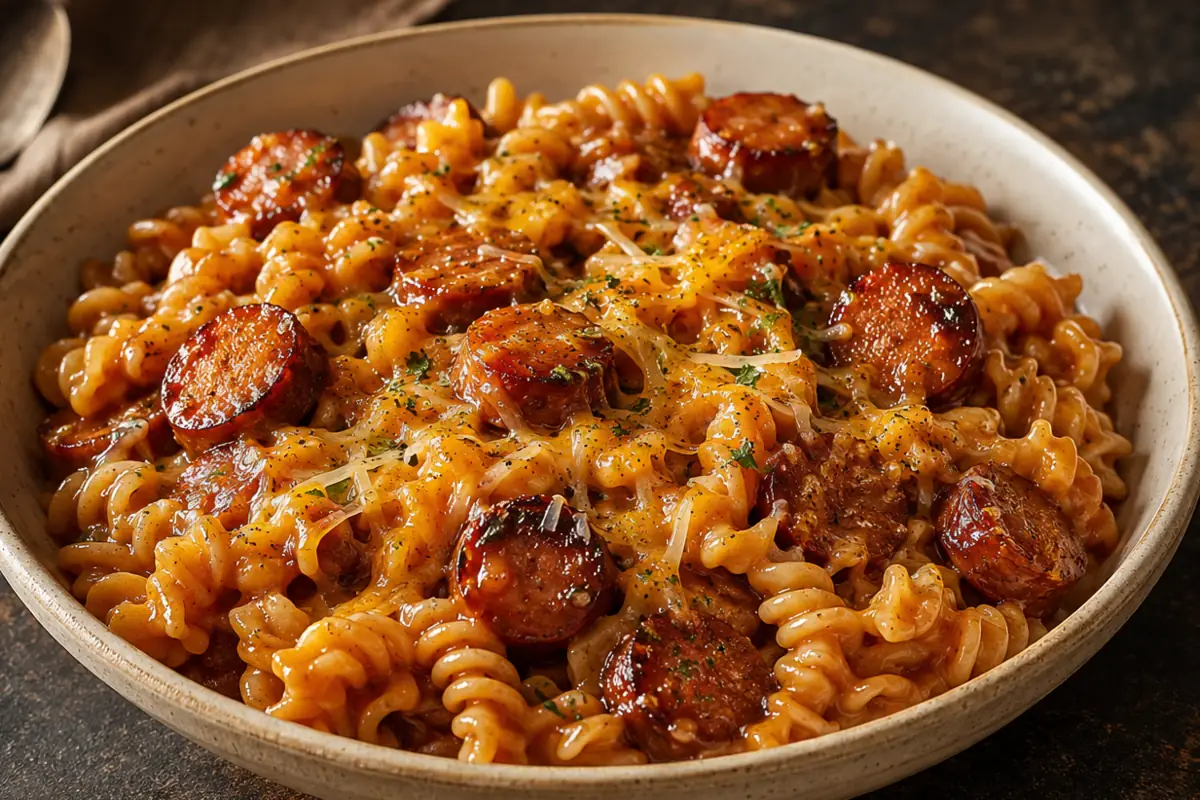
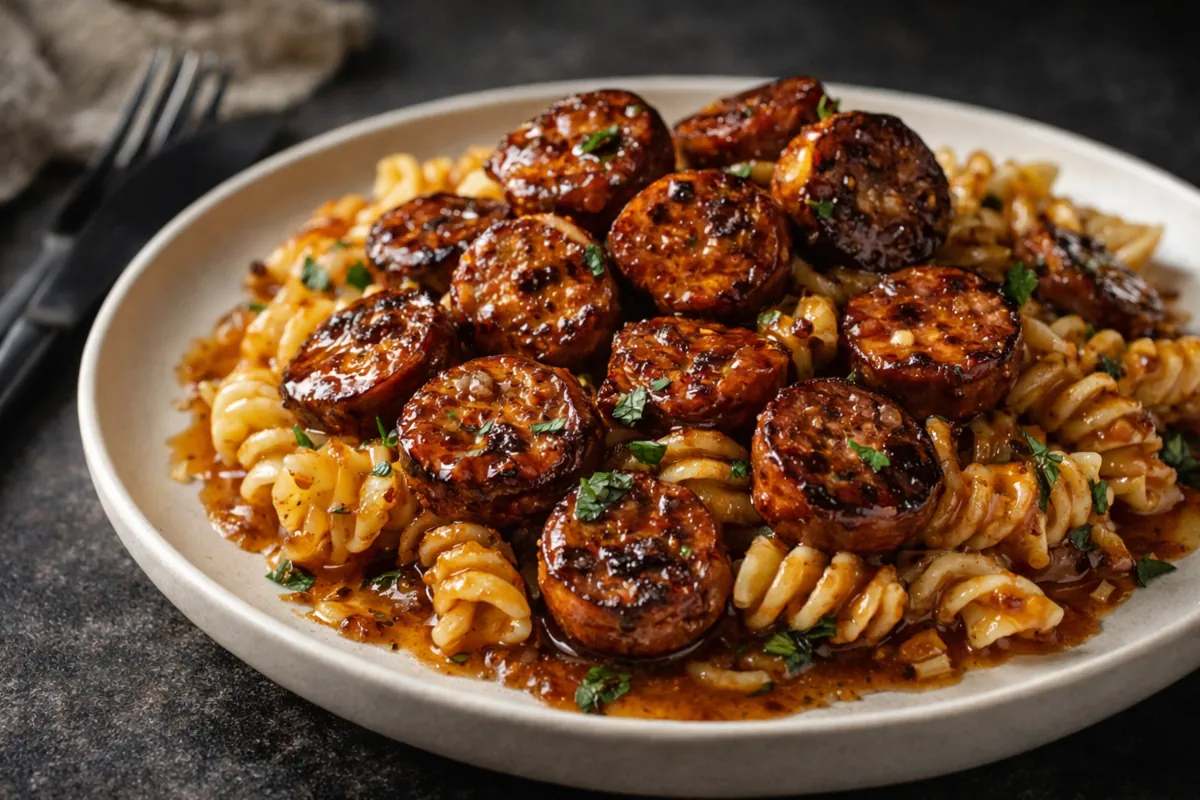
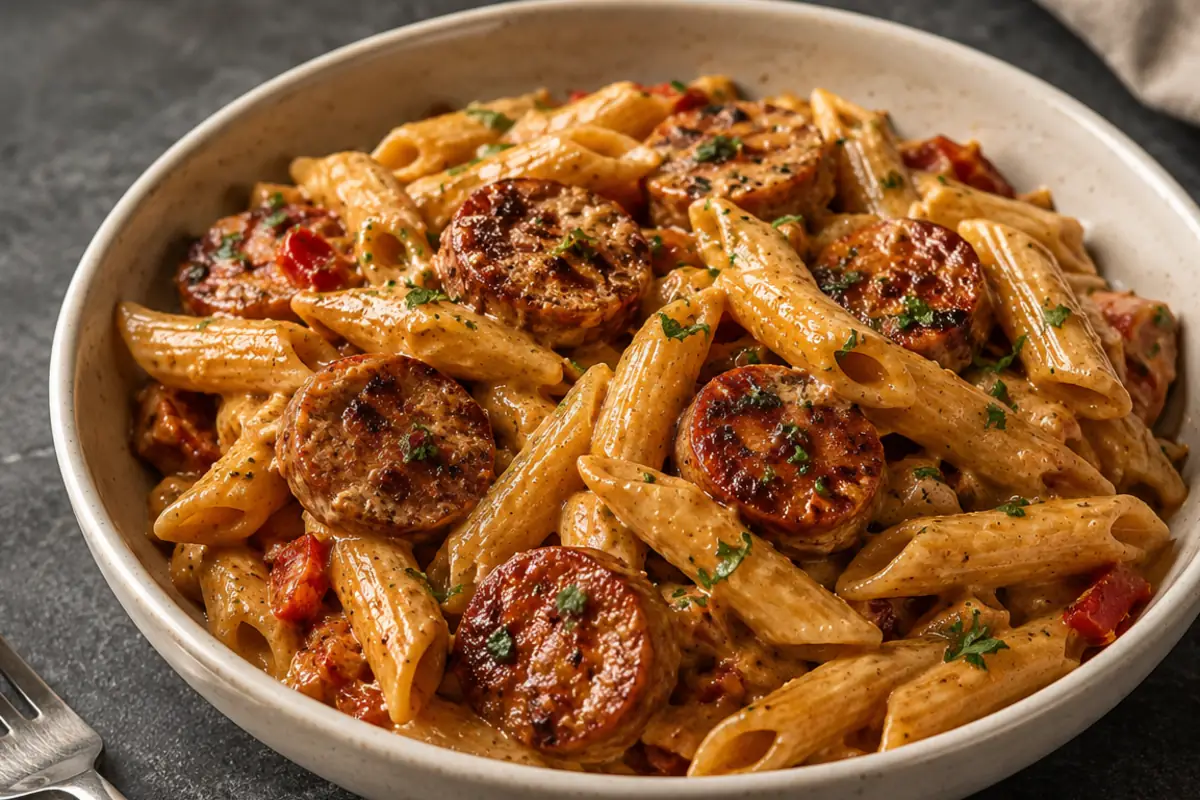
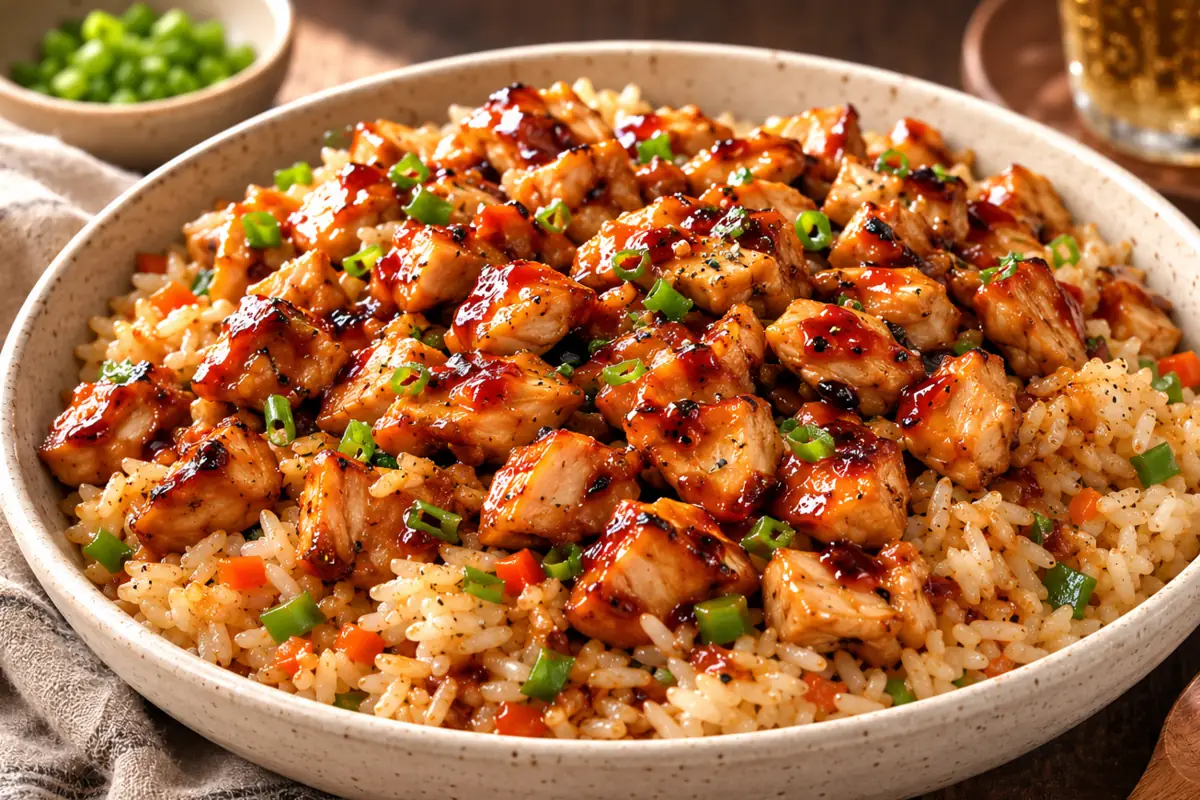
Deep-browned kielbasa edges, creamy-centered potatoes, and crisp-tender broccoli catch a hot, glossy honey-garlic glaze in every forkful. Honey Garlic Kielbasa: The Ultimate One Pan Family Dinner smells smoky and garlicky, with enough sweetness to round out the savory sausage.
The skillet handles everything in a sensible order, so the potatoes soften without the broccoli going limp. Dinner lands on the table in 35 minutes, with no separate saucepot to wash.
Why You’ll Love Sticky Honey Garlic Kielbasa
Everything cooks in the same skillet, but not all at once. That small bit of sequencing keeps the sausage browned and the vegetables distinct.
Thick kielbasa rounds develop broad seared surfaces, so they taste smoky and meaty instead of merely warmed.
Halved potatoes and whole baby carrots steam under the lid, trimming cook time while helping both hold their shape.
Broccoli joins after the firm vegetables are nearly done. It stays bright with a little bite.
Honey, soy sauce, Dijon, and vinegar make a glossy sauce with sweetness, savory depth, and a clean tang.
The complete meal takes 35 minutes. Cleanup stays limited to one skillet, two small bowls, and a cutting board.
The glaze settles into the sausage overnight, so next-day portions are especially good.
How to Make Sticky Honey Garlic Kielbasa
Set aside 15 minutes for prep and about 20 minutes at the stove. The move that matters is removing the sausage once its cut faces are deep brown. Leaving it in the skillet would crowd the vegetables and soften that seared surface.
The potatoes should be fork-tender before the sauce enters the pan.
1. Whisk together the honey, soy sauce, garlic, Dijon, vinegar, paprika, and pepper. Make a separate slurry with cornstarch and 2 tablespoons broth.
2. Pat the kielbasa dry, then sear the rounds in oil over medium-high heat. Turn once and remove them after 4 to 5 minutes.
3. Add the potatoes, whole baby carrots, and onion. Let them cook briefly before pouring in the remaining broth and covering the skillet for 7 minutes.
4. Add the broccoli once the potatoes are nearly tender. Cover for 2 minutes, then uncover and cook until most of the broth evaporates.
5. Return the kielbasa and pour in the honey mixture. After a short simmer, stir in the slurry and toss until the sauce turns glossy.
Storing and Reheating Tips
The cooked skillet keeps in the refrigerator for up to four days. Freezing works for up to two months, although the potatoes become softer and the broccoli loses some bite.
The main reheating risk is scorching the concentrated glaze before the kielbasa warms through.
Cool leftovers promptly and refrigerate them in a shallow, covered container.
Reheat on the stove over medium-low heat with a tablespoon of water or broth. Stir often and stop once the sausage is hot.
For the microwave, cover loosely and use 45-second intervals at 70 percent power.
Keep meal-prep portions of broccoli slightly firm during the original cook. They’ll finish softening when reheated.
Thaw frozen portions overnight when possible. Gentle skillet reheating gives the sauce a better texture than high microwave heat.
Variations and Substitutions
The type of fully cooked kielbasa is flexible, but keep the smoked sausage and honey-garlic glaze as the anchors. Thick rounds also matter because thin slices dry out before the potatoes finish.
Pork or beef kielbasa works well. Spoon out excess rendered fat before adding the vegetables.
Small red potatoes or fingerlings can replace gold potatoes. Cut them into evenly sized halves so the timing stays close.
Regular carrots work in place of baby carrots. Cut them into 1/2-inch diagonal pieces so they soften in the covered phase.
Cauliflower can replace broccoli, but give it an extra minute or two under the lid.
Gluten-free tamari can replace soy sauce in the same amount.
For more heat, add 1/4 teaspoon crushed red pepper to the glaze. It sharpens the sweetness without covering the garlic.
Ingredient Notes
Kielbasa releases some fat as it browns, which helps season the vegetables later. Dry cut surfaces sear more cleanly, while honey becomes tacky only during the final minutes.
Lean turkey kielbasa keeps the skillet from becoming greasy while still providing plenty of smoky flavor.
Baby gold potatoes have thin skins and creamy centers. Halving them exposes a flat surface that can pick up color.
Whole baby carrots stay firm enough to handle the covered cook. Choose pieces of similar thickness for even results.
Onion softens into the broth, while late-added broccoli keeps the skillet from becoming uniformly soft.
Honey provides the sticky finish. Soy sauce, Dijon, and vinegar keep that sweetness from tasting flat.
Cornstarch tightens the remaining broth quickly. Stir the slurry immediately before adding it because the starch settles in the bowl.
Expert Cooking Tips
The most common mistake is adding the sauce before the potatoes finish. Honey thickens quickly and can burn while you wait for firm vegetables to soften.
Don’t do this: put damp kielbasa into a cool skillet. Moisture and low heat cause steaming instead of browning.
Use a wide skillet with a fitted lid. A smaller pan traps too much liquid and leaves little room for the potatoes to touch the surface.
Keep the potato halves close in size. Large pieces can remain firm after the carrots and broccoli are ready.
Let most of the broth evaporate before adding the honey mixture. Too much liquid produces a thin, diluted sauce.
If the glaze clings too tightly, loosen it with a spoonful of warm water. If it looks thin, let it bubble for another 30 seconds.
Taste before adding any salt. Kielbasa, soy sauce, and broth can supply all the seasoning the skillet needs.
What to Serve with Sticky Honey Garlic Kielbasa
The skillet already covers protein, vegetables, and potatoes. A cool or acidic side balances the sweet-savory glaze, while bread helps catch the sauce.
Keep the rest of the table straightforward.
Cucumber salad with dill and vinegar adds a cold, crisp contrast.
Vinegar-dressed cabbage slaw works especially well with smoky sausage.
A leafy green salad with lemon vinaigrette brings freshness without competing with the garlic.
Warm dinner rolls are useful for picking up the glaze left on the plate.
Steamed rice can stretch the skillet into extra portions. Serve fewer potatoes per plate if you don’t want two starches.
FAQ
The usual concern is whether every vegetable can finish at the right time. Starting the firm vegetables first keeps the timing under control.
Can I use pork kielbasa?
Yes. Pork kielbasa browns well but usually releases more fat, so remove any large excess before cooking the vegetables.
Why are my potatoes still firm?
They may be larger than the recipe expects, or the lid may not seal tightly. Add 2 tablespoons broth, cover, and cook for another 3 to 5 minutes.
Can I make this ahead?
Cook it up to two days ahead, leaving the broccoli slightly firmer than usual. Reheat slowly so the kielbasa stays tender and the glaze doesn’t scorch.
Can I double the recipe?
Use two large skillets or brown the kielbasa in batches and cook the vegetables in a wide Dutch oven. A doubled batch will take longer than 35 minutes.
How do I loosen thick glaze?
Remove the skillet from the heat and toss in warm water, one tablespoon at a time. The glaze loosens quickly, so add only what it needs.
One Last Bite
Honey Garlic Kielbasa: The Ultimate One Pan Family Dinner brings smoky sausage, creamy potatoes, and glossy garlic sauce together without making the cook juggle pans. Once you’ve used the covered steam and quick final glaze, it’s an easy dinner to keep in regular rotation.
Honey Garlic Kielbasa: The Ultimate One Pan Family Dinner
Honey Garlic Kielbasa: The Ultimate One Pan Family Dinner pairs browned turkey kielbasa with tender potatoes, carrots, broccoli, onion, and a glossy honey-garlic skillet glaze.
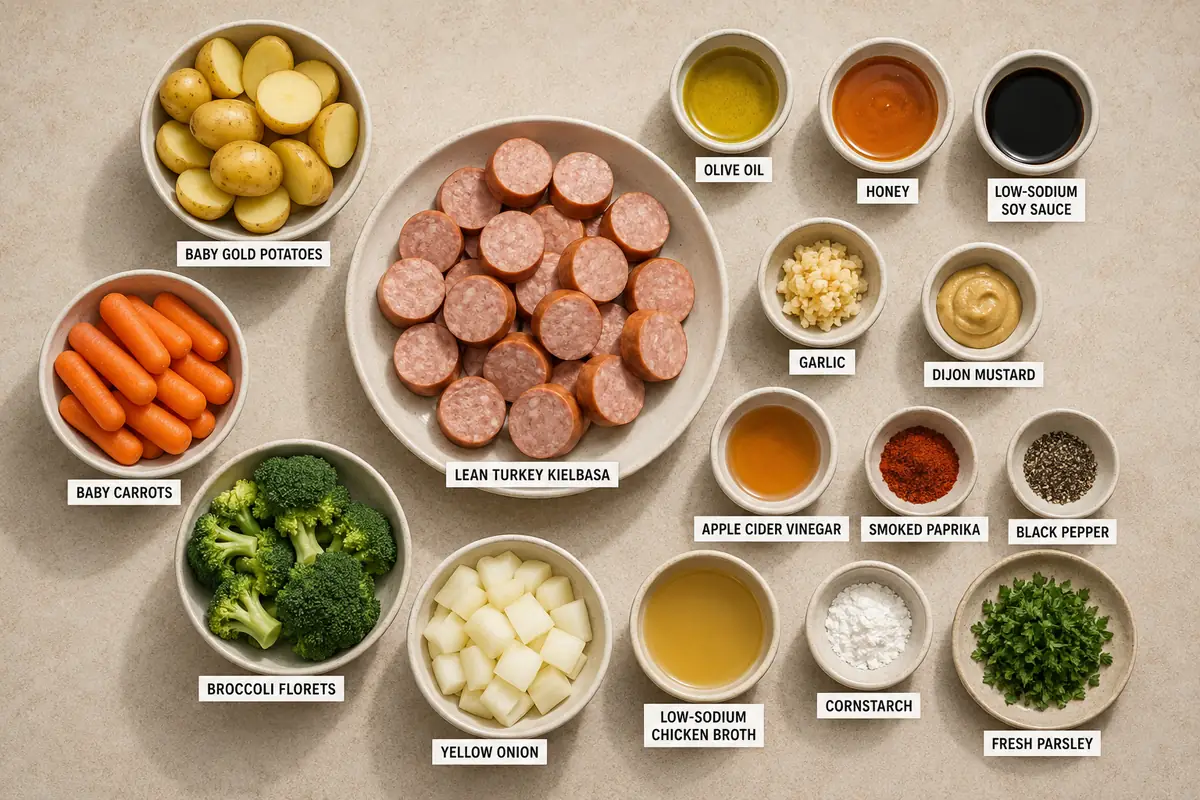
24ounceslean turkey kielbasacut into 1-inch rounds
12ouncesbaby gold potatoeshalved
8ouncesbaby carrotsleft whole
10ouncesbroccoli floretslarge pieces
1smallyellow onion1-inch pieces
1tablespoonolive oildivided
2tablespoonshoneyfor glaze
3tablespoonslow-sodium soy saucefor glaze
4clovesgarlicminced
1tablespoonDijon mustardfor glaze
1tablespoonapple cider vinegarfor glaze
1/2teaspoonsmoked paprikafor seasoning
1/4teaspoonblack pepperfreshly ground
1/2cuplow-sodium chicken brothdivided
2teaspoonscornstarchfor slurry
1tablespoonfresh parsleychopped, optional
Equipment
12-Inch Lidded Skillet
Cutting board
Chef'S Knife
2 Small Bowls
whisk
tongs
Method
Whisk the honey, soy sauce, garlic, Dijon mustard, vinegar, paprika, and black pepper in a small bowl. In the second bowl, whisk the cornstarch with 2 tablespoons chicken broth.
Pat the kielbasa rounds dry. Heat a large lidded skillet over medium-high heat for 1 minute, then add 2 teaspoons olive oil.
Arrange the kielbasa cut-side down. Brown for 4 to 5 minutes, turning once, then transfer to a plate.
Add the remaining oil, potatoes, carrots, and onion. Cook for 2 minutes, keeping most potatoes cut-side down.
Pour in the remaining broth. Cover and cook for 7 minutes, until the potatoes are nearly tender.
Add the broccoli and cover for 2 minutes. Uncover and cook for 1 to 2 minutes, until the broccoli is crisp-tender and most broth has evaporated.
Return the kielbasa to the skillet and pour in the honey mixture. Toss and simmer for 1 minute.
Stir the cornstarch slurry again, then add it to the skillet. Toss for 30 to 60 seconds, until the glaze is glossy and coats the ingredients. Remove from heat and add parsley if using.
Notes
Refrigerate leftovers for up to 4 days or freeze for up to 2 months, noting that the potatoes and broccoli soften after freezing. Reheat gently with a spoonful of water or broth. Pork or beef kielbasa can replace turkey kielbasa, but may release more fat.
Mia Olivia is a food writer and recipe contributor who loves creating approachable recipes that fit busy lifestyles. From quick weeknight dinners to crowd-pleasing comfort foods, she focuses on helping readers cook with confidence and enjoy more time around the table.