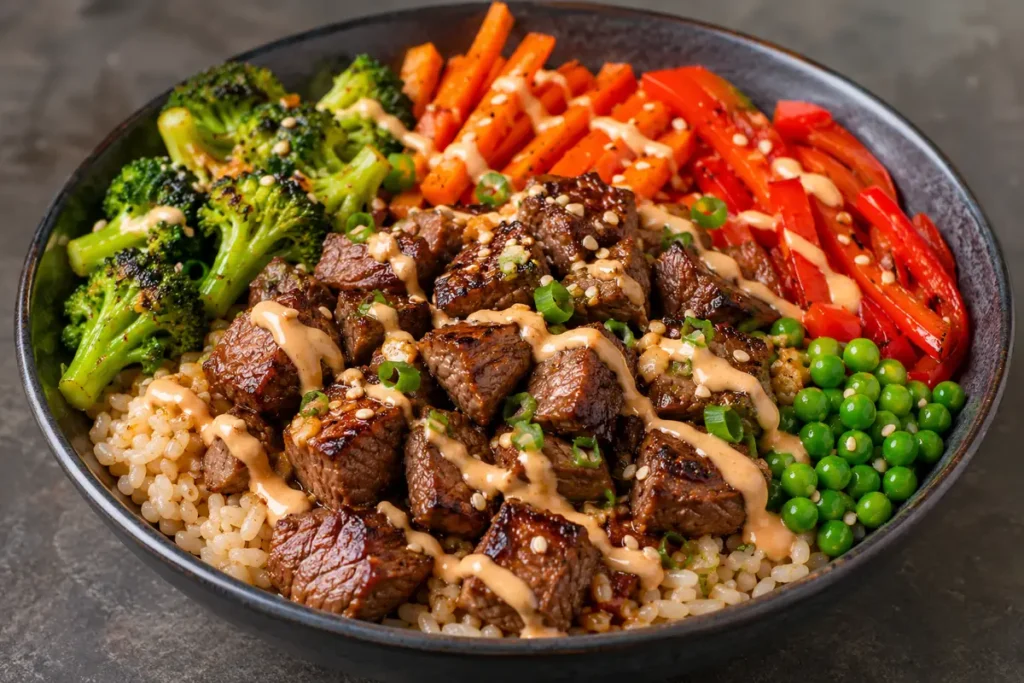
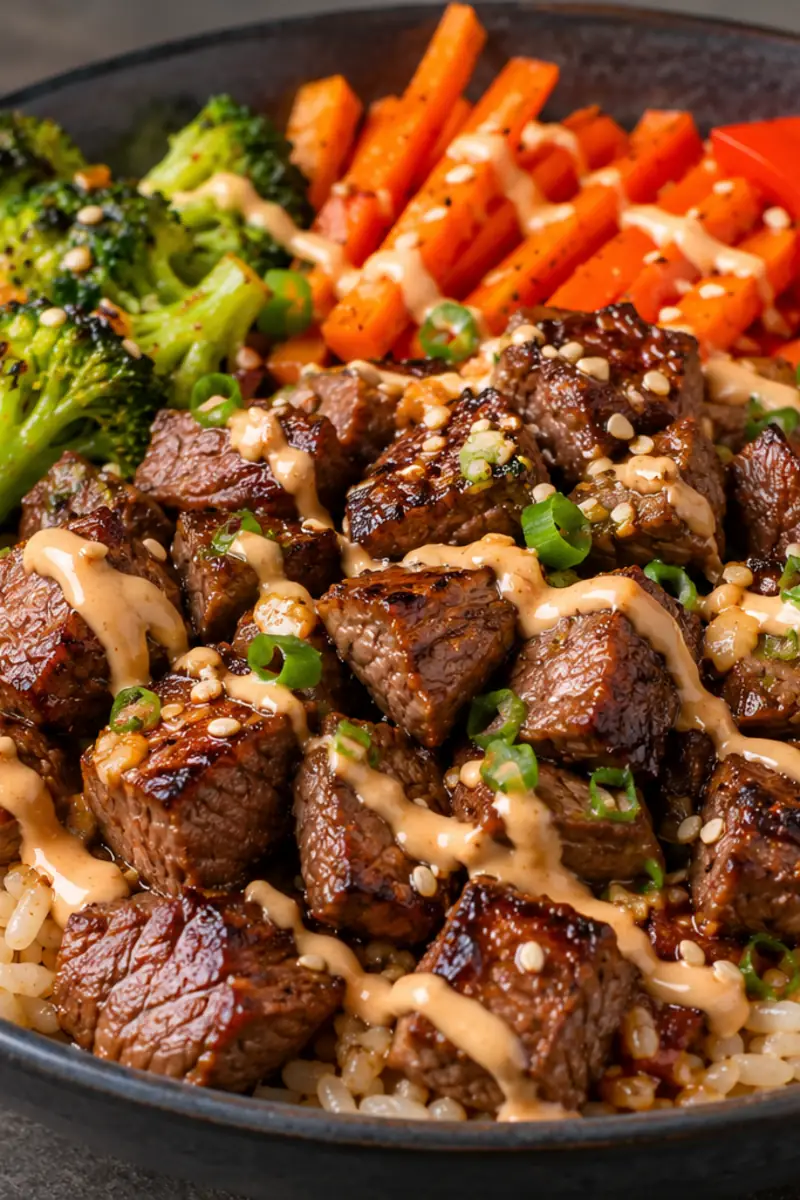
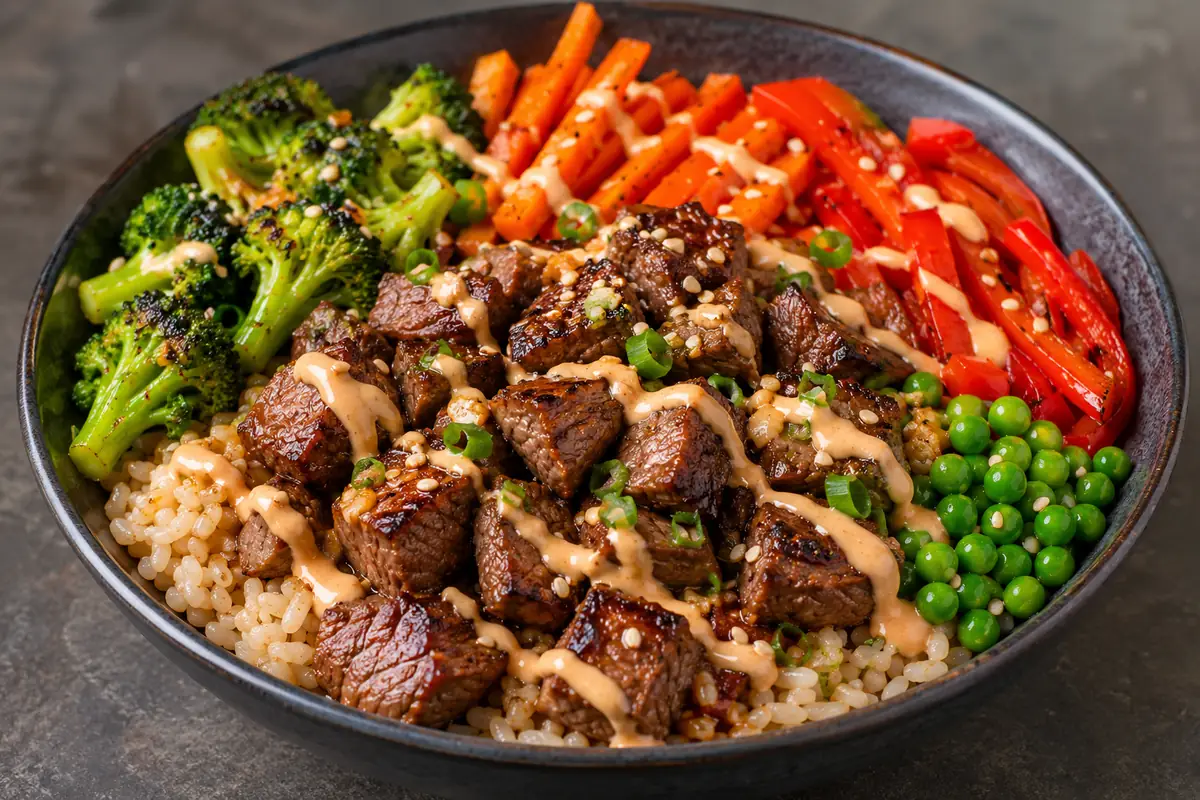
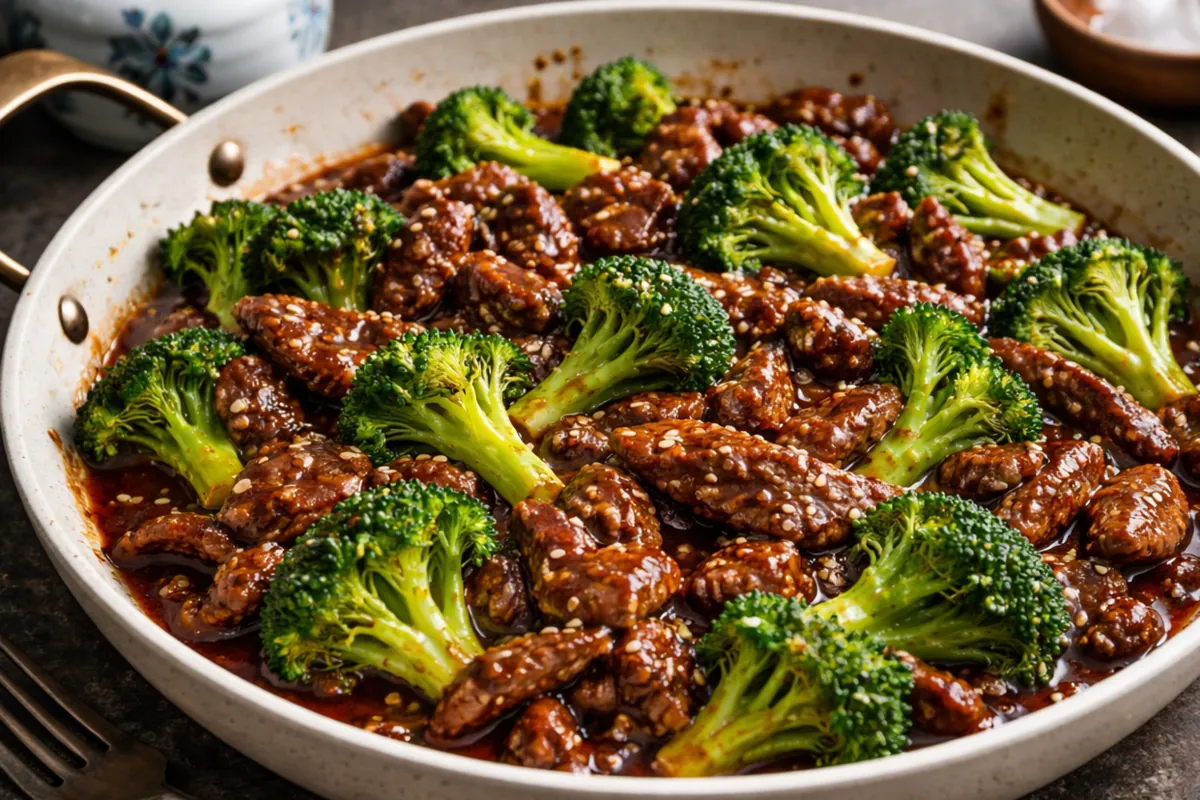
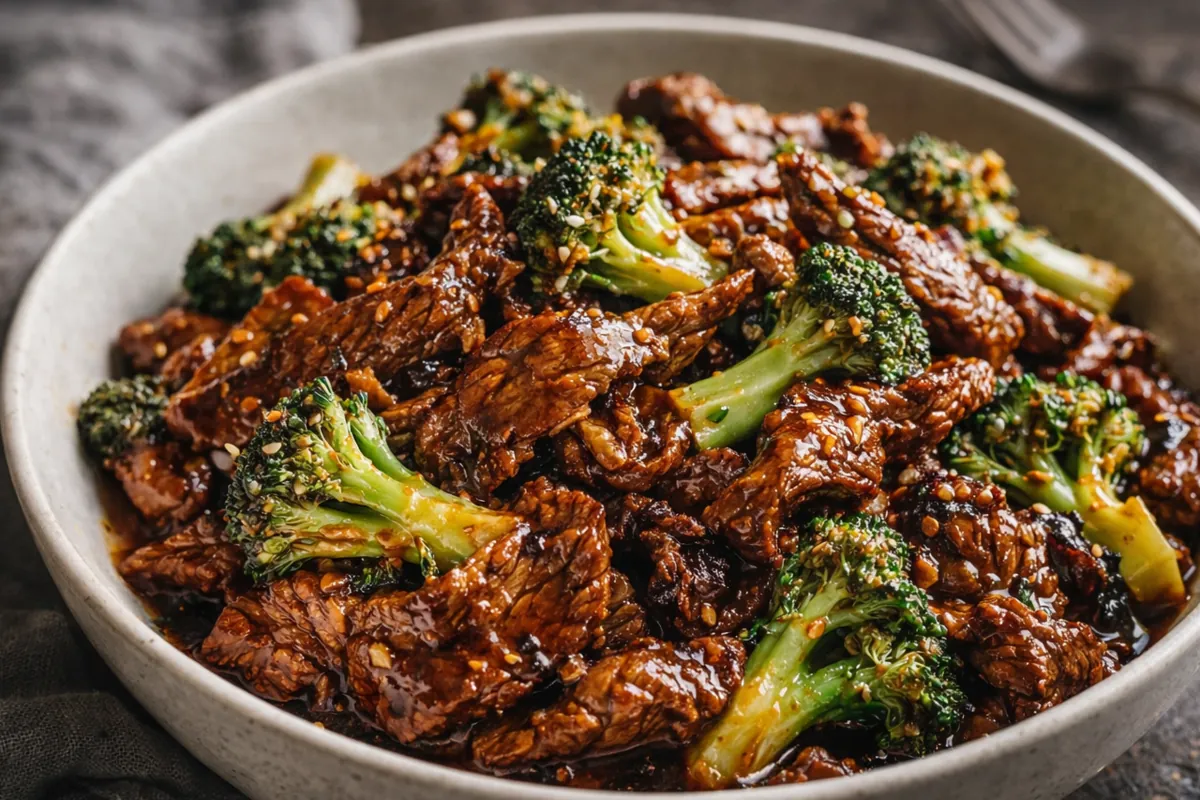
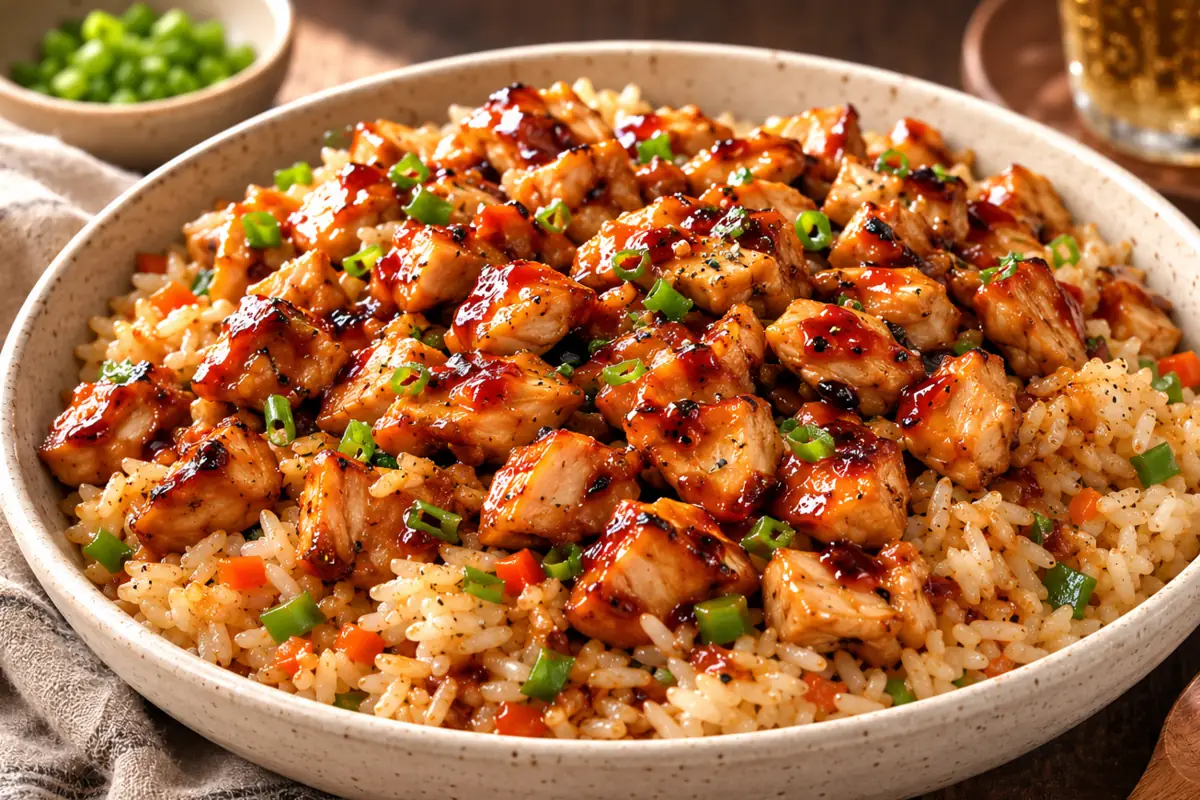
Hibachi Steak Bowls pile glossy, browned steak cubes over warm rice with crisp-tender broccoli, sweet carrots, peppers, and bright green peas. The garlic-scented beef is savory and juicy, while the cool creamy sauce cuts through every rich bite.
This is the kind of dinner that feels like takeout without waiting for takeout. Everything comes together in one skillet in about 35 minutes, and the vegetables keep enough bite to make the bowl feel fresh.
Why You’ll Love Hibachi Steak Bowls
The best part is the contrast. You get deeply browned steak, warm rice, vegetables with a little snap, and a tangy sauce that brings the whole bowl together.
Sirloin stays affordable and cooks quickly when cut into 1-inch cubes.
Two steak batches give the beef room to brown instead of steam.
The sauce takes about a minute to whisk and can be made ahead.
Brown rice, peas, broccoli, carrots, and peppers make the bowls easy to scale up.
Leftovers hold well when the steak and sauce stay separate from the rice.
A hot skillet builds the savory browned edges that make this dinner worth repeating.
You can also adjust the rice and vegetables based on what is already in the refrigerator. The steak, garlic, soy sauce, and creamy sauce are the anchors.
How to Make Hibachi Steak Bowls
Active prep takes about 15 minutes, including the sauce and vegetable cutting. The most important move is keeping the skillet hot and the steak cubes in a single layer.
Don’t skip the thermometer if you prefer tender steak. One-inch cubes cook quickly, and their browned edges can look ready before the centers reach your preferred doneness.
1. Whisk the mayonnaise, Greek yogurt, ketchup, sriracha, rice vinegar, and water until smooth. Set the sauce aside.
2. Pat the steak cubes dry, then season them with soy sauce, Worcestershire sauce, pepper, and salt.
3. Stir-fry the broccoli, carrots, and bell pepper in avocado oil until the vegetables are bright and just tender.
4. Add the peas and half the garlic for the final minute. Move the vegetables out of the skillet.
5. Melt half the butter, then sear half the steak cubes without moving them for 2 minutes.
6. Turn the cubes and cook until browned on several sides and 140°F for medium. Repeat with the remaining butter and steak.
7. Add the remaining garlic during the last 30 seconds of the second batch so it turns fragrant without burning.
8. Layer warm rice, vegetables, and steak in bowls. Add the sauce and sesame seeds at the end.
Storing and Reheating Tips
These bowls keep in the refrigerator for up to 4 days. The sauce is the easiest component to make ahead, while the steak needs gentle reheating to avoid turning firm.
Store the steak, vegetables, rice, and sauce in separate containers when possible.
Reheat rice with a teaspoon of water and a loose cover so it doesn’t dry out.
Warm the vegetables in a skillet over medium-low heat or in the microwave.
Add the steak only during the last minute of reheating.
Keep the sauce cold and spoon it over the warm bowl just before eating.
Freeze the steak, rice, and vegetables for up to 2 months, but leave out the sauce because the yogurt and mayonnaise may separate.
For meal prep, portion the rice and vegetables first, then add the steak after everything has cooled. That keeps condensation from softening the browned edges.
Hibachi Steak Bowls Variations to Try
The steak and skillet method should stay anchored, but the rice, vegetables, and sauce have some room to move. Make swaps based on cooking time rather than adding everything at once.
Use cooked white rice instead of brown rice for a softer, more traditional hibachi-style base.
Ribeye gives you richer steak bites, while top sirloin keeps the bowl a little leaner.
Tamari works in place of soy sauce if you need a gluten-free option.
Swap the bell pepper for thinly sliced zucchini, adding it during the final 2 minutes so it doesn’t turn soft.
Use cayenne or a few drops of hot sauce in place of sriracha, then adjust the sauce before serving.
Add sliced mushrooms with the broccoli if you like a deeper savory flavor. Cook them until their moisture has evaporated.
Avoid very thin steak strips here. They cook faster than the vegetables and are more likely to overcook before the bowl is assembled.
Ingredient Notes
Each ingredient has a small job in the finished bowl. The steak needs a dry surface for browning, and the vegetables need different cuts so they finish together.
Sirloin steak is a practical choice for 1-inch cubes. Patting it dry removes surface moisture and helps the edges brown.
Brown rice adds a nutty base, but leftover white rice works just as well. Warm it before assembling so the sauce doesn’t cool the bowl.
Cut the carrots into thin sticks and the broccoli into small florets. Large pieces won’t soften during the short skillet cook.
Garlic goes in twice. Adding some with the vegetables and the rest near the end gives you fragrance without bitter, scorched bits.
Greek yogurt lightens the sauce and adds tang, while mayonnaise gives it body. Full-fat yogurt makes the sauce thicker.
Sesame seeds are optional, but they add a small toasted crunch that works well with the tender steak and creamy sauce.
Use low-sodium soy sauce if you can. The Worcestershire sauce, butter, and sauce already bring plenty of savory seasoning.
Expert Cooking Tips
The most common problem with this recipe is a crowded skillet. When steak cubes touch too closely, they release moisture and simmer instead of developing a browned crust.
Pat the steak dry right before seasoning. If it sits in the soy mixture too long, blot it again before it hits the pan.
Cook in two batches even if the skillet seems large enough. Space around the cubes matters more than shaving a few minutes.
Don’t start the garlic in a cold pan. It can burn before the steak or vegetables are ready, especially over medium-high heat.
Look for browned corners and a firm but springy center. Use the thermometer for accuracy because 1-inch cubes can move from medium to well-done quickly.
If the sauce seems loose, add another spoonful of Greek yogurt and let it stand while the steak cooks.
Don’t re-sear leftover steak. Warm it briefly over low heat or fold it into the hot rice after the pan is off the burner.
Let the steak rest for 3 minutes before serving. The short rest keeps the juices from running out as soon as the cubes hit the rice.
What to Serve with Hibachi Steak Bowls
The bowl already has rice, protein, and vegetables, so sides should bring freshness or acidity rather than another heavy starch. A small crisp salad is usually enough.
Serve cucumber salad dressed with rice vinegar for a cool, sharp contrast.
Add a simple miso soup when you want a warmer, more complete dinner.
Put extra steamed broccoli on the table if you want more vegetables without another involved side.
A small dish of edamame adds texture and works with the soy-garlic flavors.
Fresh pineapple or orange segments bring brightness after the rich steak and creamy sauce.
For a lighter plate, use a smaller scoop of rice and add more of the stir-fried vegetables.
Keep the sauce on the side if you’re serving the bowls with other dishes. That way, the rice and steak don’t soften before everyone sits down.
FAQ
A few details make the difference between tender steak bowls and dry ones, especially when you’re cooking several components in the same skillet.
Can I use another cut of steak?
Yes. Ribeye, strip steak, or tenderloin work well when cut into 1-inch cubes. Avoid very thin cuts because they overcook quickly.
How do I keep the steak tender?
Dry the cubes, use a hot skillet, avoid crowding, and remove them at your target temperature. For medium, remove them at 140°F and rest for 3 minutes.
Can I make these ahead?
Make the sauce and cook the rice and vegetables up to 4 days ahead. Cooked steak is best within the first 2 days, though it remains safe in the refrigerator for up to 4 days.
Can I freeze the bowls?
Freeze the steak, rice, and vegetables in separate portions for up to 2 months. Make fresh sauce after thawing because the dairy-based mixture may separate.
Why did my steak steam instead of brown?
The pan was probably crowded, the steak was damp, or the heat dropped. Cook fewer cubes at a time and leave them undisturbed for the first 2 minutes.
One Last Bite
These bowls bring the browned steak, warm rice, vegetables, and cool sauce together with very little cleanup. The components store neatly, the swaps are practical, and the whole dinner is reliable enough to return to whenever takeout sounds tempting.
Loaded Hibachi Steak Bowls for Easy Dinners
Loaded Hibachi Steak Bowls combine seared steak cubes, brown rice, hibachi vegetables, and creamy sauce in one satisfying bowl.
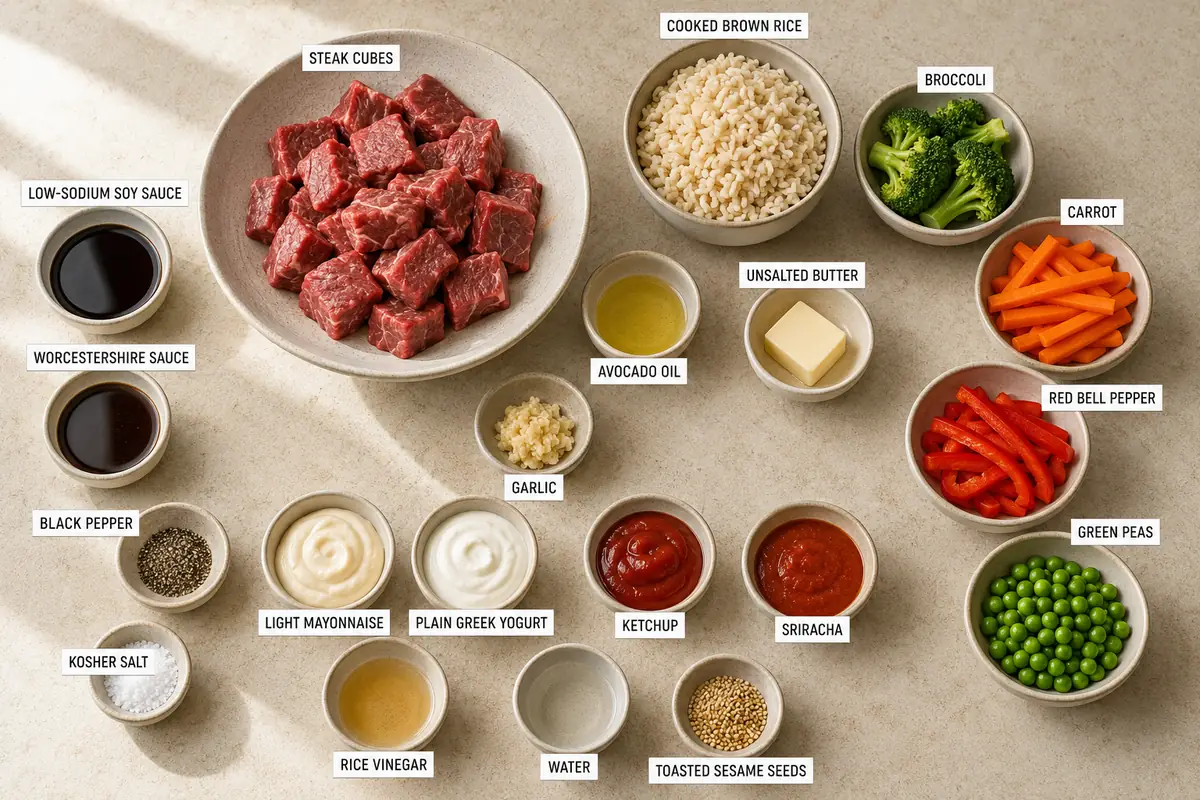
Whisk the light mayonnaise, Greek yogurt, ketchup, sriracha, rice vinegar, and water in a small bowl. Set aside.
Toss the steak cubes with soy sauce, Worcestershire sauce, black pepper, and kosher salt. Let them stand for 5 minutes while you prepare the vegetables.
Heat a 12-inch skillet over medium-high heat. Add the avocado oil, broccoli, carrot, and bell pepper. Stir-fry for 4 to 5 minutes, until the vegetables are bright and just tender.
Add the peas and half the garlic. Cook for 1 minute, then transfer the vegetables to a plate.
Add half the butter to the hot skillet. Cook half the steak cubes in a single layer for 2 minutes without moving them, then turn and cook 2 to 3 minutes more.
Transfer the first batch to the vegetable plate. Add the remaining butter and steak, then repeat. Add the remaining garlic during the final 30 seconds.
Check the thickest steak cube with an instant-read thermometer. For medium, remove it at 140°F and rest for 3 minutes.
Divide the warmed brown rice among four bowls. Add the vegetables and steak, then drizzle with sauce and finish with toasted sesame seeds.
Notes
Store the steak, vegetables, rice, and sauce separately in airtight containers for up to 4 days. Reheat the rice and vegetables gently, then add the steak only long enough to warm it so it stays tender. The sauce can be made 2 days ahead. For the best texture, freeze the steak, rice, and vegetables without the sauce for up to 2 months.
Stella Rose is a recipe developer, food blogger, and founder of https://www.stellachef.com. She shares easy family-friendly recipes, meal prep ideas, and comforting homemade dishes designed for real life. Her goal is to help home cooks create delicious meals with simple ingredients and practical cooking techniques.