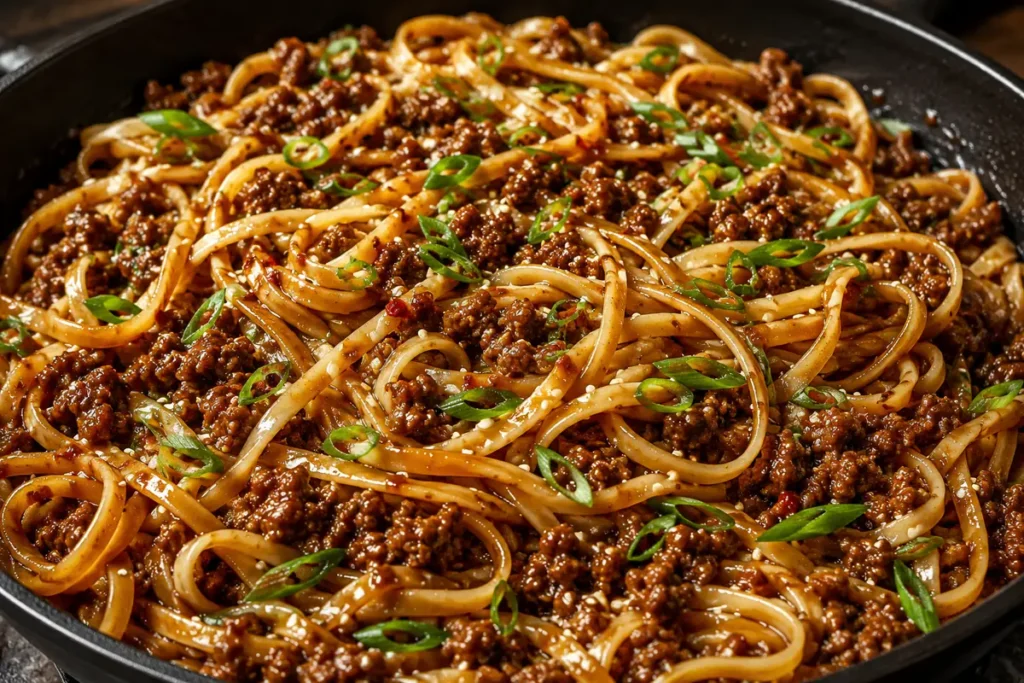
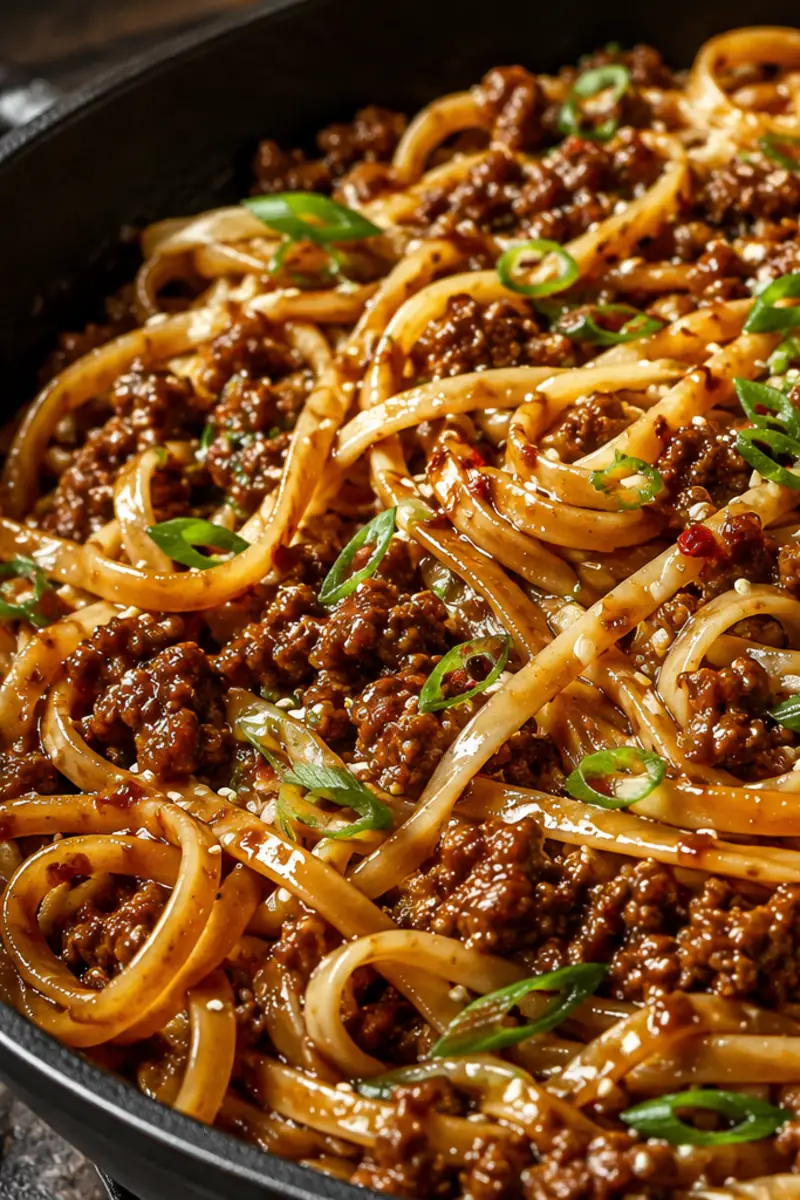
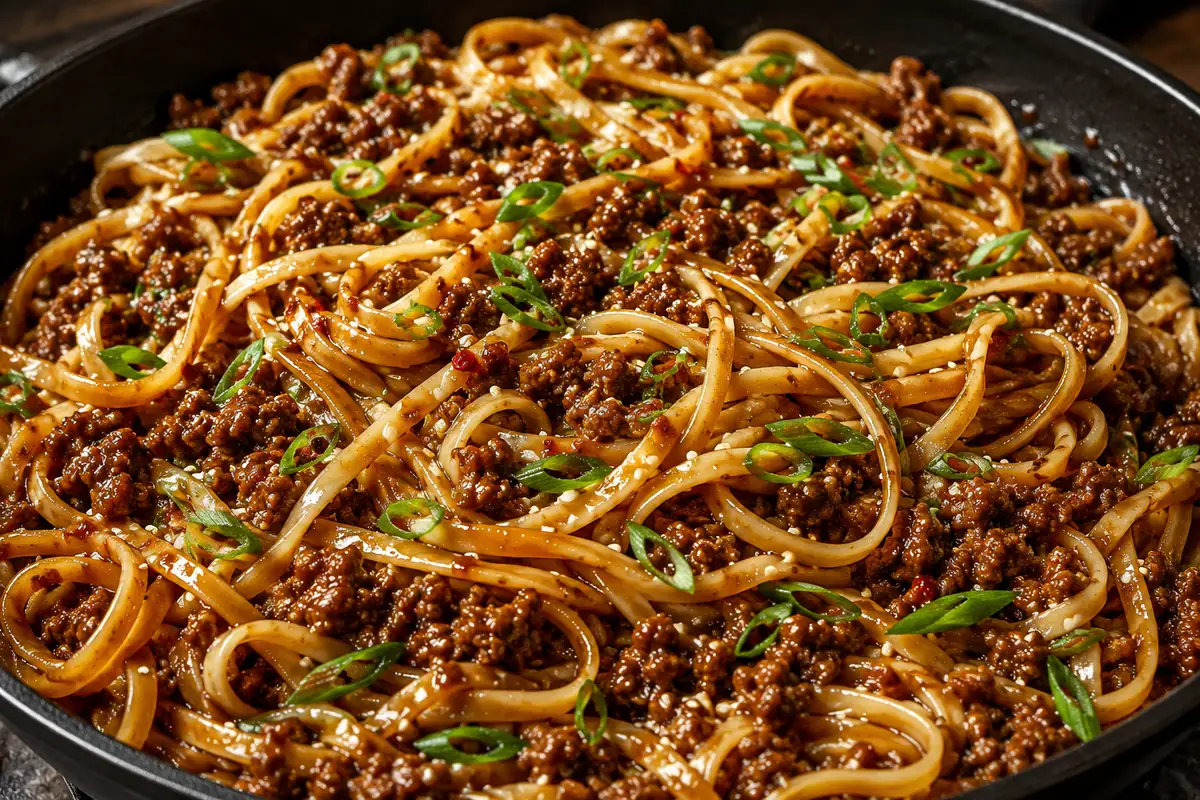
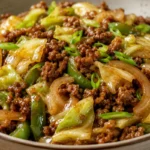
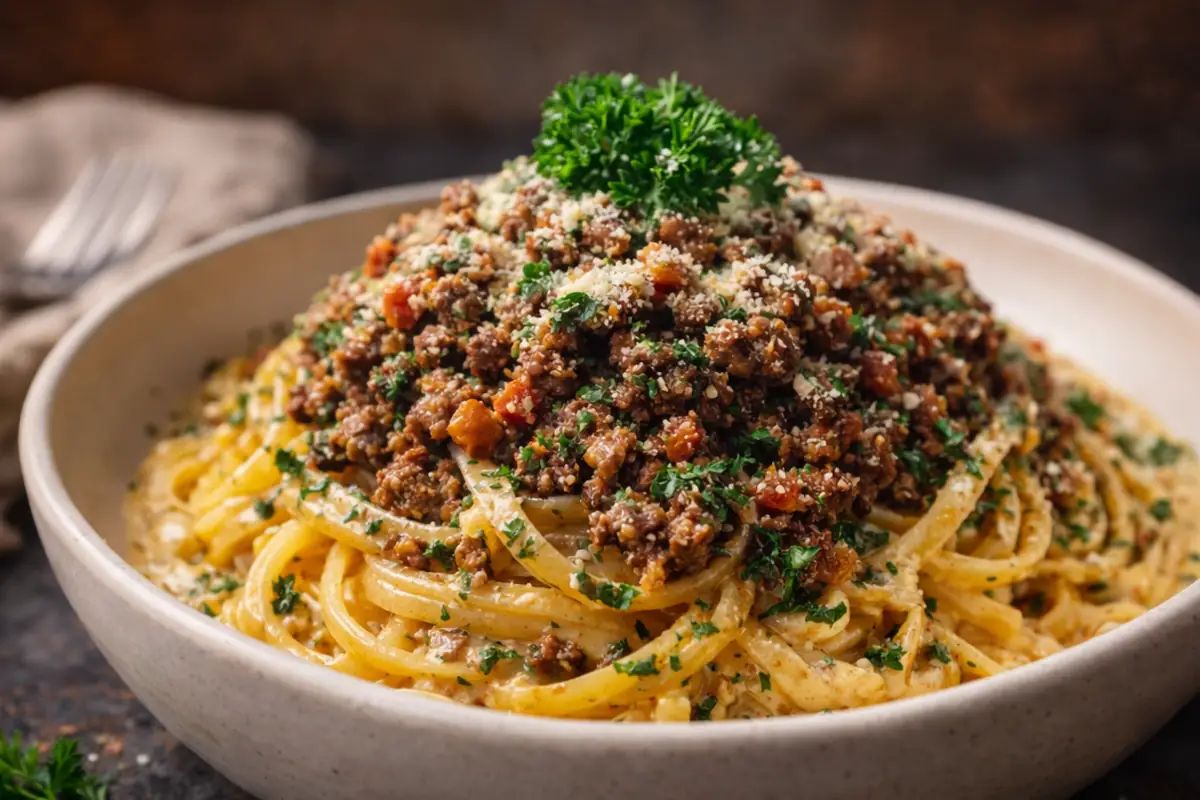
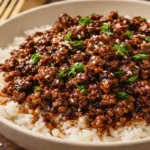
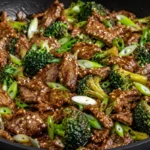
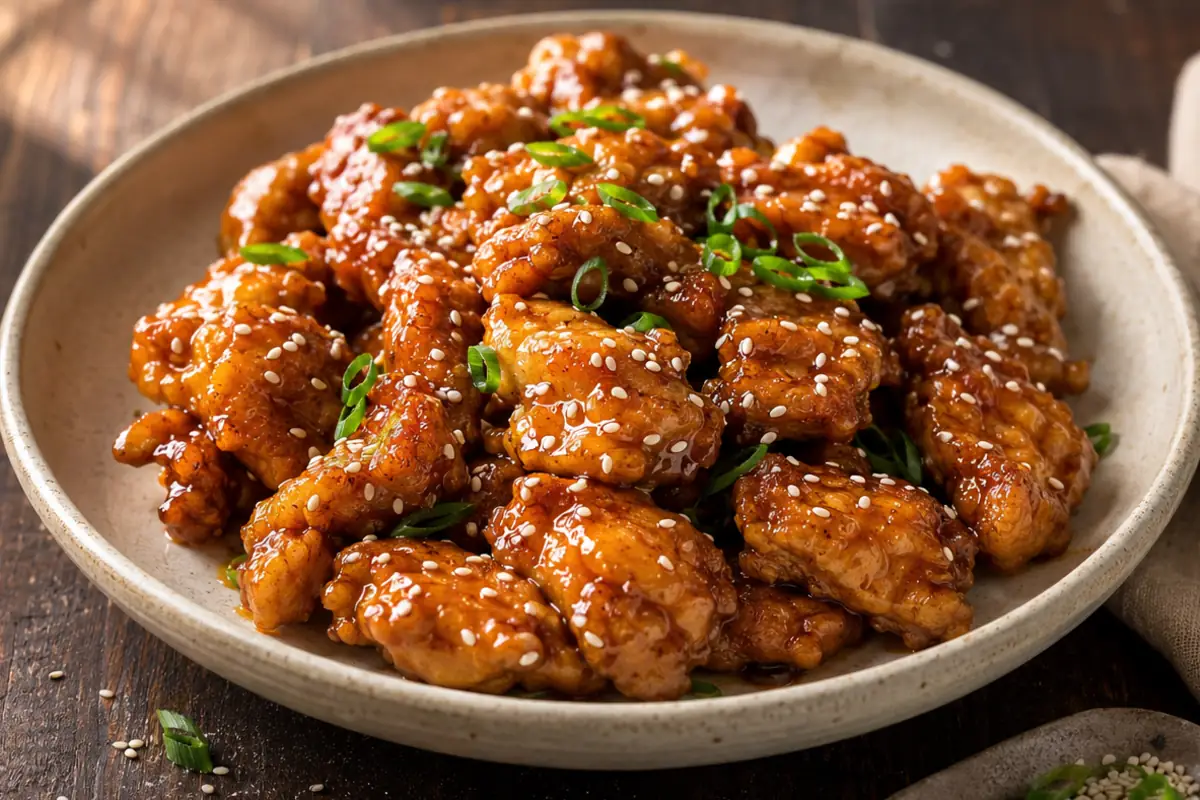
The noodles are glossy, savory, and just slippery enough to catch every bit of sauce, while browned ground beef gives each forkful a rich, craggy bite. Garlic, ginger, scallions, and sesame make the skillet smell like dinner before you sit down. Mongolian Ground Beef Noodles lands in that sweet spot between pantry dinner and a takeout craving, with tender linguine and a sticky soy-brown-sugar sauce.
Plan on 10 minutes of prep and 25 minutes at the stove. The sauce thickens right in the skillet, so a full bowl of beef and noodles comes together without a second pan or a long simmer.
Why You’ll Love Mongolian Ground Beef Noodles
Ground beef is the shortcut, but it still gets browned before the sauce goes in. That one pause for color gives the noodles savory little crumbles instead of one soft layer of meat.
The sauce leans on soy, brown sugar, hoisin, ginger, and vinegar, so it tastes savory first, sweet second, with enough tang to keep the finish lively.
Six ounces of linguine gives the beef room to show up in every bowl, and the wide strands hold the sauce better than thin noodles.
A 12-inch skillet leaves enough space to toss the noodles without sloshing sauce over the sides.
The whole meal follows a 35-minute plan, including boiling the noodles, browning the beef, and thickening the sauce.
Leftovers keep for four days and loosen nicely with a splash of broth, making the next lunch just as practical.
For six servings, use a wider skillet and brown the beef in batches if the crumbles start steaming.
How to Make Mongolian Ground Beef Noodles
Plan on 10 minutes of prep and 25 minutes of cooking, using the noodle pot while the skillet heats. The key move is browning the beef before the sauce goes in. Keep the simmer gentle, and stop when the sauce coats a spoon instead of turning gummy.
1. Whisk soy sauce, broth, brown sugar, hoisin, rice vinegar, cornstarch, sesame oil, and red pepper flakes, if using, until smooth.
2. Cook linguine according to package directions until just tender, then drain well.
3. Heat oil in a 12-inch skillet over medium-high. Add beef, break it into loose crumbles, and cook 6 to 8 minutes, stirring occasionally, until no pink remains and browned edges appear.
4. Stir in garlic, ginger, and white scallion pieces. Cook 45 seconds, just until fragrant.
5. Rewhisk the sauce, pour it into the skillet, and simmer 2 to 3 minutes until glossy and lightly thickened.
6. Add noodles and toss 1 to 2 minutes until hot and coated. Remove from heat, then top with green onion tops and sesame seeds.
Storing and Reheating Tips
Store leftovers in an airtight container for up to 4 days. The linguine absorbs some sauce as it rests, so gentle heat and a little broth matter more than speed when you reheat it. If you freeze it, expect softer noodles after thawing.
Cool and refrigerate within 2 hours, preferably in shallow portions so the center chills quickly.
For skillet reheating, add 1 to 2 tablespoons broth per serving and warm over medium-low, tossing until the sauce turns glossy again.
For microwave reheating, cover loosely and heat in 45-second bursts, stirring between bursts. Stop when hot; long blasts dry the crumbled beef.
Freeze portions in airtight containers for up to 2 months. Thaw overnight in the refrigerator for the most even texture.
If making it for meal prep, hold back the sesame seeds and green onion tops until serving so they stay fresh.
Variations and Substitutions
Keep the soy, ginger, garlic, and brown sugar backbone anchored. The noodle and sauce details can flex, but changes to salt or sweetness show up quickly because there are only a few main flavors.
Regular soy sauce works, but use 3 tablespoons plus 1 tablespoon broth in place of the low-sodium version.
Swap in dried lo mein noodles for linguine at the same weight. Rice noodles work too, but drain them barely tender because they soften fast in the hot sauce.
Use 93% lean ground beef if that’s what you have. Drain excess fat after browning, or the sauce can slide off the noodles.
For more heat, increase the red pepper flakes. For a less sweet finish, reduce the brown sugar to 2 tablespoons; the sauce will be a little less sticky.
No hoisin? Add 1 teaspoon extra brown sugar and 1 tablespoon more broth, then expect less savory depth.
Ingredient Notes
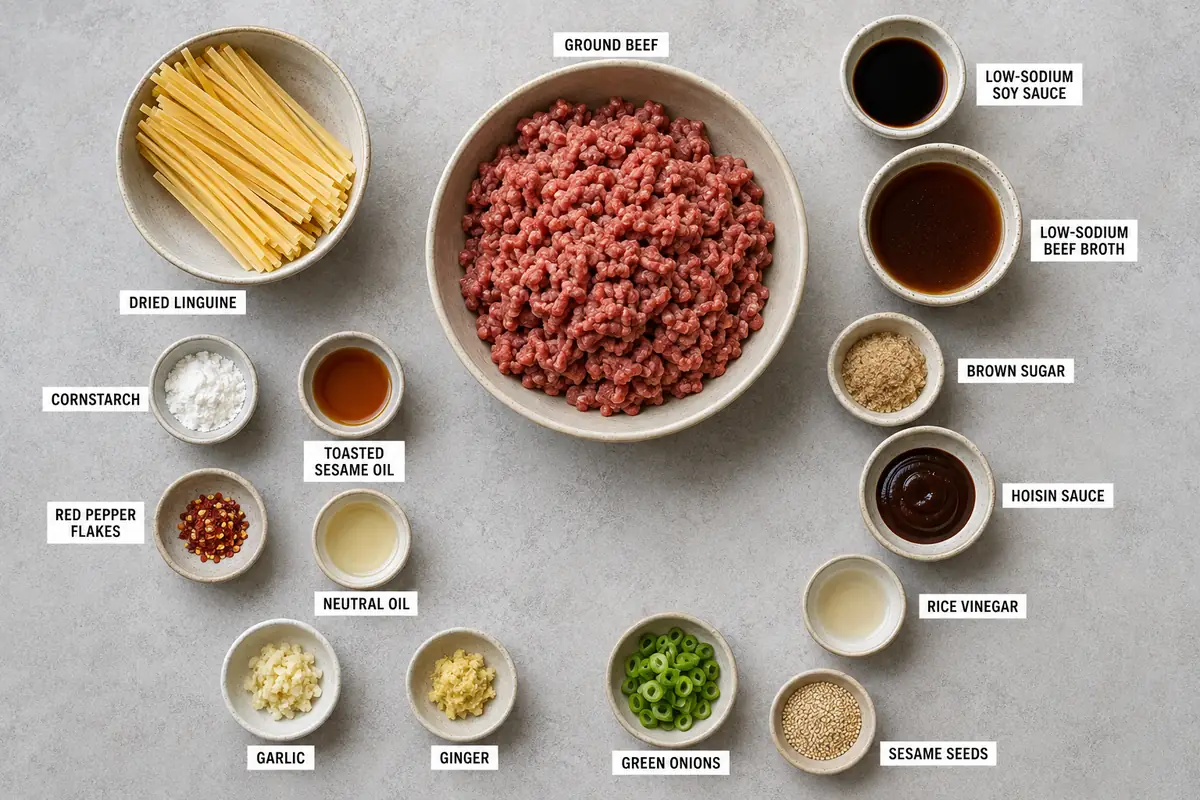
Each ingredient has a small job here. Cornstarch must dissolve before the sauce hits the heat, while the brown sugar and hoisin give the noodles a glossy coating instead of a thin soy broth.
Ground beef: The 96% lean blend keeps the sauce from turning greasy, but it needs a hot skillet and a few undisturbed minutes to brown. Break it into small crumbles so sauce reaches the whole bowl.
Linguine: Six ounces of dried wide noodles is enough to carry sauce without hiding the beef. Drain as soon as it’s just tender; overcooked noodles go soft during the final toss.
Soy sauce and broth: Low-sodium soy leaves room for hoisin and beef broth. If your broth is salty too, taste the sauce before adding any extra soy.
Brown sugar and hoisin: These create the sticky, savory-sweet finish. Keep the heat at a simmer once they hit the pan so the sugar doesn’t scorch.
Garlic, ginger, and green onions: Garlic and ginger need less than a minute after the beef. Use the white scallion pieces in the skillet and the green tops at the end for fresher flavor.
Sesame oil and sesame seeds: Stir sesame oil into the sauce for background nuttiness, then use the seeds as a final topping so they stay distinct.
Expert Cooking Tips
The most common texture miss is a sauce that goes from loose to gummy in a minute. That usually means the skillet was too hot, the sauce was not whisked again, or the noodles sat in the pan too long.
Whisk just before pouring. Cornstarch settles quickly, and the last spoonful at the bottom is what makes the sauce thicken evenly.
Leave small gaps between turns of the beef. Constant stirring releases moisture and steams the crumbles instead of giving them browned edges.
Don’t do this: crank the heat after the sauce goes in. A gentle simmer is enough; if bubbles race across the pan, lower the burner.
If the sauce is too thin, simmer it for another 30 to 60 seconds before adding noodles. If it’s too thick, lower the heat and loosen it with broth one tablespoon at a time.
Drain the noodles thoroughly. Extra water dilutes the soy flavor and makes the coating slide off, while a hot, well-drained noodle grabs the sauce quickly.
If the skillet feels crowded after adding noodles, toss with tongs in two rounds. A few extra seconds of mixing is better than breaking the strands or spilling sauce.
What to Serve with Mongolian Ground Beef Noodles
With beef and noodles already bringing savory weight, the best side is crisp, fresh, or lightly acidic. Keep the rest of the meal quick enough that the skillet stays the main event.
Quick cucumber salad with rice vinegar gives the meal a cool, crunchy counterpoint.
Steamed broccoli or snap peas add color and a little bite without competing with the ginger sauce.
Garlicky bok choy takes only a few minutes in a hot pan; cook it separately so its edges stay tender-crisp.
Orange wedges or a small citrusy slaw cut through the brown-sugar richness with almost no extra work.
For lunch, portion the noodles into shallow containers and keep a simple green salad on the side.
FAQ
The questions that come up most often are about noodle swaps, sauce thickness, and reheating. Here are the fixes that keep the skillet texture on track.
Q: Can I use lo mein instead of linguine?
A: Yes. Use the same weight of dried lo mein and cook it just until tender; fresh lo mein may need less boiling time.
Q: Why did the sauce turn gummy?
A: The pan was likely too hot or the sauce simmered too long. Lower the heat, add broth a tablespoon at a time, and toss the noodles only until coated.
Q: Can I prep this ahead?
A: Mix the sauce and slice the aromatics up to one day ahead. For the best noodle texture, cook and toss the linguine close to serving.
Q: How long do leftovers last?
A: Refrigerated leftovers keep for up to 4 days. Reheat gently with broth because the noodles continue absorbing sauce in the container.
Q: Can I double the recipe?
A: Yes, but use a wide skillet and brown the beef in batches if it starts steaming. Toss the larger batch in a pot or Dutch oven so the noodles have room.
One Last Bite
Sticky sauce, browned beef, and springy noodles make Mongolian Ground Beef Noodles the kind of dinner that feels handled without tasting rushed. The ingredients are ordinary, the skillet does most of the work, and tomorrow’s portion still brings plenty of savory comfort after a gentle reheat.
Sticky Mongolian Ground Beef Noodles for Easy Dinners
Sticky Mongolian Ground Beef Noodles for Easy Dinners combines browned ground beef and tender linguine with a glossy soy-ginger sauce, scallions, and sesame seeds.
3tablespoonspacked light brown sugarsauce sweetener
1tablespoonhoisin saucesavory depth
1tablespoonrice vinegaracidity
2teaspoonscornstarchthickener
1teaspoontoasted sesame oilfinish
1/2teaspooncrushed red pepper flakesoptional heat
Noodles and Beef
1pound96% lean ground beefloose crumbles
6ouncesdried linguinewide strands
2teaspoonsneutral oilfor browning
4clovesgarlicminced
1tablespoonfresh gingerfinely grated
3mediumgreen onionsthinly sliced, divided
1tablespoonsesame seedsgarnish
Equipment
Large Pot
12-Inch Skillet
Mixing bowl
whisk
Colander
Wooden spoon
tongs
Method
Sauce and Noodles
Bring a large pot of water to a boil. While it heats, whisk the soy sauce, broth, brown sugar, hoisin sauce, rice vinegar, cornstarch, sesame oil, and red pepper flakes, if using, until smooth.
Cook the linguine according to package directions until just tender. Drain well and set aside.
Beef and Finish
Heat the neutral oil in a 12-inch skillet over medium-high heat. Add the ground beef, break it into loose crumbles, and cook for 6 to 8 minutes, stirring occasionally, until no pink remains and browned edges appear.
Stir in the garlic, ginger, and white portions of the green onions. Cook for 45 seconds, just until fragrant.
Rewhisk the sauce, pour it into the skillet, and simmer for 2 to 3 minutes until glossy and lightly thickened.
Add the drained noodles and toss for 1 to 2 minutes until hot and evenly coated.
Remove the skillet from the heat. Scatter the green onion tops and sesame seeds over the noodles before serving.
Notes
For the best texture, serve immediately while the sauce is glossy. Refrigerate leftovers in an airtight container for up to 4 days; reheat gently in a skillet or microwave with a splash of broth if the noodles have tightened. Freeze only if needed, since the noodles soften after thawing.
Mia Olivia is a food writer and recipe contributor who loves creating approachable recipes that fit busy lifestyles. From quick weeknight dinners to crowd-pleasing comfort foods, she focuses on helping readers cook with confidence and enjoy more time around the table.