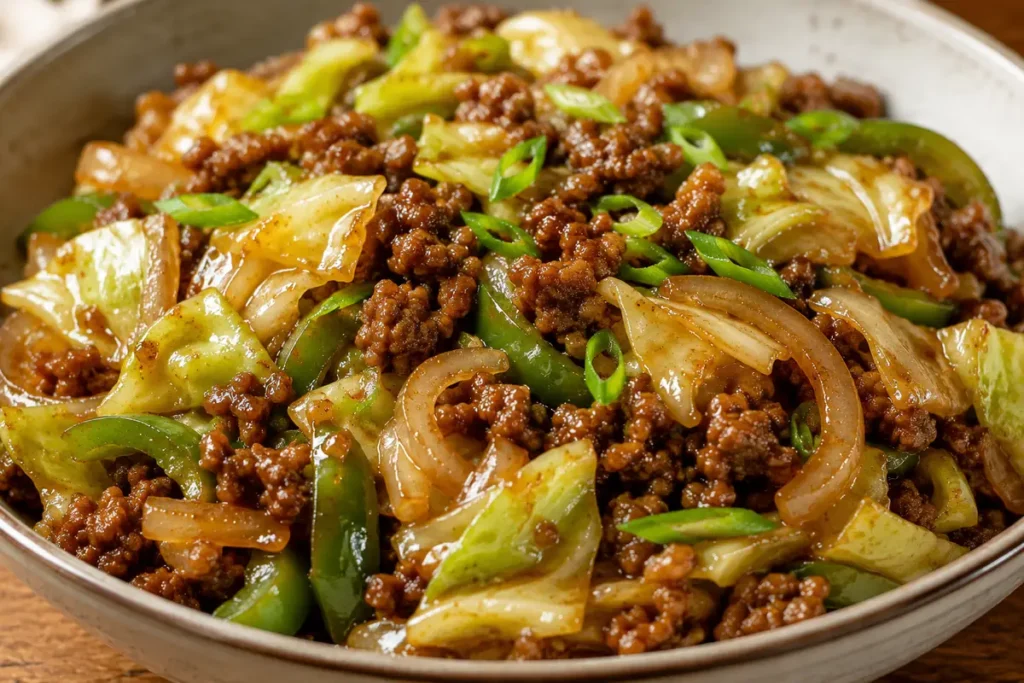
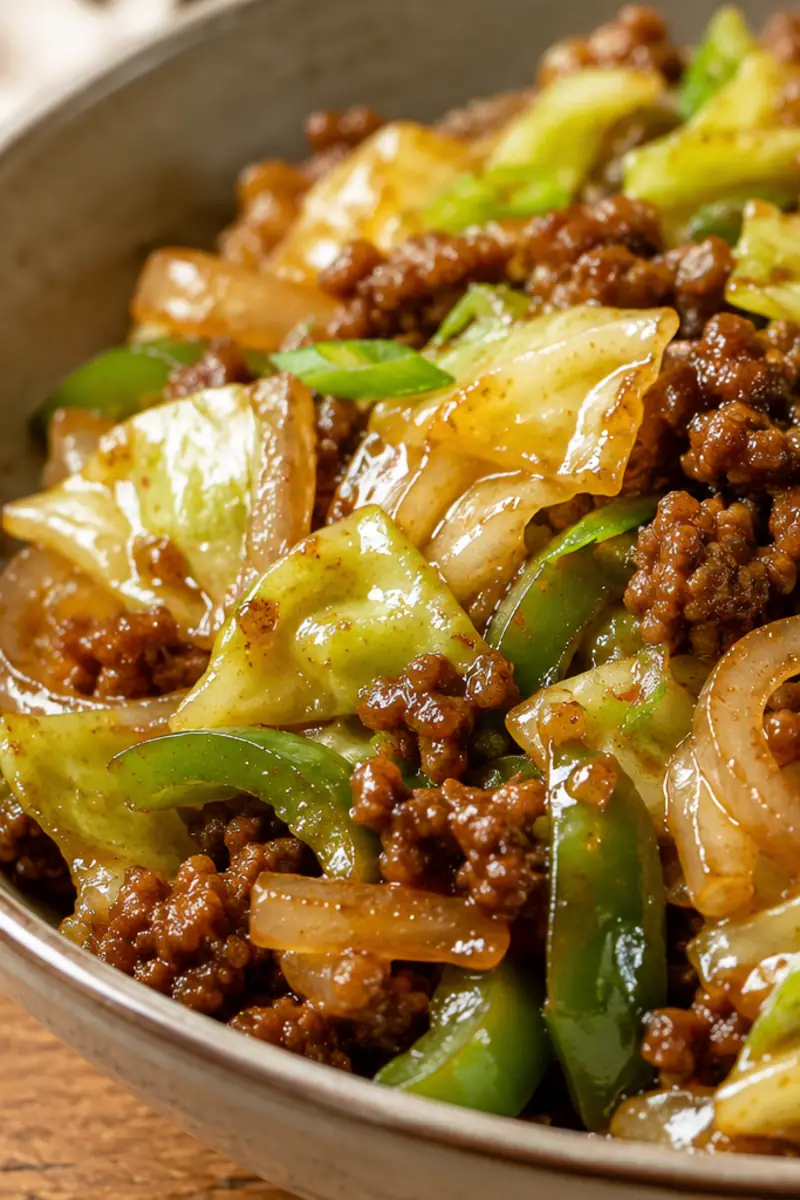
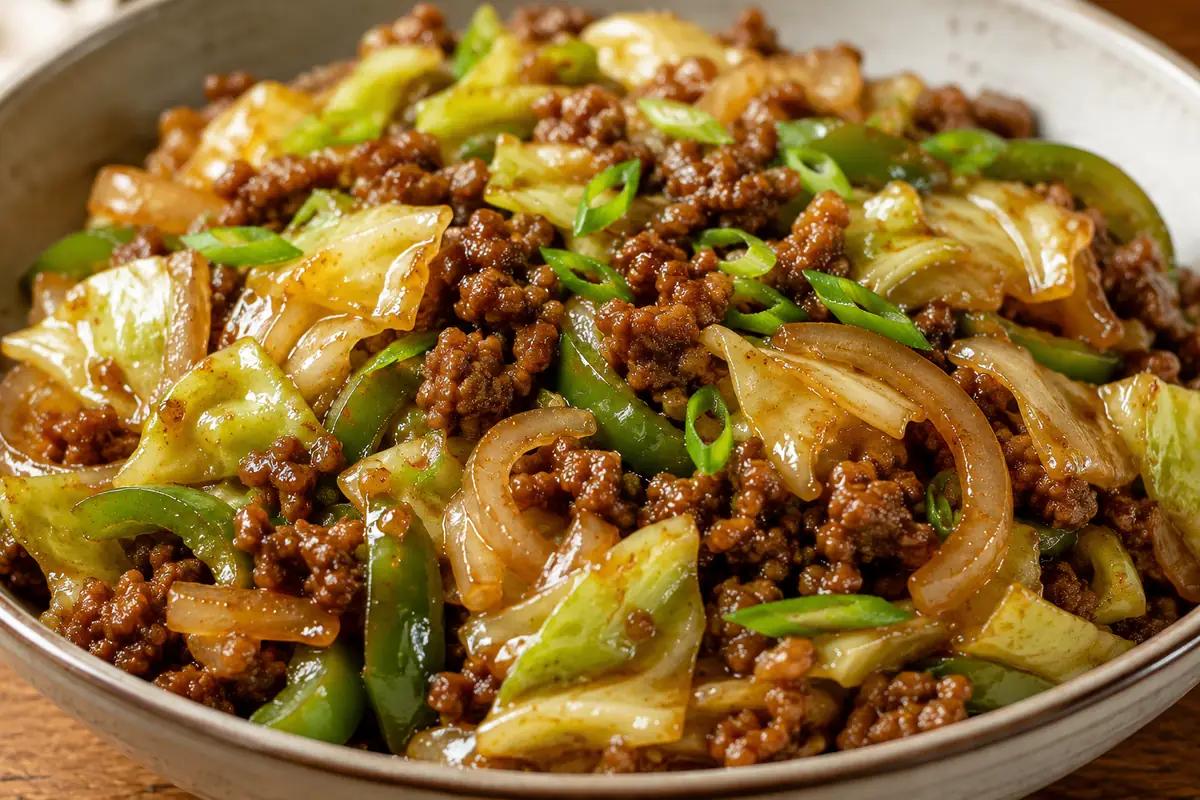
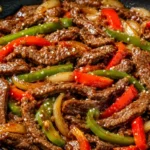
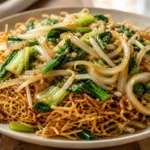
Glossy soy-ginger sauce clings to browned ground beef, tender-crisp cabbage, sweet onion, and green bell pepper in Mongolian Cabbage with Ground Beef. The skillet smells garlicky and savory, and the sauce settles into every folded cabbage edge without turning the vegetables limp.
When dinner needs to feel handled, this 35-minute skillet keeps the work in one pan. You brown the beef first, then let the cabbage soften just enough to keep a little bite.
Why You’ll Love Mongolian Cabbage with Ground Beef
One large skillet gives you real browning and a glossy sauce without a separate pan for the vegetables. The cabbage stays substantial, with softened leaves and ribs that still give a little bite.
The 15-minute prep is mostly cutting the cabbage into one-inch pieces, slicing the onion and pepper, and whisking the sauce.
The 20-minute cook starts with beef, so the finished sauce has a savory base instead of a flat steamed flavor.
Eight cups of cabbage look like a lot in the skillet, but they collapse quickly while keeping more texture than thin shreds.
Low-sodium soy sauce, hoisin, ginger, garlic, and brown sugar make a concentrated sauce from regular grocery-store staples.
Leftovers keep their coating and reheat without the beef drying out, making this a useful meal-prep lunch.
A wide 12-inch skillet gives the beef room to brown and makes the recipe easy to scale up.
How to Make Mongolian Cabbage with Ground Beef
Active prep and cooking take about 35 minutes. The move that matters most is browning the beef before the cabbage goes in; if the skillet bottom is wet, keep cooking until the crumbles pick up color. The ribs should bend easily but still offer resistance.
1. Whisk the soy sauce, hoisin sauce, brown sugar, rice vinegar, water, and cornstarch in a medium bowl until smooth.
2. Heat the skillet over medium-high heat with the oil. Brown the beef well, breaking it into small crumbles for 5 to 7 minutes, until no pink remains and it reaches 160°F. Spoon off excess fat if needed.
3. Add the onion and bell pepper. Cook for 3 to 4 minutes, until the onion softens and the pepper still has a slight bite.
4. Stir in the garlic and ginger. Cook for 30 seconds, just until fragrant.
5. Add the cabbage in two additions, tossing as each handful wilts. Cook for 4 to 5 minutes, until the thick ribs are tender-crisp.
6. Whisk the sauce again, then pour it around the skillet. Toss for 2 to 3 minutes, until the sauce turns glossy and clings to the beef and cabbage.
7. Turn off the heat, stir in the sesame oil, scatter the green onions over the top, and serve hot.
Storing and Reheating Tips
This keeps for 3 to 4 days in the refrigerator in a covered container. Freezing works for up to 2 months, but the cabbage will soften, so use the freezer when convenience matters more than its fresh bite.
Cool the skillet briefly, then portion leftovers into shallow containers and refrigerate within 2 hours.
Reheat gently in a skillet over medium-low heat with 1 tablespoon of water. Stir until the beef is hot and the sauce loosens.
For the microwave, use 60- to 90-second intervals, stirring between rounds so the edges don’t dry out.
Thaw frozen portions overnight in the refrigerator. Warm them in a skillet rather than boiling the sauce.
If serving with rice, store the rice separately so it stays less gummy and lets you adjust the sauce portion.
The savory sauce settles overnight, but expect the cabbage ribs to be softer on day three or four.
Variations and Substitutions
Keep the one-inch cabbage pieces and the soy-hoisin sauce as the anchors. The beef, pepper color, and soy style can shift a little while the skillet still stays recognizable and saucy.
Ground turkey works in place of beef. Use a 93% lean grind and add a little extra oil if the pan looks dry.
For 90% lean ground beef, brown it the same way and drain the extra fat before adding the vegetables.
Napa cabbage works, but it softens faster and releases more moisture. Add it later and stop cooking as soon as the leaves wilt.
Red or yellow bell pepper can replace the green pepper without changing the cooking sequence.
Regular soy sauce can replace low-sodium soy. Use 2 tablespoons instead of 3 so the sauce doesn’t become too salty.
For a less-sweet finish, reduce the brown sugar to 2 teaspoons. The hoisin sauce will still provide some sweetness.
Ingredient Notes
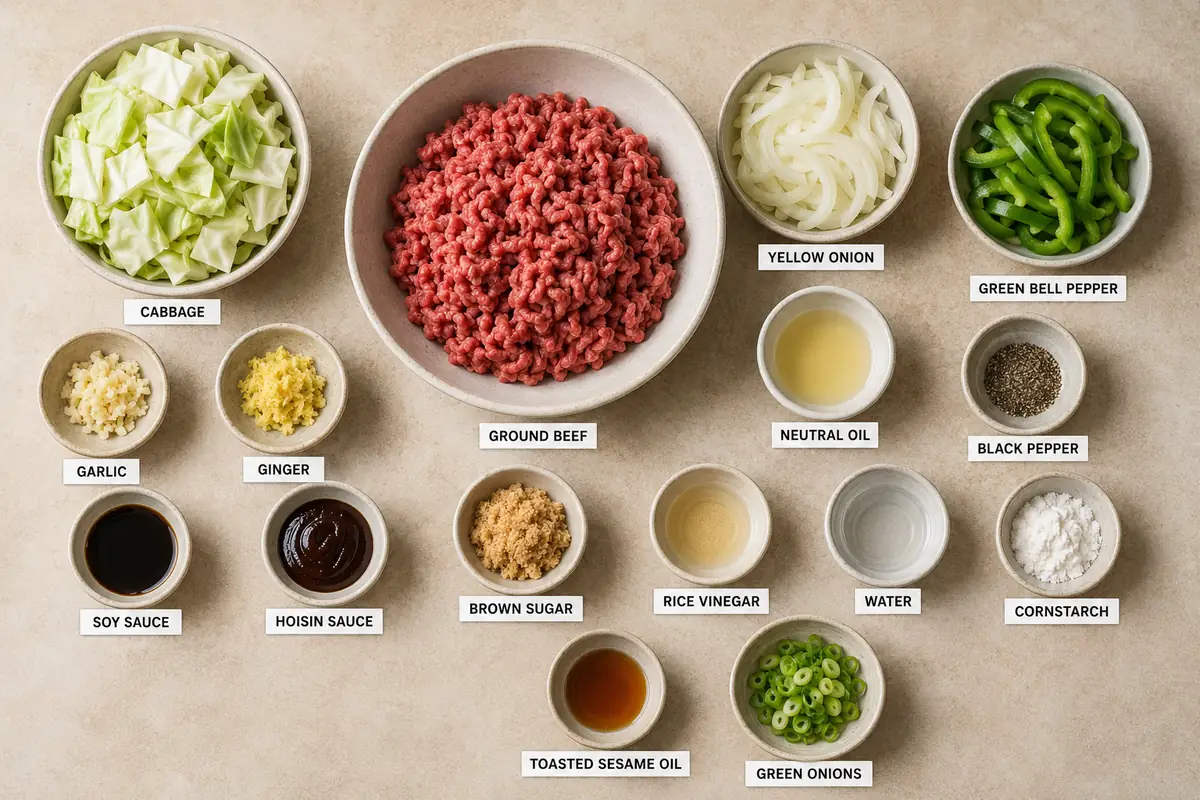
Cabbage is cut into one-inch pieces rather than thin shreds, so the ribs soften while the leafy edges catch the sauce. The sauce is concentrated; water and cornstarch loosen it just enough to coat the beef and vegetables.
Ground beef: 93% lean gives you enough fat for browning without leaving the skillet greasy. Break it into small crumbles so the sauce reaches every piece.
Cabbage: Use a firm green head and cut it into thick, irregular one-inch pieces. Thin slices soften too quickly and lose the texture this skillet needs.
Onion and bell pepper: The quarter-inch onion slices and half-inch pepper strips finish alongside the cabbage instead of disappearing into the sauce.
Garlic and ginger: Add both after the onion and pepper have softened. Their aroma stays sharper when they spend only about 30 seconds in the hot pan.
Soy sauce and hoisin: Low-sodium soy brings salt and savory depth, while hoisin adds sweetness and body. Taste before adding any extra salt.
Cornstarch and water: Whisk them into the cold sauce ingredients first. Cornstarch settles quickly, so whisk the mixture again immediately before pouring.
Expert Cooking Tips
The most common mistake here is letting the cabbage cook too long after the sauce goes in. Cornstarch thickens quickly, so the skillet needs to be nearly finished before you add that mixture.
Use the widest skillet you have. A crowded pan makes the beef steam instead of brown and leaves the cabbage wetter.
Don’t do this: cover the skillet while the cabbage cooks. The trapped steam softens the ribs too much and washes out the browned flavors.
Let the cabbage wilt before judging the volume. Adding it in two additions keeps the pan manageable and prevents raw centers beneath the top layer.
If the sauce turns too thick, lower the heat and add water 1 tablespoon at a time. Toss after each addition until it coats the vegetables without clumping.
If the sauce looks loose, keep the skillet uncovered for another minute. The cornstarch will tighten as the liquid simmers.
Check the beef at 160°F and taste the finished sauce before adding salt. Soy sauce and hoisin already carry plenty of seasoning.
What to Serve with Mongolian Cabbage with Ground Beef
The skillet already contains beef and vegetables, so keep the sides plain and bright. A small starch soaks up the sauce, while something crisp or fresh keeps the bowl from feeling heavy.
Steamed jasmine rice is the classic pairing and catches the glossy sauce without competing with the cabbage.
Brown rice or rice noodles work when you want a slightly chewier base. Keep the seasoning plain.
A cucumber salad dressed with rice vinegar adds cool crunch and a little acidity beside the warm beef.
Steamed broccoli or green beans make an easy vegetable side without adding another rich sauce.
Shelled edamame brings a soft, nutty bite and can be served warm or at room temperature.
FAQ
Most questions come down to cabbage texture, sauce thickness, and whether the pan can handle a larger batch. These answers cover the places where a small adjustment saves dinner.
One Last Bite
Mongolian Cabbage with Ground Beef brings browned beef, tender cabbage, and a glossy sauce together with very little cleanup. It’s the kind of 35-minute dinner that handles leftovers well and earns another turn when you want something savory, warm, and reliable.
Saucy Mongolian Cabbage with Ground Beef for Easy Dinners
Saucy Mongolian Cabbage with Ground Beef for Easy Dinners combines browned lean ground beef, tender cabbage, green bell pepper, and onion in a glossy soy-hoisin sauce.
Whisk the soy sauce, hoisin sauce, brown sugar, rice vinegar, water, and cornstarch in a medium bowl until smooth.
Heat a 12-inch skillet over medium-high heat. Add the oil, ground beef, and black pepper. Cook for 5 to 7 minutes, breaking the beef into small crumbles, until browned and no pink remains.
Spoon off excess fat if it pools, leaving a thin film in the skillet.
Add the onion and bell pepper. Cook for 3 to 4 minutes, until the onion softens and the pepper still has a little bite.
Stir in the garlic and ginger. Cook for 30 seconds, just until fragrant.
Add the cabbage in two additions, tossing as each addition wilts. Cook for 4 to 5 minutes, until the thick ribs are tender-crisp.
Whisk the sauce again, pour it around the skillet, and toss for 2 to 3 minutes, until glossy and thickened.
Remove from the heat, stir in the sesame oil, scatter the green onions over the top, and serve hot.
Notes
Refrigerate leftovers in a covered container for up to 4 days. Freeze for up to 2 months if needed, knowing the cabbage will soften; thaw overnight and reheat gently with a splash of water. Regular soy sauce can replace low-sodium soy, but use 2 tablespoons to keep the sauce from getting too salty.
Mia Olivia is a food writer and recipe contributor who loves creating approachable recipes that fit busy lifestyles. From quick weeknight dinners to crowd-pleasing comfort foods, she focuses on helping readers cook with confidence and enjoy more time around the table.