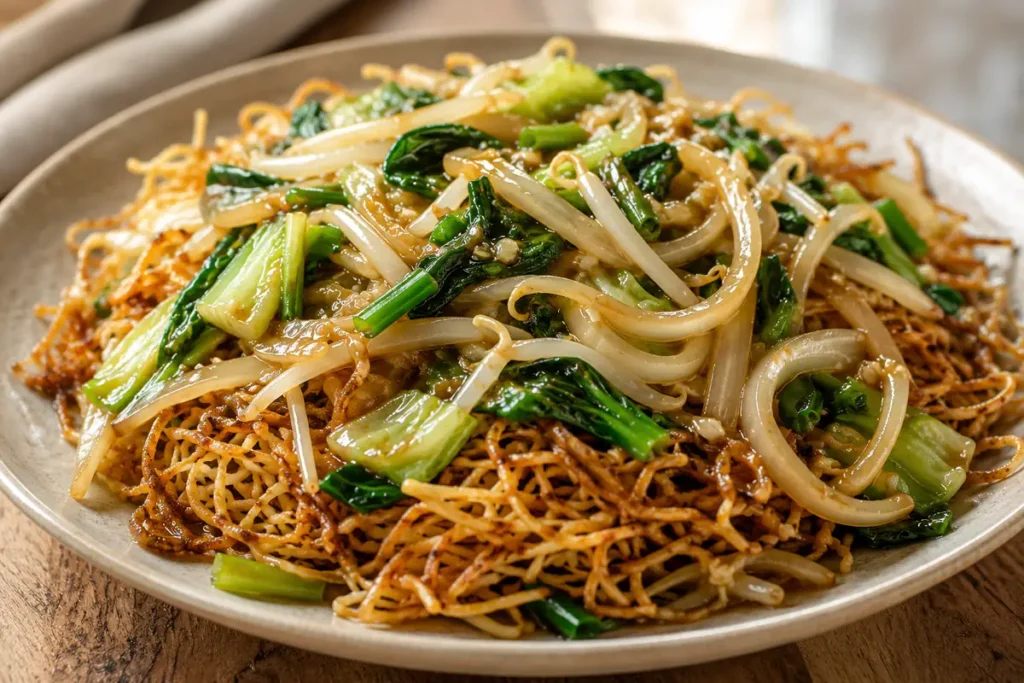
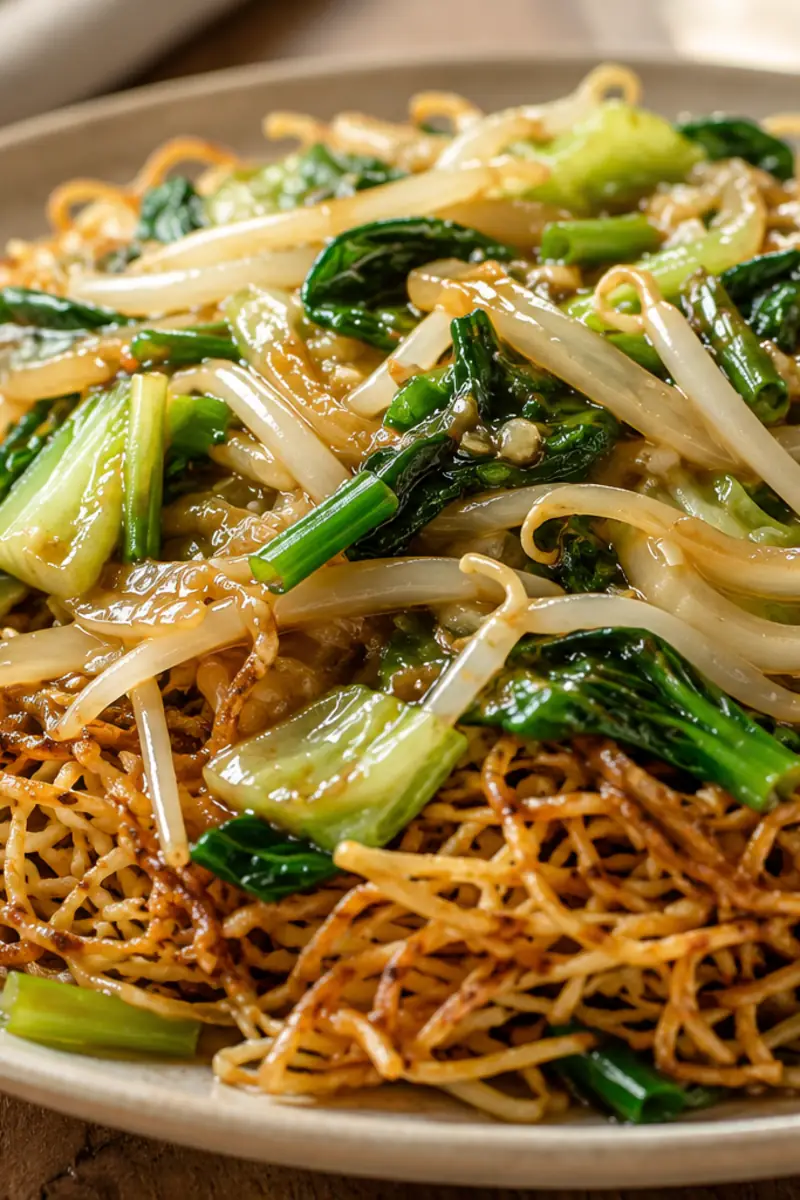
Cantonese Chow Mein hits the table with thin noodles browned at the edges, glossy from a savory sauce, and tangled through crisp bean sprouts and green vegetables. Each forkful brings chewy strands, tender bok choy, and just enough peppery depth to keep you reaching back into the bowl.
The whole pan comes together in about 30 minutes. It has the comfort of takeout, but the sprouts stay fresh and the noodles get real browning instead of turning soft in a pool of sauce.
Why You’ll Love Cantonese Chow Mein
Fresh noodles make this easy chow mein recipe especially useful when dinner needs to feel handled. The vegetables cook quickly, and the sauce comes together in one small bowl before the wok gets hot.
Real browned edges come from leaving the noodles alone long enough to sear against the hot wok.
Bean sprouts go in late, so they stay juicy and slightly firm instead of collapsing.
Bok choy brings leafy tenderness and crisp stems without needing a separate cooking pot.
The sauce uses regular grocery-store ingredients, with dry sherry standing in for Shaoxing wine when needed.
A 14-inch wok gives 12 ounces of noodles room to spread, which keeps the strands from steaming.
Leftovers reheat well in a skillet, making this a useful lunch the next day.
How to Make Cantonese Chow Mein
Active cooking takes about 18 minutes once the vegetables are sliced. The important move is giving the noodles undisturbed time against the hot wok, then watching for sauce that clings instead of pools.
Keep the sprouts dry and don’t add the sauce until the noodles have some color. Those two details make the difference between springy chow mein and a heavy, soggy pile.
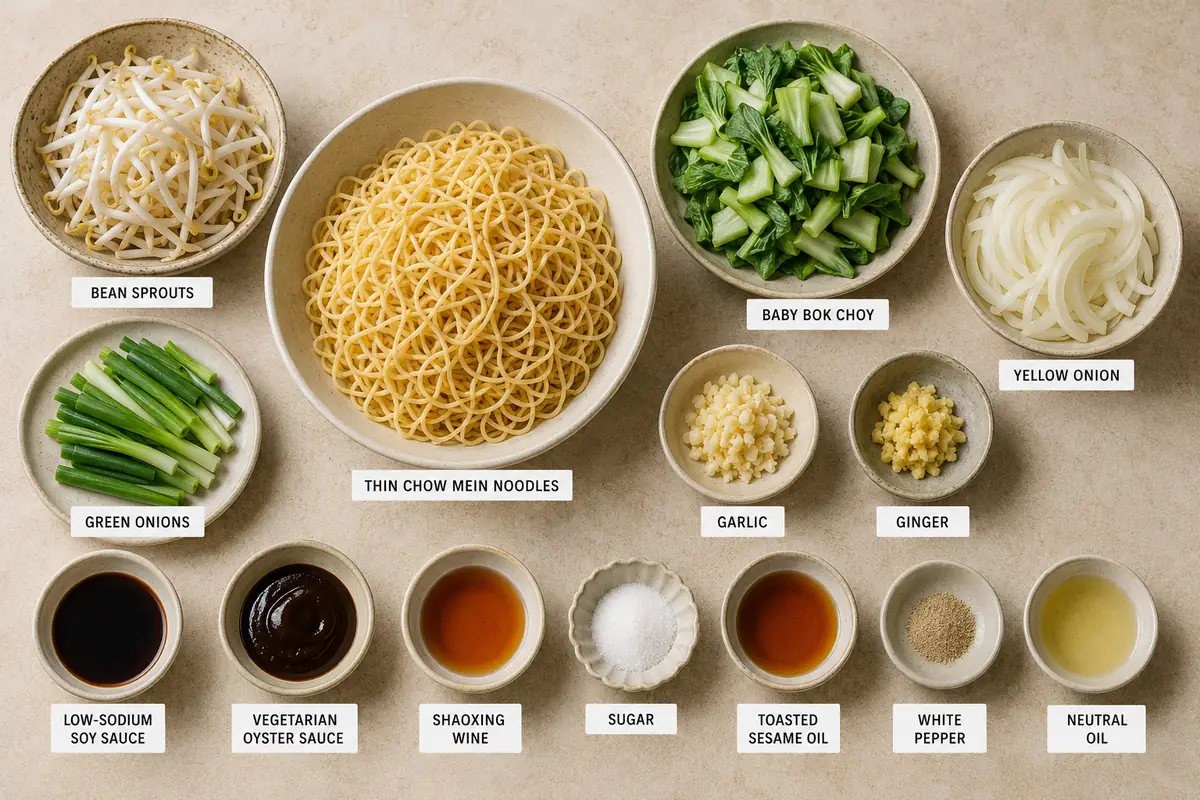
1. Whisk the soy sauce, vegetarian oyster sauce, Shaoxing wine, sugar, sesame oil, and white pepper in a small bowl.
2. Heat a 14-inch wok over high heat for 2 minutes, then cook the onion, bok choy stems, and half the green onions in half the oil.
3. Add the bok choy leaves, bean sprouts, garlic, and ginger. Toss until the leaves wilt while the sprouts still have a little snap.
4. Transfer the vegetables out of the wok and add the remaining oil.
5. Add the loosened fresh noodles, spread them into a wide layer, and let them cook without stirring for 60 to 90 seconds.
6. Toss and continue cooking until the noodles are hot, separated, and browned at the edges.
7. Return the vegetables, add the sauce around the hot side of the wok, and toss until every strand looks glossy.
8. Add the remaining green onions, toss briefly, and serve while the noodles are hot.
Storing and Reheating Tips
Leftover chow mein keeps in the refrigerator for up to 3 days. I don’t recommend freezing it because the bean sprouts lose their snap and the noodles soften noticeably after thawing.
Cool the noodles promptly, then store them in a shallow airtight container.
For the best texture, reheat portions in a lightly oiled skillet over medium-high heat.
Toss frequently while reheating, but give the noodles short undisturbed rests so the edges can dry out again.
The microwave works when speed matters. Cover the bowl loosely and use short heating bursts to avoid rubbery noodles.
You can slice the vegetables and mix the sauce a day ahead. Keep the noodles separate until you’re ready to cook.
Variations and Substitutions
The vegetables and sauce have room to move, but keep the fresh thin noodles, bean sprouts, and hot finishing heat anchored. That combination gives the dish its familiar texture and shape.
Swap baby bok choy for yu choy or napa cabbage. Cut thicker stems small enough to cook alongside the onion.
Use regular oyster sauce instead of vegetarian oyster sauce if you don’t need the recipe to stay vegetarian. The amount stays the same.
Dried chow mein noodles can replace fresh noodles. Boil them just shy of al dente, rinse briefly, and drain thoroughly before stir-frying.
Dry sherry works well in place of Shaoxing wine. Avoid sweet cooking wine, which can make the sauce taste heavy.
Add red pepper flakes or a spoonful of chili oil at the table for heat without changing the main sauce.
A smaller skillet will work, but cook the noodles in batches so they brown instead of steaming.
Ingredient Notes
Cantonese Chow Mein relies on a few ingredients behaving at the right moment. Fresh noodles brown quickly, while bean sprouts release water if they enter the wok wet.
Fresh thin chow mein noodles should be loosened before cooking. Separate stubborn clumps gently with your fingers so the strands don’t tear.
Bean sprouts add the best texture when rinsed, drained, and added after the bok choy stems. Excess water cools the wok.
Slice bok choy stems thinner than the leaves. The stems need extra heat, while the leaves wilt almost immediately.
Vegetarian oyster sauce provides savory depth and helps the sauce cling to the noodles. Soy sauce supplies salt, so no extra salt is needed.
Shaoxing wine adds a dry, fragrant note. Dry sherry is the closest easy substitute from a typical US pantry.
Garlic and ginger should be minced finely and cooked briefly. They add aroma quickly, but garlic can scorch over high heat.
Expert Cooking Tips
The most common mistake with this dish is crowding the wok or stirring the noodles too soon. Both problems trap moisture and leave you with pale, soft strands.
Don’t add the sauce first. The noodles need direct contact with the hot wok before liquid goes in.
Drain the bean sprouts until they stop dripping. If they are very wet, pat them lightly with a clean towel.
Let the wok recover its heat after the vegetables come out. A hot surface browns the noodles before they absorb the sauce.
Stir less than you think. A short rest against the wok creates browned edges, while constant tossing only warms the strands.
If sauce pools at the bottom, keep the heat high and toss for another 30 seconds. The liquid should coat the noodles, not collect underneath them.
Stop cooking when the sprouts remain slightly firm and the bok choy leaves are wilted. More time makes both vegetables limp.
If the noodles stick, add a small drizzle of oil around the wok edge. Water will loosen them, but it also creates steam and softens the texture.
What to Serve with Cantonese Chow Mein
The noodles already bring the starch and savory weight, so pair them with something cool, fresh, or lightly brothy. Keep the sides simple enough that they don’t compete with the wok-charred flavor.
A cucumber salad with rice vinegar cuts through the glossy sauce and adds a cold, juicy contrast.
Steamed edamame gives the meal more substance without adding another complicated cooking project.
Clear chicken, vegetable, or wonton soup makes a good starter when you want a warmer meal.
Quick-pickled carrots or radishes add acidity and a pleasant crunch.
Unsweetened iced tea, jasmine tea, or a cold lager all work well alongside the salty noodles.
For a larger spread, serve the chow mein with steamed dumplings and keep the portions modest so the noodles remain the focus.
FAQ
The usual hesitation is whether fresh noodles are required and how to keep the finished strands from going soft. Here are the practical answers.
Can I use dried chow mein noodles?
Yes. Cook them just shy of al dente, rinse briefly, and drain very well before they reach the wok.
Why did my noodles turn soggy?
Wet sprouts, a crowded pan, or sauce added too early are the usual causes. Drain the vegetables and use a wide wok so moisture can evaporate.
Can I prep the vegetables ahead?
Yes. Slice the vegetables and mix the sauce up to 1 day ahead, then refrigerate them separately.
How should I reheat leftovers?
A lightly oiled skillet over medium-high heat gives the noodles the best texture. The microwave is convenient, but the sprouts and edges will be softer.
Can I use a regular skillet?
Use the widest skillet you have. If the noodles can’t spread out, cook them in batches and combine everything with the sauce at the end.
One Last Bite
This is the kind of noodle dinner that feels comforting without requiring much cleanup or planning. The fresh vegetables keep it lively, the browned strands make it satisfying, and the leftovers give you a very good reason to cook it again.
Crispy Cantonese Chow Mein for Easy Dinners
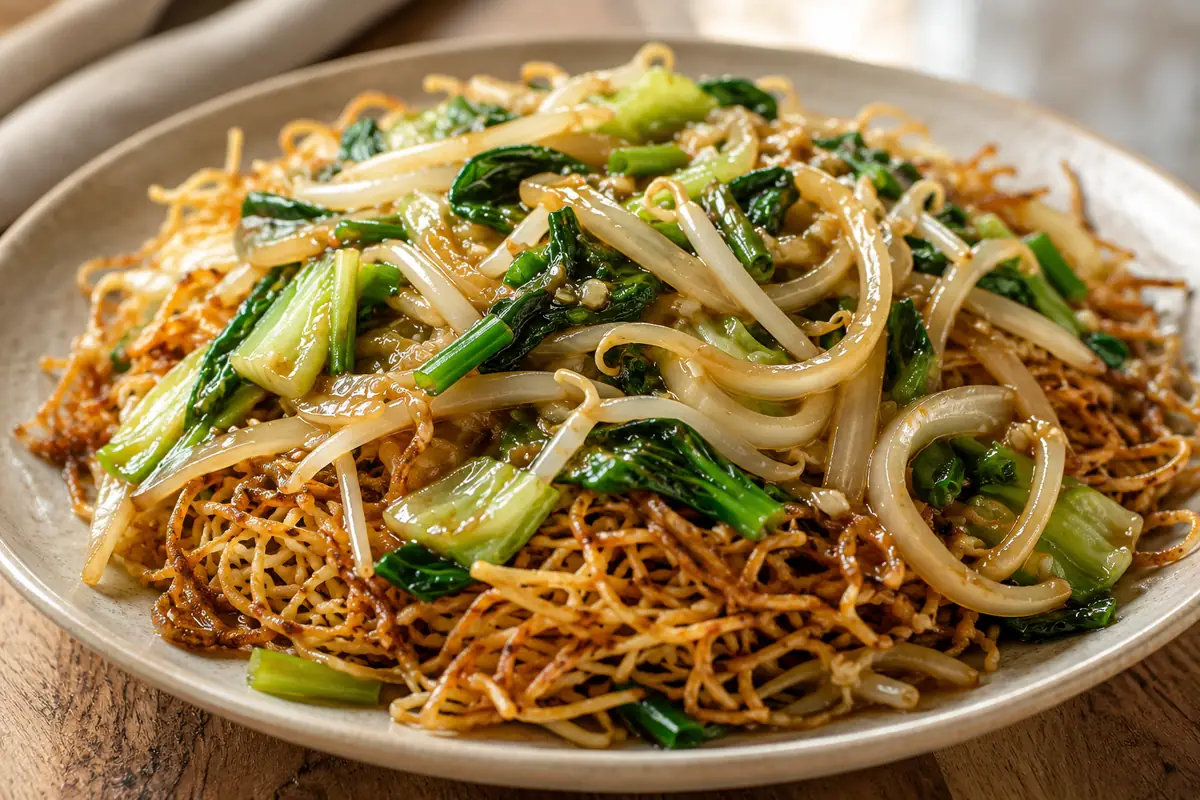
Crispy Cantonese Chow Mein for Easy Dinners features fresh thin noodles stir-fried with bean sprouts, bok choy, onion, and green onions in a glossy savory sauce.
Whisk the soy sauce, vegetarian oyster sauce, Shaoxing wine, sugar, sesame oil, and white pepper in a small bowl until the sugar mostly dissolves.
Rinse and drain the bean sprouts thoroughly. Separate the bok choy stems from the leaves if the pieces are large.
Stir-Fry
Heat a 14-inch wok over high heat for 2 minutes. Add half the neutral oil, then stir-fry the onion, bok choy stems, and half the green onions for 2 minutes.
Add the bok choy leaves, bean sprouts, garlic, and ginger. Toss for 1 to 2 minutes, until the leaves wilt and the sprouts remain slightly firm. Transfer the vegetables to a bowl.
Add the remaining oil and the loosened noodles to the hot wok. Spread them into a broad layer and cook undisturbed for 60 to 90 seconds.
Toss the noodles with tongs and continue stir-frying for 3 to 4 minutes, until hot, separated, and browned at the edges.
Return the vegetables to the wok. Pour the sauce around the hot side of the wok, then toss everything for 2 minutes until the noodles look glossy and the sauce clings.
Add the remaining green onions and toss for 30 seconds. Serve immediately while the noodle edges are still lightly crackly.
Notes
Refrigerate leftovers in a shallow airtight container for up to 3 days. Reheat in a lightly oiled skillet over medium-high heat for the best texture; microwaving is faster but softens the noodles and sprouts. Fresh noodles give the closest result, though dried chow mein noodles can be used after cooking just shy of al dente and draining very well.
Stella Rose is a recipe developer, food blogger, and founder of https://www.stellachef.com. She shares easy family-friendly recipes, meal prep ideas, and comforting homemade dishes designed for real life. Her goal is to help home cooks create delicious meals with simple ingredients and practical cooking techniques.