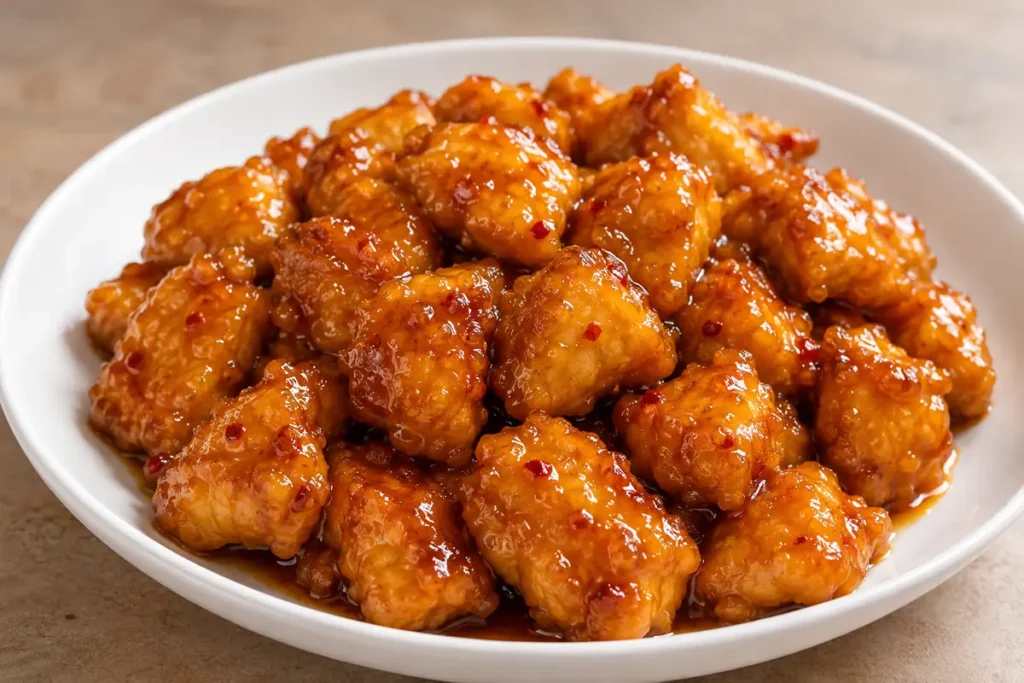
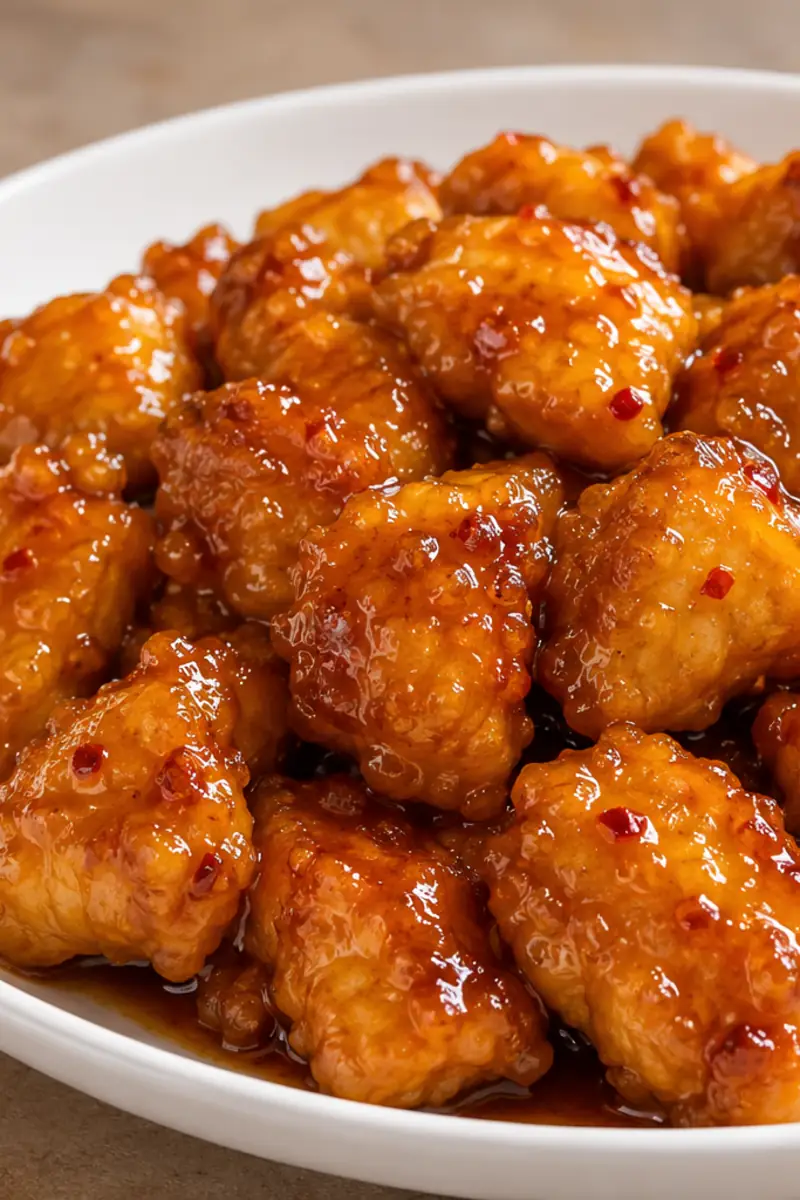
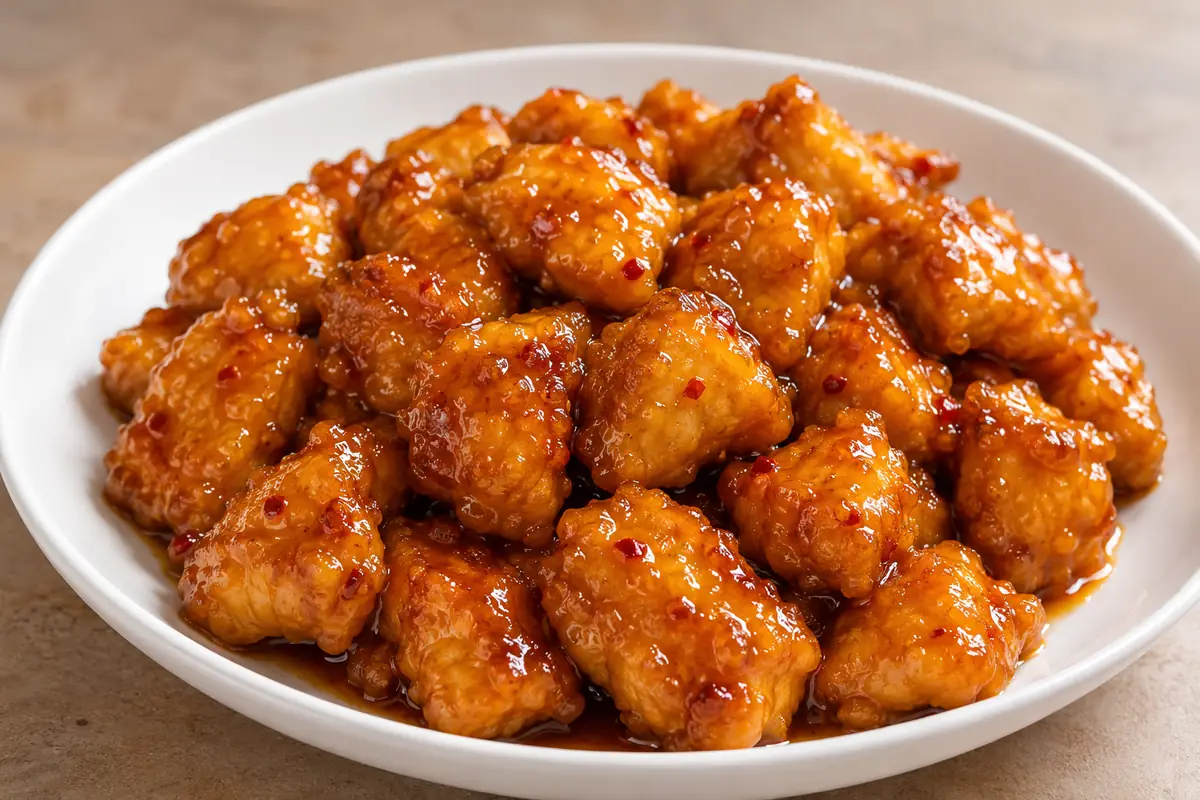
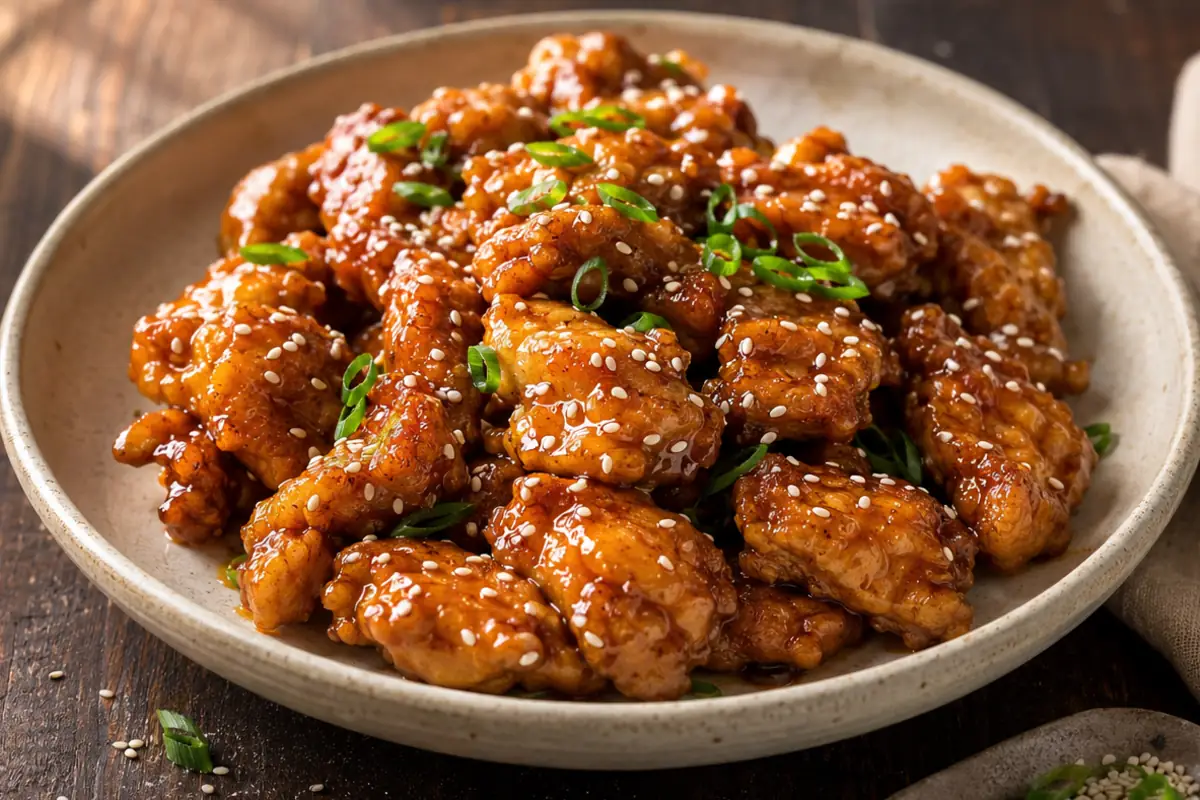
Baked Orange Chicken hits the table with crisp, browned edges and a glossy orange glaze that clings to every bite. The sauce smells citrusy and garlicky, then lands sweet, savory, and lightly tangy while the chicken stays juicy under the coating.
This is the oven-baked answer to a takeout craving when you want something warm and saucy without standing over a pot of oil. You’ll spend about 35 minutes from cutting board to dinner, with the sauce simmering while the chicken bakes.
Why You’ll Love Baked Orange Chicken
The best part is the contrast: browned coating outside, tender chicken inside, and a shiny sauce that grabs every irregular edge.
A wire rack keeps hot air moving underneath the chicken, so the bottoms don’t turn soft on the baking sheet.
Flour adds structure, while cornstarch gives the coating a lighter, more delicate bite.
Orange marmalade brings concentrated citrus flavor without requiring a long reduction.
The sauce cooks in the same window as the chicken, so dinner stays within one practical cooking session.
The recipe scales up well when you use a second baking sheet instead of crowding the first.
Leftovers make an useful lunch, especially when you reheat the chicken separately from extra sauce.
The glaze is bold enough for rice but bright enough to pair with something green. That makes this a reliable homemade dinner when plain baked chicken sounds dull.
How to Make Baked Orange Chicken
Plan on about 15 minutes of active prep and 20 minutes of cooking. The move that matters most is arranging the coated chicken in a single layer with space around each piece.
Don’t pour on the sauce until the chicken is fully baked. That keeps the coating from steaming while the orange glaze thickens.
1. Heat the oven to 425°F and set a wire rack over a parchment-lined baking sheet.
2. Cut the chicken into bite-size chunks and pat them dry. Season with salt and pepper.
3. Dip each piece in beaten egg, then coat it in the flour and cornstarch mixture.
4. Arrange the chicken on the rack without touching pieces. Drizzle with oil.
5. Bake for 10 minutes, flip, and bake for another 10 minutes.
6. While it cooks, simmer the orange juice, marmalade, soy sauce, vinegar, garlic, ginger, and pepper flakes.
7. Stir in the cornstarch slurry and cook until the sauce turns glossy and lightly thickened.
8. Toss the hot chicken with the sauce and serve right away.
Use an instant-read thermometer on the largest chunk. The center should reach 165°F, with no translucent meat near the middle.
Storing and Reheating Tips
The chicken keeps in the refrigerator for 3 to 4 days. The main storage issue is texture: the sauce gradually softens the coating, even when the flavor stays strong.
Store the chicken in a shallow airtight container so it cools quickly and evenly.
Keep any extra sauce in a separate small container when possible.
As an alternate reheating method, use a 400°F oven for about 10 minutes, until the centers are hot.
A microwave works for speed, but use short bursts and expect a softer coating.
Freeze the chicken and sauce separately for up to 2 months. Thaw in the refrigerator overnight.
For meal prep, portion rice or vegetables separately and add the sauce after reheating.
Reheat only what you’ll eat. Repeated heating makes the chicken firmer and the glaze thicker.
Variations and Substitutions
The orange sauce has some room to move, but keep the chicken chunks, coating, and citrus base anchored. Those three elements create the recognizable sweet-savory structure.
Boneless, skinless chicken thighs work in the same bite-size form. They stay tender but may need a little longer to reach 165°F.
For a gluten-free version, replace the all-purpose flour with a 1-to-1 gluten-free flour blend and use gluten-free tamari.
Orange preserves can replace marmalade, though the sauce may taste less concentrated and need an extra minute of simmering.
Increase the red pepper flakes for more heat, or leave them out for a gentler glaze.
Bottled orange juice works well when fresh juice isn’t convenient. Avoid orange drink or concentrate, which can make the sauce overly sweet.
Add a little more water to the slurry if the sauce tightens before the chicken is ready.
Don’t replace the orange juice with lemon juice. The sharper acidity changes the sauce enough that it no longer tastes like orange chicken.
Ingredient Notes
The coating depends on dry chicken and a thin egg layer. Too much moisture makes the flour mixture slide off instead of forming the craggy browned surface shown here.
Cut the chicken into similar bite-size chunks so smaller pieces don’t dry out before larger ones finish.
Patting the chicken dry helps the egg cling and keeps the coating from turning pasty.
Flour gives the coating body, while cornstarch helps it bake up lighter and less dense.
Use smooth orange marmalade for a clean glaze. Chunky peel is fine, but it creates a more textured sauce.
Fresh garlic and ginger sharpen the citrus flavor during the short simmer.
Rice vinegar keeps the marmalade from tasting flat or overly sweet, while soy sauce supplies savory depth.
The cornstarch slurry should be mixed with cold water before it reaches the pan. Adding dry cornstarch directly can leave little lumps.
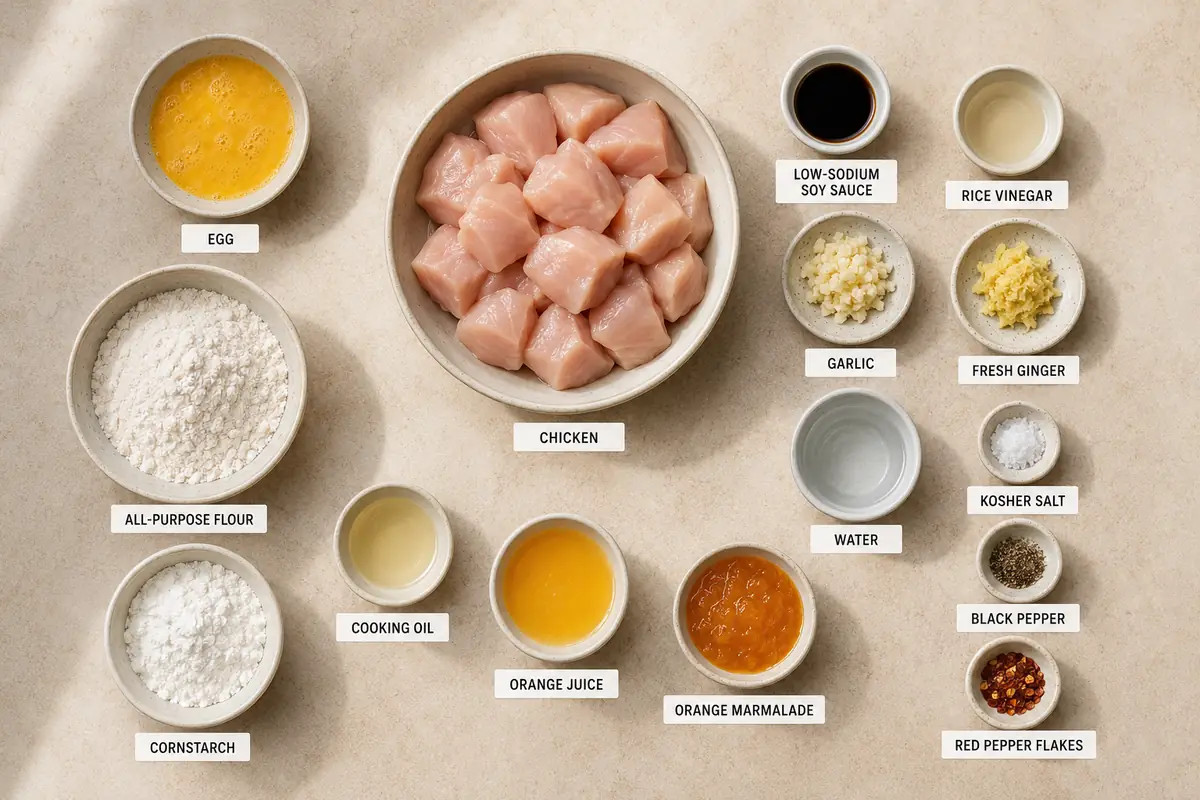
The chicken enters the oven as raw bite-size chunks, then gets coated with sauce only after baking. That timing protects the browned edges.
Expert Cooking Tips
The most common mistake is crowding the chicken or saucing it too early. Both problems trap steam, leaving the coating soft instead of browned.
Keep a single layer: Leave visible gaps between pieces on the rack. If the chicken is crowded, use a second pan and rotate both pans halfway through.
Don’t do this: Don’t toss raw chicken in the orange sauce before baking. The sugar can darken too quickly, and the coating won’t brown properly.
Watch the sauce after thickening: Once the slurry goes in, keep the heat at a gentle simmer. High heat can make the glaze tighten into a gummy paste.
Check the largest piece: Use the thermometer from the side so the tip reaches the center. Pull the chicken when it reaches 165°F.
Fix a sauce that’s too thick: Stir in a teaspoon or two of water while the sauce is warm until it flows slowly from a spoon.
Fix pale coating: Confirm the oven is fully preheated and the chicken is lightly oiled. Wet or touching pieces will brown less effectively.
Toss gently: Fold the chicken through the glaze instead of stirring hard. The coating stays attached and the chunks keep their shape.
Serve the chicken as soon as it is sauced. The longer it sits, the more the glaze soaks into the coating.
What to Serve with Baked Orange Chicken
Because the glaze is sweet and savory, the best sides are plain, fresh, or lightly acidic. Keep the plate uncomplicated so the orange sauce remains the focus.
Steamed jasmine rice catches the extra glaze and turns it into a complete dinner.
Broccoli, snap peas, or green beans add freshness without competing with the citrus.
A quick cucumber salad with rice vinegar cools the peppery edge of the sauce.
Cauliflower rice keeps the meal lighter while still giving the sauce somewhere to go.
Plain steamed vegetables are useful when the chicken is already the boldest part of the plate.
For a larger spread, add extra rice and a simple vegetable rather than another heavily seasoned dish.
If serving this for guests, keep some sauce aside and toss it just before eating. The chicken stays more textured that way.
FAQ
Most questions come down to coating texture, sauce thickness, and knowing when the chicken is done.
One Last Bite
The payoff is tender chicken with browned edges and a citrus glaze that tastes far more involved than the short cooking time suggests. It handles a busy evening, reheats reasonably well, and earns a place in the regular dinner rotation.
Crispy Baked Orange Chicken for Busy Weeknights
Crispy Baked Orange Chicken for Busy Weeknights pairs oven-baked, flour-and-cornstarch-coated chicken chunks with a glossy orange sauce.
1tablespoonneutral cooking oilfor rack and chicken
Orange Sauce
1/2cuporange juicefresh or bottled
1/4cuporange marmaladesmooth
2tablespoonslow-sodium soy saucefor sauce
1tablespoonrice vinegarunseasoned
2clovesgarlicminced
1teaspoonfresh gingergrated
1tablespooncornstarchfor slurry
2tablespoonswaterfor slurry
1/4teaspoonred pepper flakesoptional
Equipment
Large Rimmed Baking Sheet
Wire Rack
Parchment Paper
Shallow Bowls
Small Saucepan
whisk
Instant-Read Thermometer
Large Bowl
Method
Chicken
Heat the oven to 425°F. Line a large baking sheet with parchment and set a wire rack on top. Brush the rack with about half of the oil.
Pat the chicken dry, then season it with the salt and black pepper.
Place the beaten egg in one shallow bowl. Whisk the flour and 1/4 cup cornstarch in a second bowl.
Dip each chicken chunk in the egg, let the excess drip off, then coat it in the flour mixture. Arrange the pieces in one layer on the rack, leaving space between them. Drizzle with the remaining oil.
Bake for 10 minutes. Flip the chicken and bake for 10 more minutes, or until the coating is browned and the thickest pieces reach 165°F.
Orange Sauce
While the chicken bakes, combine the orange juice, marmalade, soy sauce, rice vinegar, garlic, ginger, and red pepper flakes in a small saucepan. Bring to a gentle simmer over medium heat.
Whisk the remaining 1 tablespoon cornstarch with the water. Stir the slurry into the simmering sauce and cook for 1 to 2 minutes, until glossy and thick enough to coat a spoon.
Transfer the hot chicken to a large bowl. Pour the orange sauce over it and toss gently until every piece is coated. Serve immediately.
Notes
Refrigerate leftovers in an airtight container for 3 to 4 days. Reheat in a 400°F oven for the best available texture, though the coating will soften after storage. Freeze the chicken and sauce separately for up to 2 months when possible, then thaw overnight and reheat before tossing together.
Mia Olivia is a food writer and recipe contributor who loves creating approachable recipes that fit busy lifestyles. From quick weeknight dinners to crowd-pleasing comfort foods, she focuses on helping readers cook with confidence and enjoy more time around the table.