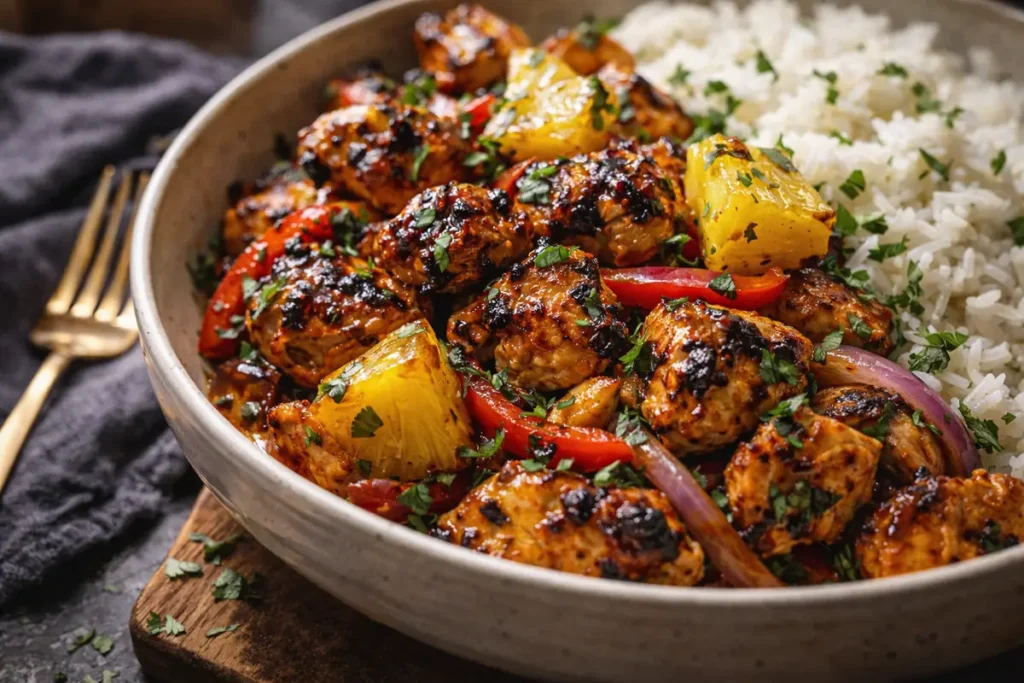
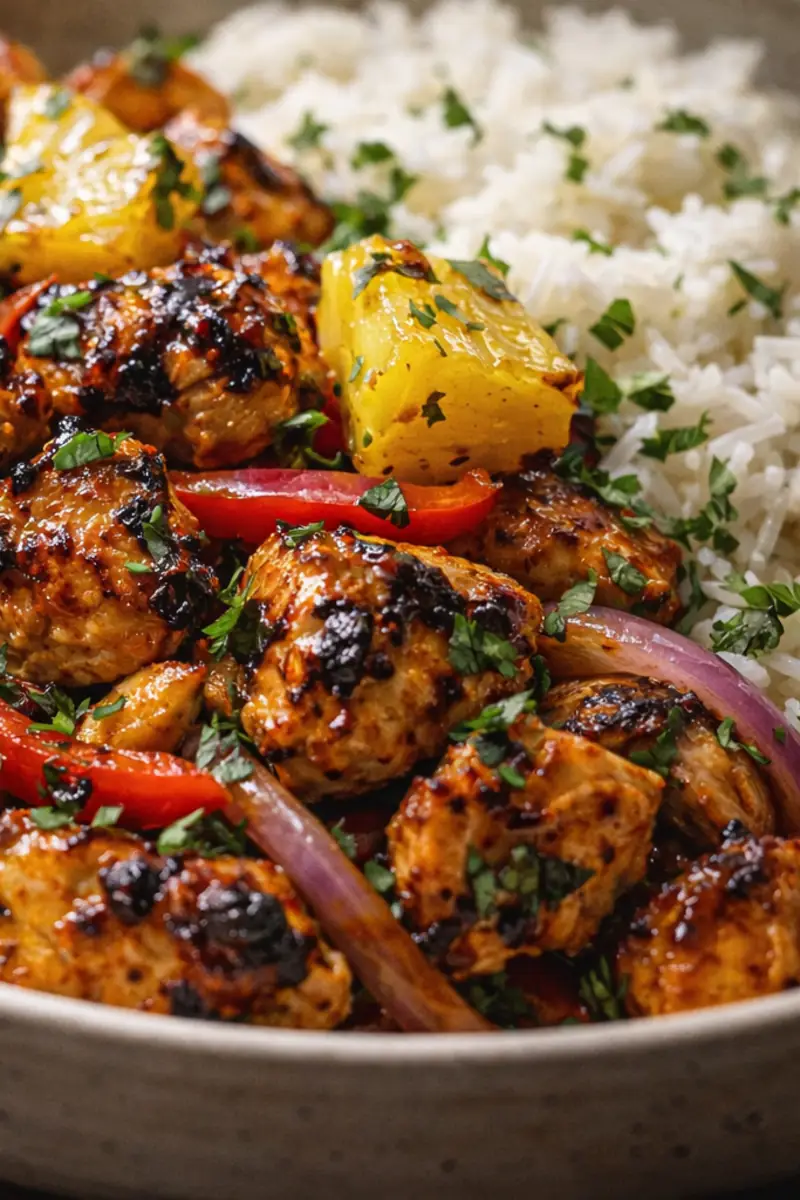
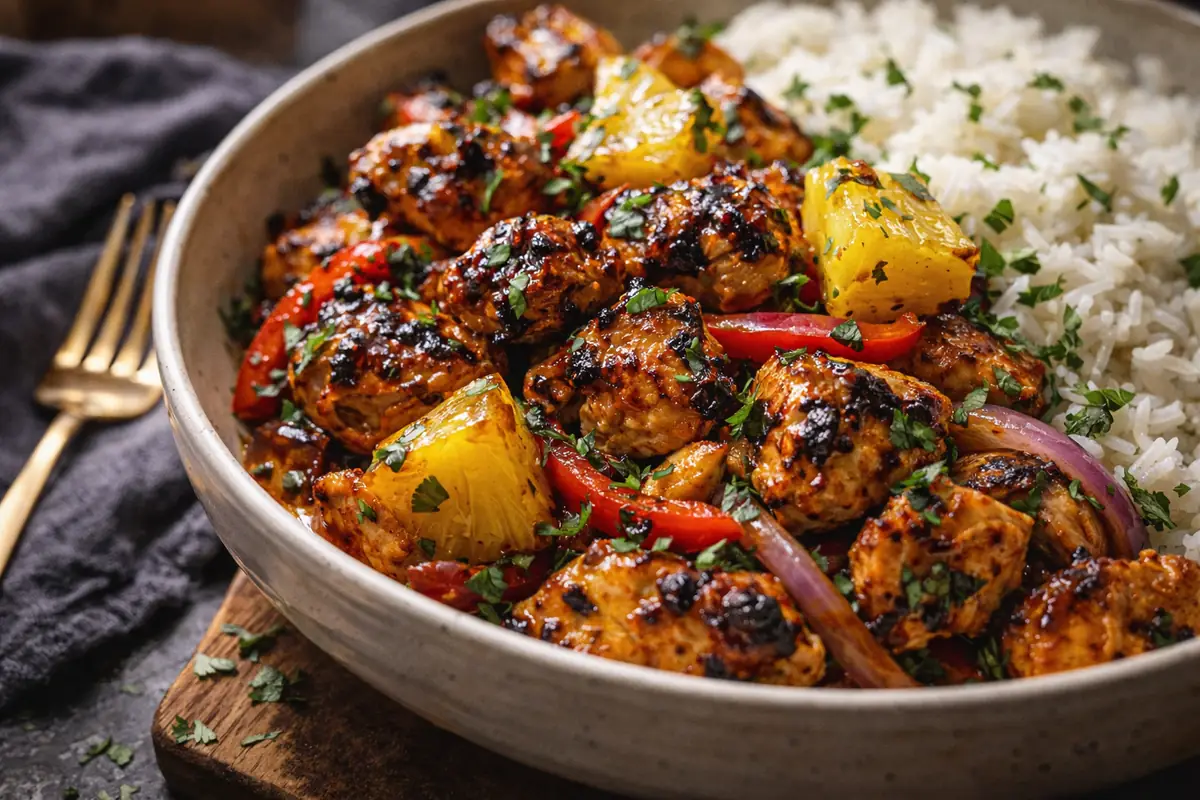
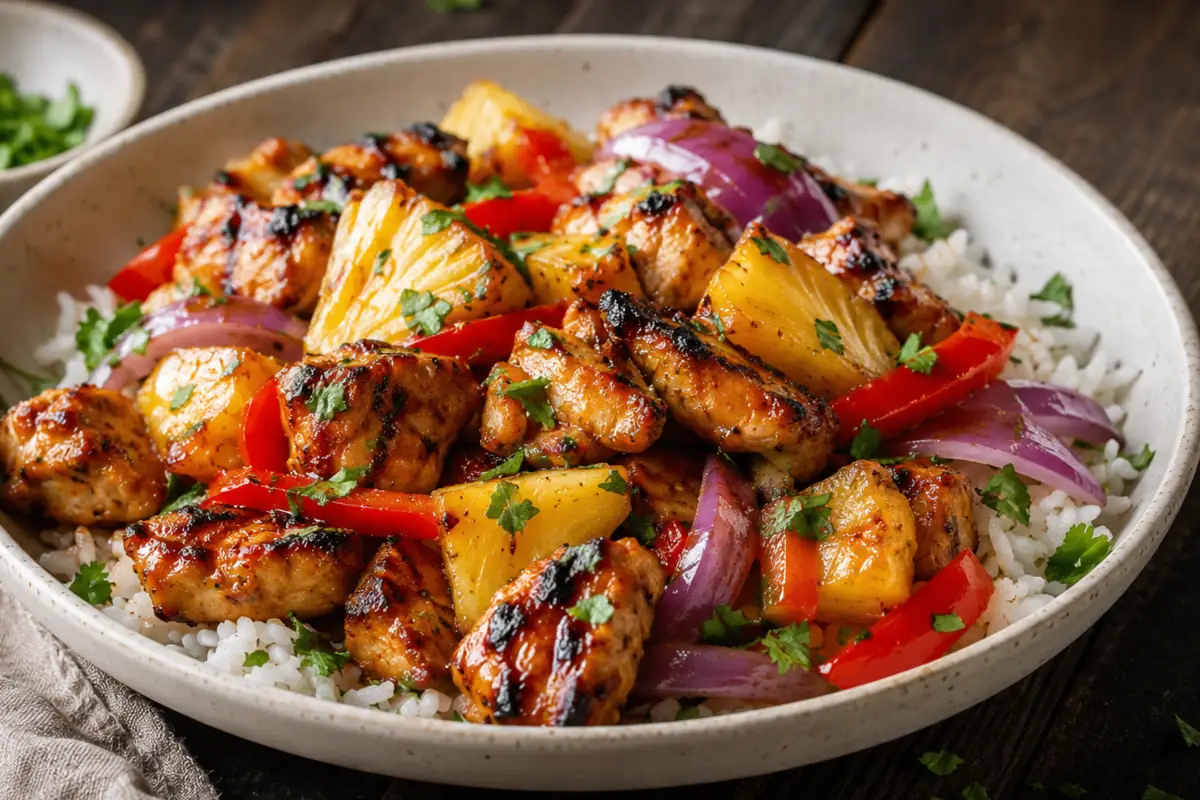
Glossy chicken bites come off the pan with caramelized edges, juicy pineapple, and enough savory sauce to soak into warm rice. Hawaiian Chicken Sheet Pan smells garlicky and gingery as it broils, while the peppers stay bright and the onion chars at the tips.
The glaze cooks while the sheet pan roasts, so dinner reaches the table in 35 minutes. That final two-minute broil makes the sauce cling instead of pooling underneath.
Why You’ll Love Hawaiian Chicken Sheet Pan
The sweet-savory glaze does the heavy lifting, but the pan keeps the chicken, fruit, and vegetables distinct. You get browned edges instead of the softer texture of a saucy stovetop stir-fry.
Dinner takes 35 minutes: 15 for prep and 20 for roasting and broiling.
An 18-by-13-inch pan gives the chicken room to brown, while the glaze needs only a small saucepan.
One-inch breast pieces cook quickly and stay juicy because the sugary sauce goes on near the end.
Fresh or canned pineapple works, and easy-to-find red pepper and red onion fill out the pan.
Leftovers reheat well for lunch when you store the rice and glazed chicken in separate containers.
How to Make Hawaiian Chicken Sheet Pan
Expect about 20 minutes of hands-on work, mostly cutting and whisking. Drying and spacing the chicken and pineapple matters most. After broiling, the thickest chicken piece should register 165°F in the center.
1. Heat the oven to 425°F and line a rimmed half sheet pan with foil. A smaller baking pan will crowd the ingredients.
2. Blot the chicken and pineapple thoroughly. Toss them with the pepper, onion, oil, salt, and black pepper, then spread everything in one layer.
3. Roast for 10 minutes. Meanwhile, whisk the cold glaze ingredients in a saucepan and simmer for 3 to 4 minutes, until they coat a spoon.
4. Turn the chicken pieces and stir the vegetables. Roast another 8 minutes, looking for browned edges and an internal temperature near 160°F.
5. Toss everything with the glaze, then broil for 2 minutes. Serve over warm rice once the sauce bubbles and the chicken reaches 165°F.
Storing and Reheating Tips
Refrigerate cooled leftovers within two hours and use them within four days. Freezing works for the glazed chicken mixture, although the peppers and pineapple lose some bite after thawing.
Store the rice separately so it doesn’t absorb all the glaze or become overly soft.
For meal prep, divide the chicken mixture and rice into individual containers once both have cooled.
Microwave a portion loosely covered at 70 percent power, stirring after 60 seconds to prevent dry chicken edges.
Reheat larger portions in a covered skillet over medium-low heat. A spoonful of water loosens sauce that has tightened overnight.
Freeze the chicken mixture without the rice for up to two months. Thaw it overnight before reheating gently.
Variations and Substitutions
The method has room for normal grocery-store swaps. Keep the chicken, pineapple, and soy-based glaze anchored so the dinner retains its Hawaiian-inspired character.
Boneless thighs stay especially tender. Cut them into one-inch pieces and allow 2 to 3 extra roasting minutes before broiling.
Canned pineapple packed in juice is the practical shortcut. Drain and blot it well, then reserve the juice for the glaze.
Orange or yellow bell pepper can replace red pepper without changing the timing or texture.
Swap the brown sugar for 1 1/2 tablespoons of honey. The glaze will be slightly looser and may darken faster under the broiler.
Brown rice or quinoa can replace white rice, provided it’s already cooked and warm when the sheet pan comes out.
Add a small pinch of crushed red pepper to the glaze when a little heat sounds good.
Ingredient Notes
Cornstarch turns the glaze glossy only after the liquid reaches a simmer. Dry pineapple develops char in the oven, while wet chunks release juice and steam the chicken.
Chicken breasts cook quickly and keep the meal lean. Uniform one-inch pieces prevent smaller bites from drying before larger ones finish.
Pineapple brings acidity as well as sweetness. Fresh chunks brown more readily, but canned fruit is convenient and consistent.
Red pepper and red onion should stay fairly wide. Thin slices soften too much during the 20-minute roasting time.
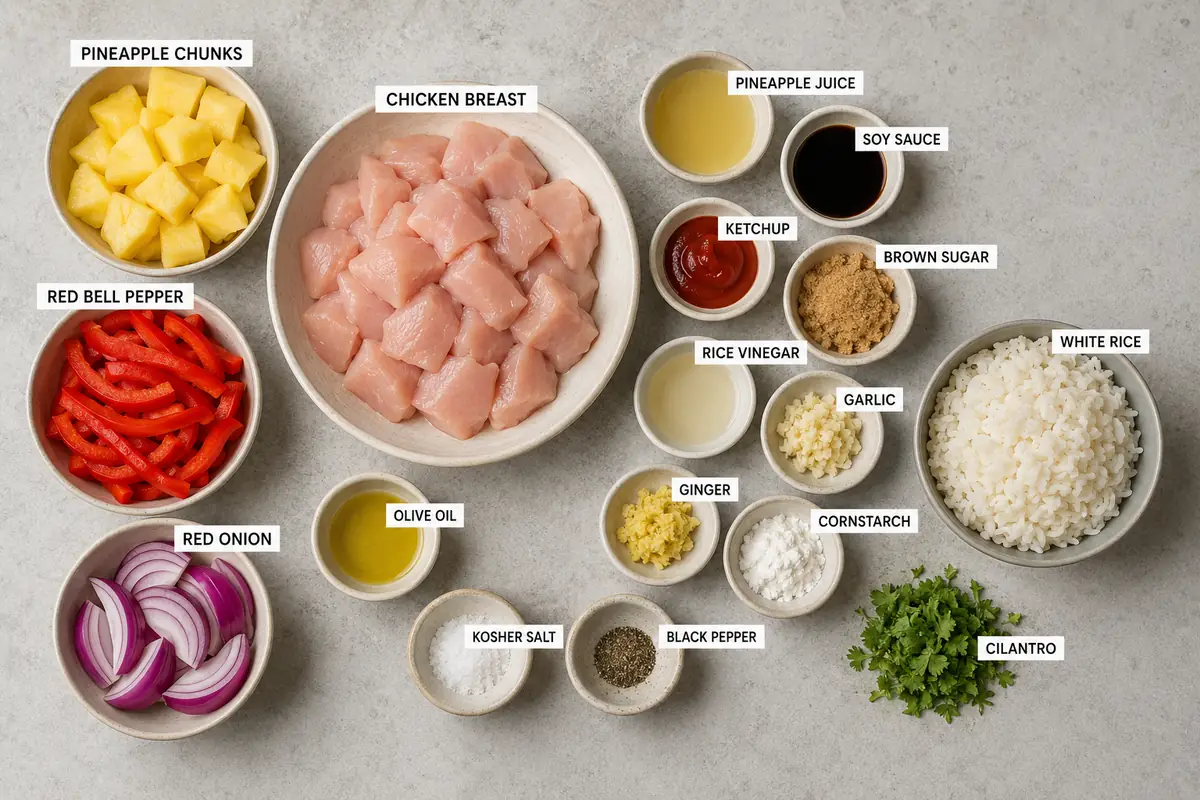
Pineapple juice and soy sauce form the glaze base. Reduced-sodium soy sauce leaves room for the sauce to reduce without becoming too salty.
Ketchup, brown sugar, and rice vinegar give the glaze body, color, and a clean tang rather than flat sweetness.
Garlic and ginger add aroma, while cornstarch helps the finished glaze grip the chicken instead of running into the rice.
Expert Cooking Tips
Watery pans cause more trouble here than weak seasoning. Moist pineapple, crowded ingredients, or an early coating of sugary glaze will steam the chicken and soften every edge.
Use a true half sheet pan. A 9-by-13-inch baking dish holds the food too tightly and traps moisture around the chicken.
Don’t add the glaze before roasting. Sugars scorch before the chicken cooks, so glaze only at the end and finish under the broiler.
Separate any oversized chicken pieces before roasting. Even one thick chunk can lag behind while the smaller pieces pass 165°F.
Pull the saucepan from the heat when the glaze falls from the whisk in a thick ribbon. It tightens further as it cools.
If the glaze becomes pasty, whisk in a spoonful of hot pan juices before coating the chicken.
Watch the broiler continuously. Pineapple and brown sugar can move from caramelized to scorched in less than a minute.
What to Serve with Hawaiian Chicken Sheet Pan
Warm white rice is already built into the bowl, so additional sides should bring freshness, crunch, or something green. Keep them lightly dressed so they don’t compete with the pineapple-soy glaze.
Cucumber salad with rice vinegar adds a cool, crisp contrast to the warm chicken.
Steamed broccoli or snap peas catch extra glaze without making dinner feel heavier.
A quick cabbage slaw with lime brings acidity and stays crunchy beside the tender vegetables.
Roasted green beans work well when you want another hot side with very little preparation.
Shelled edamame with a little salt adds color and can stretch the meal without another sauce.
FAQ
The usual questions involve excess moisture, make-ahead timing, and getting the chicken done before the glaze darkens.
Can I use canned pineapple?
Yes. Choose chunks packed in juice, reserve the juice for the glaze, and blot the fruit thoroughly before roasting.
Why did the pan turn watery?
The pan was likely crowded or the pineapple was wet. Use a half sheet pan and spoon off excess liquid before glazing if needed.
Can I prep this ahead?
Cut the chicken and vegetables and mix the glaze up to one day ahead. Refrigerate everything separately and roast just before serving.
Can I double the recipe?
Yes, but use two sheet pans and rotate them between oven racks halfway through. Allow a few extra minutes if both pans cook at once.
How do I know chicken is done?
Check the thickest piece with an instant-read thermometer after broiling. It should reach 165°F and feel firm without becoming hard.
One Last Bite
The sticky glaze, charred fruit, and warm rice make this dinner feel fuller than the cleanup suggests. Once you know to dry the pineapple and sauce the pan at the end, it becomes a reliable 35-minute chicken dinner worth keeping in regular rotation.
Hawaiian Chicken Sheet Pan: The Ultimate Easy Weeknight Dinner
Hawaiian Chicken Sheet Pan: The Ultimate Easy Weeknight Dinner is a glossy sheet-pan dinner of tender chicken, charred pineapple, peppers, and onion served with warm white rice.
Heat the oven to 425°F. Line an 18-by-13-inch rimmed sheet pan with foil.
Pat the chicken and pineapple very dry. Toss the chicken, pineapple, bell pepper, and onion with the olive oil, salt, and black pepper.
Spread the mixture in one layer, leaving room between the chicken pieces. Roast for 10 minutes.
Glaze and Finish
While the pan roasts, whisk the pineapple juice, soy sauce, ketchup, brown sugar, rice vinegar, garlic, ginger, and cornstarch in a small saucepan until smooth.
Bring the glaze to a simmer over medium heat. Cook for 3 to 4 minutes, whisking, until glossy and thick enough to coat a spoon.
Turn the chicken and stir the vegetables. Roast for 8 minutes more, until the thickest chicken pieces reach about 160°F.
Pour the glaze over the pan and toss quickly. Broil for 2 minutes, watching closely, until the glaze bubbles and the chicken reaches 165°F.
Divide the warm rice among four bowls. Add the chicken, pineapple, pepper, and onion, spoon over the pan glaze, and finish with cilantro.
Notes
Fresh pineapple browns best, but well-drained canned pineapple in juice works and can supply the glaze liquid. Refrigerate the glazed chicken mixture separately from the rice for up to 4 days. Freeze the cooled chicken mixture for up to 2 months; the peppers and pineapple will soften after thawing. Boneless chicken thighs may need 2 to 3 extra roasting minutes.
Stella Rose is a recipe developer, food blogger, and founder of https://www.stellachef.com. She shares easy family-friendly recipes, meal prep ideas, and comforting homemade dishes designed for real life. Her goal is to help home cooks create delicious meals with simple ingredients and practical cooking techniques.